

Current state of deterioration and existing risks
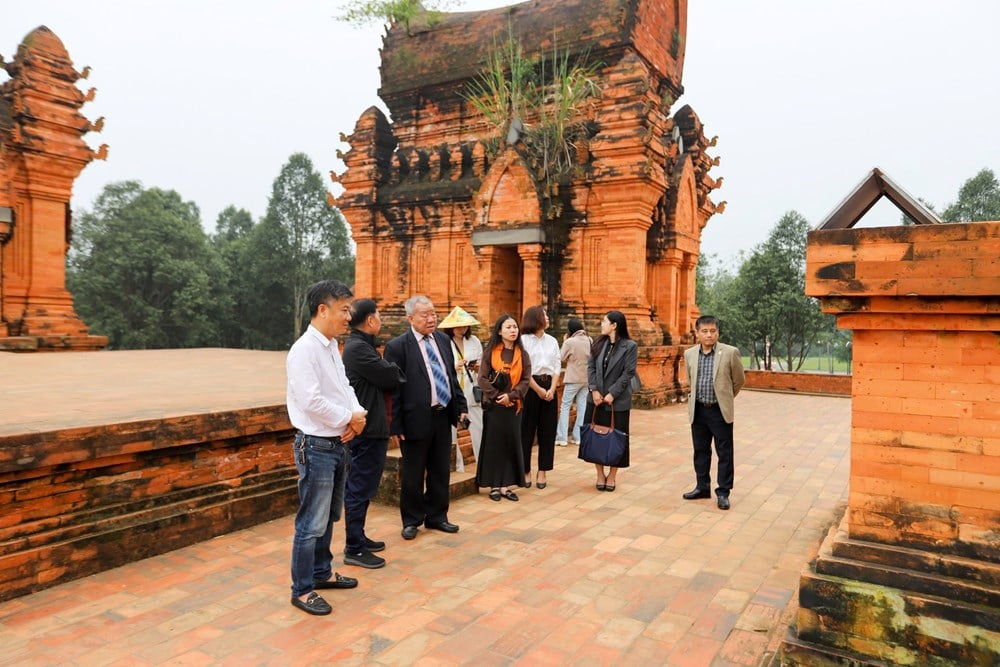
According to research documents, Champa temple-tower relics are architectural structures or architectural components that remain of religious temple complexes of the Champa people throughout history.
The relics are scattered along the central coastal strip, from Quang Tri (formerly part of Quang Binh ) to Lam Dong (formerly Binh Thuan province) and some areas of the Central Highlands.
At the beginning of the 20th century, besides the famous My Son Sanctuary in Quang Nam , Vietnam recorded more than 120 Champa temples and towers that could be studied, concentrated in more than 20 archaeological sites.
These architectural structures, dating from the 7th to the 17th centuries, are the culmination of centuries of creativity, skill, and artistic achievement of the Cham people.
Most Champa temples and towers were built for religious purposes, dedicated to the worship of Hindu or Buddhist deities. Beyond their historical and cultural value, each structure also holds mysteries regarding construction techniques, particularly the techniques of brickmaking, brick bonding methods, and binding materials – elements that remain largely unexplained to this day.
From the late 19th century, when French scholars first approached and studied the Champa tower system, it attracted strong interest from archaeologists, architects, conservationists, and artists. Questions about its structure, construction techniques, brick materials, and sophisticated sculptural decorations have always been challenging and fascinating topics for generations of scientists .
Holding a significant position in the national heritage treasury, many Champa temples and towers have been classified as National Monuments and Special National Monuments; the My Son complex, in particular, was inscribed on the UNESCO World Heritage List in December 1999.

However, after hundreds of years of existence in harsh natural conditions, wars, and a lack of continuous management, the temples and towers now mainly exist in three forms: archaeological sites, ruins, and architectural relics.
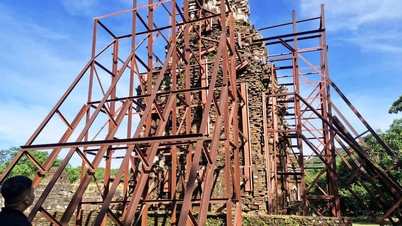
Much of the structure has been damaged, with overall deformation, many parts collapsing or peeling, cracking, and breaking. The bricks are crumbling, the stone components are weathering, and many sculptural elements are completely lost.
The deterioration stems from many factors: the natural environment, the "aging" process of materials, physical, chemical, and biological impacts, war, theft, vandalism, the activities of surrounding residents, and especially the long period of neglect and lack of protection.
The process of decay is accelerating, creating a risk of losing extremely valuable original elements.
Over the past half-century, many temples and towers have been reinforced and saved, averting collapse and preserving their existence to this day. However, the conservation results remain modest compared to actual needs, as each monument is in a different technical condition, requiring a unique approach.
The urgent need for a unified methodology system.
Unlike the restoration of traditional wooden architecture, which has established a relatively clear methodology, the preservation of Champa temples and towers still lacks uniformity in principles and intervention techniques.
Due to the unique characteristics of Champa bricks, the construction of which did not use mortar in the conventional sense, and its very high aesthetic value, any intervention always requires caution, a solid scientific basis, and methods appropriate to each specific case.
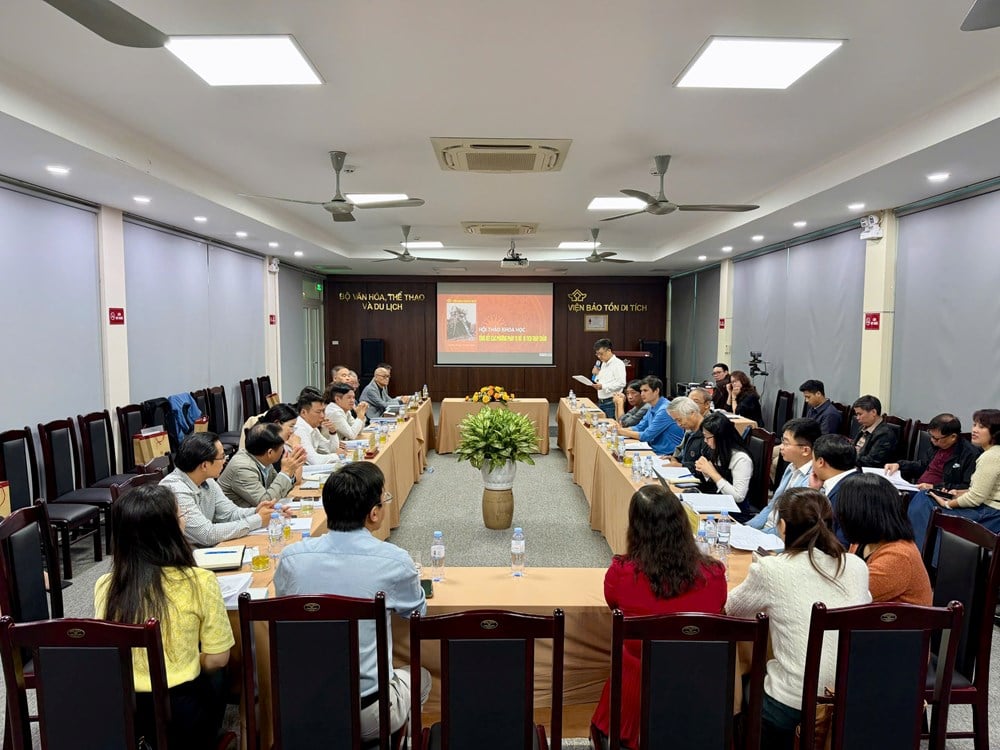
The introductory report emphasizes that summarizing practical experiences, drawing on domestic and international knowledge, and comparing them with international conservation theories are crucial for shaping future methods of Champa relic restoration.
According to Dang Khanh Ngoc, Director of the Institute of Conservation of Monuments, the workshop aims to introduce and synthesize techniques and materials for the restoration and preservation of Champa temples and towers, contributing to the protection and promotion of heritage values.
At the same time, it creates a forum for academic exchange and sharing of practical experiences among experts and research units, thereby enhancing awareness and improving the effectiveness of cooperation in heritage conservation.
The workshop also aimed to update participants on the latest results in scientific and technological research, and to provide new insights into the preservation of Champa architecture in the current context.

The golden mark on Champa treasures
"This is an important opportunity to look back on more than 40 years of Champa relic preservation – dating back to the Vietnam-Poland cooperation mission in 1981, the time that marked the first large-scale and systematic restoration interventions," Mr. Dang Khanh Ngoc shared.
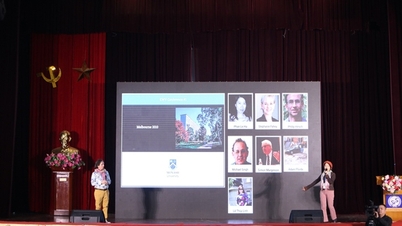
The organizing committee received 23 papers, along with 48 in-person registrations and 5 online registrations via Zoom. The combination of both formats aimed to facilitate participation from both domestic and international experts.
The presentations focused on analyzing the unique structural and material characteristics of Champa temples and towers; conservation experiences from domestic and international projects; new techniques and materials applied in restoration; and archaeological issues related to the restoration of monument structures.

The discussions also highlighted the urgent need to establish unified intervention procedures and principles, tailored to each group of heritage sites.
The workshop also noted many suggestions for research directions and the application of science and technology in the conservation of Champa temples and towers, including research on materials, technical solutions for structural reinforcement, and cooperative models to enhance the effectiveness of heritage conservation.
The workshop "Reviewing methods for restoring Cham tower relics" is not only an annual event but also a strategic step to unify understanding, gather scientific data, and develop appropriate conservation methods for this unique architectural heritage.
With over 40 years of research and conservation practice, systematizing experience, identifying new issues, evaluating restoration techniques and materials, and proposing future directions are crucial for preserving the original values of the Champa heritage.
In the context of the rapid deterioration of many Cham towers, the workshop made a significant contribution to providing managers, experts, and the scientific community with a basis for formulating long-term conservation strategies, aiming for comprehensive and sustainable protection of one of Vietnam's most representative architectural heritage types.
Source: https://baovanhoa.vn/van-hoa/tong-ket-cac-phuong-phap-tu-bo-di-tich-thap-cham-nhin-lai-hon-40-nam-bao-ton-mot-loai-hinh-di-san-dac-sac-187762.html
















![[Photo] Prime Minister Pham Minh Chinh holds a phone call with the CEO of Russia's Rosatom Corporation.](/_next/image?url=https%3A%2F%2Fvphoto.vietnam.vn%2Fthumb%2F1200x675%2Fvietnam%2Fresource%2FIMAGE%2F2025%2F12%2F11%2F1765464552365_dsc-5295-jpg.webp&w=3840&q=75)






































Comment (0)