

 |
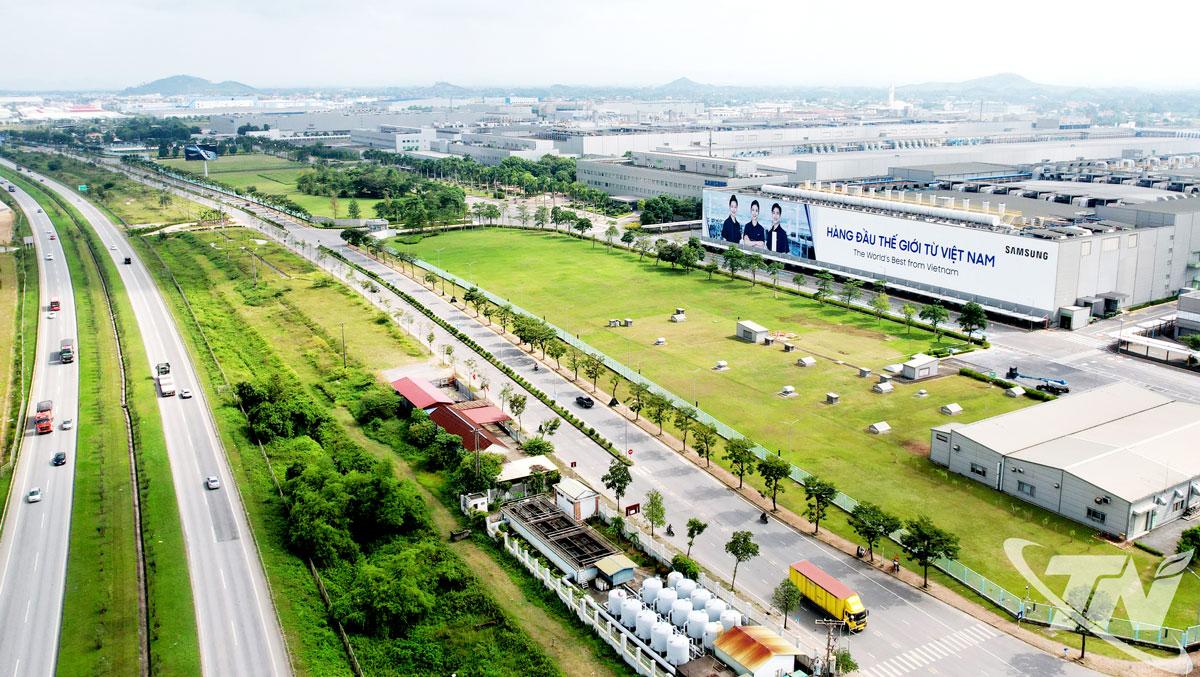
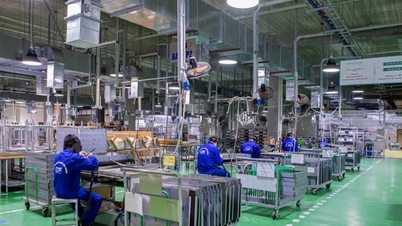
| The presence of hundreds of FDI enterprises in the province has brought about significant economic changes, while also creating an urgent need for the development of high-quality human resources to serve the goal of sustainable development. Photo: Provided |
High-quality human resource bottleneck
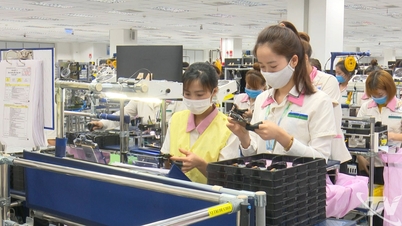
Currently, Thai Nguyen province has over 10,000 technology enterprises operating, including 227 FDI enterprises, mainly concentrated in the southern region, in industrial zones such as Yen Binh, Diem Thuy, and Song Cong II.
In 2025 alone, FDI enterprises here will need to recruit more than 5,000 engineers and graduates in the fields of electronics, information technology, automation, precision mechanics, logistics, and production management.
Recent recruitment trends show that the human resources problem is not just about quantity. High-quality workers are lacking soft skills, foreign language proficiency, innovative thinking, and work styles that align with modern management models.
Mr. Liu Jiang Feng, Human Resources Director of RQ Technology Electronics Vietnam Co., Ltd., commented: Businesses are expanding production rapidly, but a large portion of the local workforce still needs retraining. While basic technical skills meet requirements, their ability to use foreign languages and adapt to new operating procedures is limited, leading to a prolonged onboarding period.
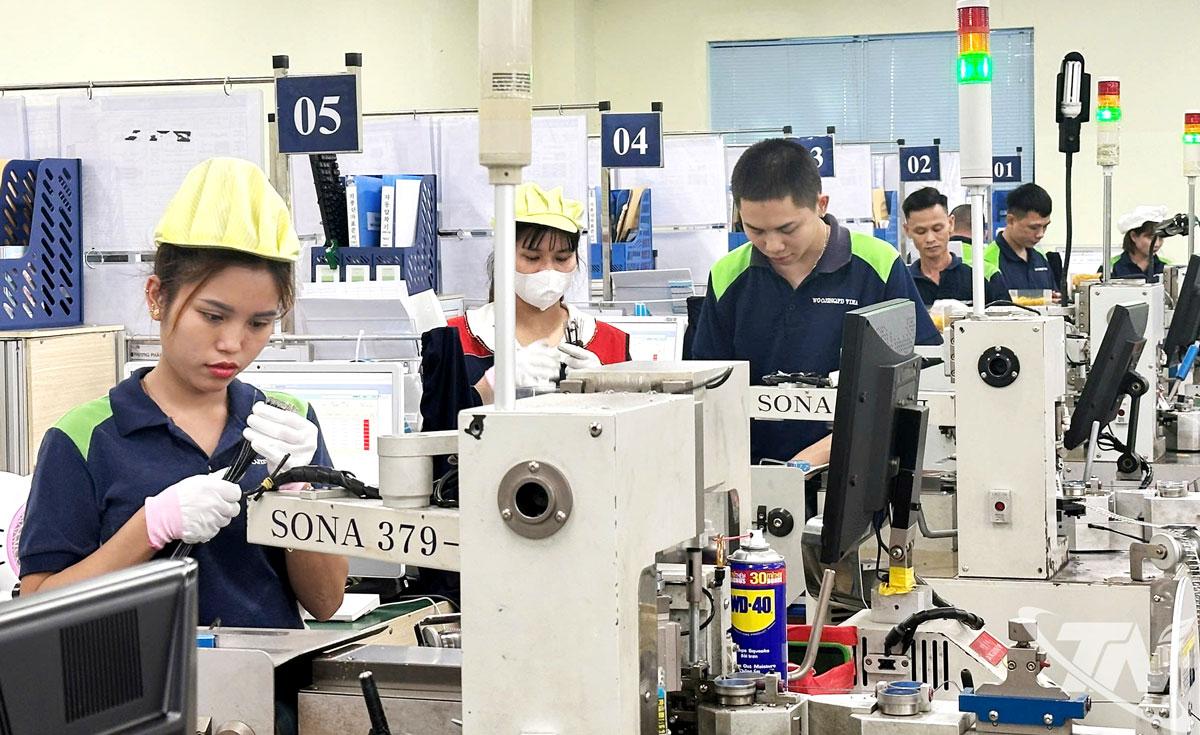 |
| With a well-structured strategy and the coordinated efforts of the government, businesses, and universities, Thai Nguyen is gradually asserting its position as a center for high-tech training and production in Northern Vietnam. |
Labor competition between localities is also creating new pressure. Many neighboring provinces are offering skilled workers more attractive salaries and benefits, leading to labor migration. Mr. Pham Manh Cuong, Head of Administration and Human Resources at You Sung Vina Company, said: Attracting skilled workers is becoming increasingly difficult, and businesses hope the province will soon have a suitable recruitment support mechanism to retain quality personnel.
These challenges demonstrate that labor quality is becoming a bottleneck in Thai Nguyen's goal of enhancing its competitiveness in attracting high-tech projects. Without fundamental solutions for training, developing, and retaining human resources, the locality will struggle to meet the development requirements of investors in the coming years.
Education and training are proactively transforming themselves.
Amidst rapid industrialization, Thai Nguyen's education and training system has gradually shifted to adapt to the demand for high-quality human resources.
In the 2024-2025 academic year, the University of Information Technology and Communications (Thai Nguyen University) launched a semiconductor microchip program, enrolling nearly 50 students in its first cohort, laying the foundation for what is considered a "breakthrough of breakthroughs" in human resource development. According to the province's goals, by 2030, the entire system is expected to train approximately 4,500 workers in the fields of semiconductors, information technology, and artificial intelligence, including 2,000 with undergraduate and postgraduate degrees.
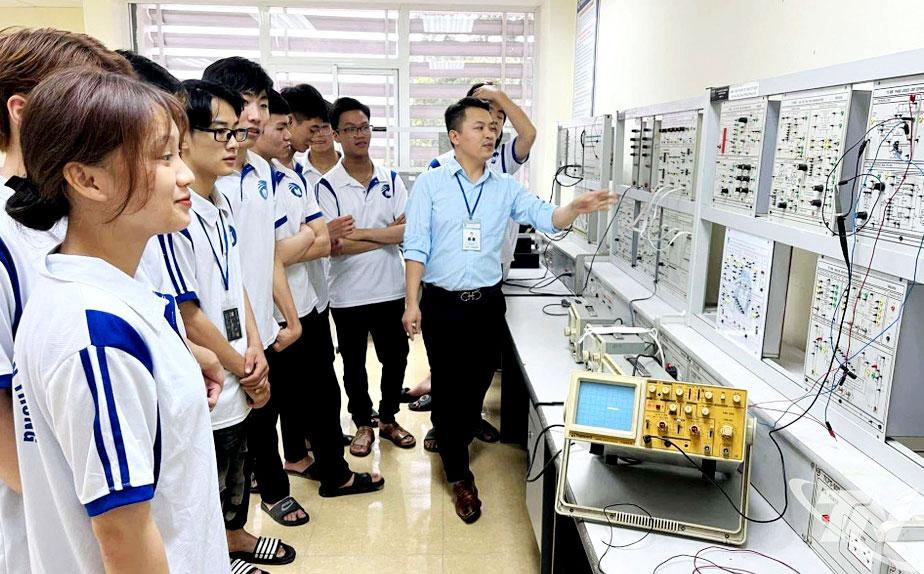 |
| The University of Information Technology and Communications (Thai Nguyen University) has invested in fairly comprehensive facilities, meeting the learning, practice, and research needs of its students. |
Professor Phung Trung Nghia, Rector of the University of Information Technology and Communications, emphasized: Training programs are closely linked to the needs of businesses, and cooperation with FDI enterprises is key to creating human resources that meet the requirements of new technologies.
Other institutions under Thai Nguyen University, such as the University of Industrial Technology, the University of Science, and the University of Economics and Business Administration, are also strengthening cooperation with Samsung and KD Heat Technology to create opportunities for students to intern, work on projects, and access modern production lines starting from their second year.
Specifically, the University of Industrial Technology - the largest engineering training institution in the region - boasts a Faculty of Mechanical and Electrical Engineering with nearly 2,000 students. Dr. Truong Thi Thu Huong, Head of the Faculty, stated: "The training program is continuously updated to meet the needs of businesses, supplementing soft skills, foreign languages, and digital skills, enabling students to work effectively in an international environment."
Students also acknowledged the effectiveness of this training model. Loc Anh Tuan, a student in class 57DDK, shared: "Practicing on modern equipment and participating in company projects helps students become more confident when preparing to enter the labor market."
In fact, significant investment in laboratories, simulation centers, mechanical workshops, and digital libraries has created a modern learning environment, helping students access technological trends and enhance their applied research capabilities—a crucial factor in meeting the requirements of high-tech FDI projects.
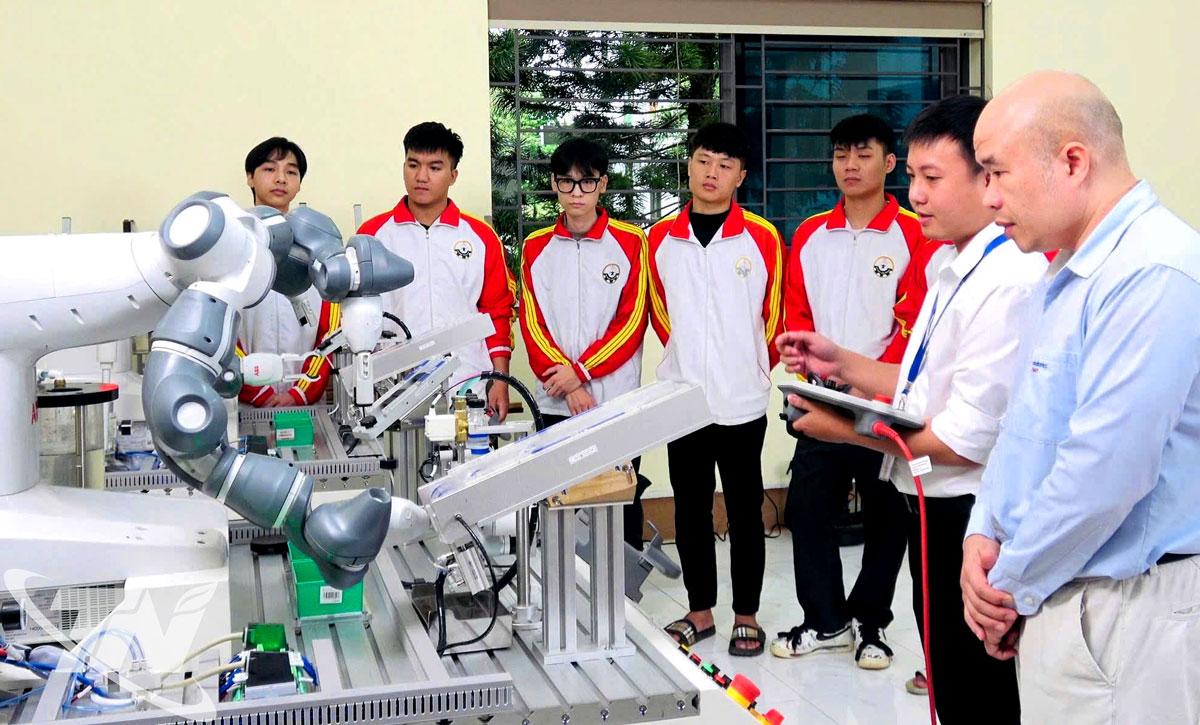 |
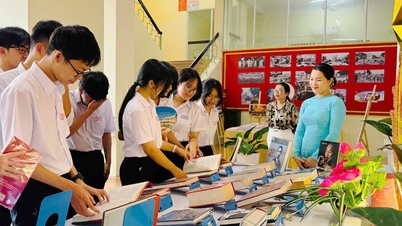
| Students at the University of Industrial Technology (Thai Nguyen University) are exposed to a modern training model under the guidance of lecturers. |
The "three-party" linkage - A breakthrough solution for human resources.
The model of collaboration between the State, schools, and businesses is becoming the main axis in the strategy for developing high-quality human resources.
According to the Provincial Competitiveness Index (PCI) report, Thai Nguyen consistently ranks among localities with good economic governance quality, particularly in the indicators of "Labor Training," "Access to Land," and "Dynamism of Government." This is an important foundation for attracting selective FDI into semiconductor, automation, software, and artificial intelligence industries – sectors that require highly skilled human resources.
Mr. Doan Nhu Hai, General Director of KD Heat Technology Co., Ltd. in Thai Nguyen, emphasized: Students who learn in an environment with practical industrial elements will be able to work immediately without needing further training. This is an advantage that helps businesses save costs and improve production efficiency. The coordinating role of the State, training tailored to the needs of schools, and the participation of businesses in the entire training chain create uniformity from policy to practice, contributing to overcoming the mismatch between labor supply and demand.
Following the administrative merger, Thai Nguyen has an area of over 8,300 km2 and a population exceeding 1.68 million people, making it a leading industrial, educational, and economic center in the region. With a workforce of approximately 1 million people and over 100,000 workers trained annually from 9 universities and 37 vocational training institutions, Thai Nguyen is the third largest human resource training center in the country.
A 2024 survey by the National Science and Technology Information Agency revealed that the province has 5,779 R&D personnel, of which Thai Nguyen University has 3,174, including 14 professors, 210 associate professors, and over 1,000 PhDs and Doctors of Science. This is an important foundation for the development of the semiconductor industry, AI, and other high-tech sectors.
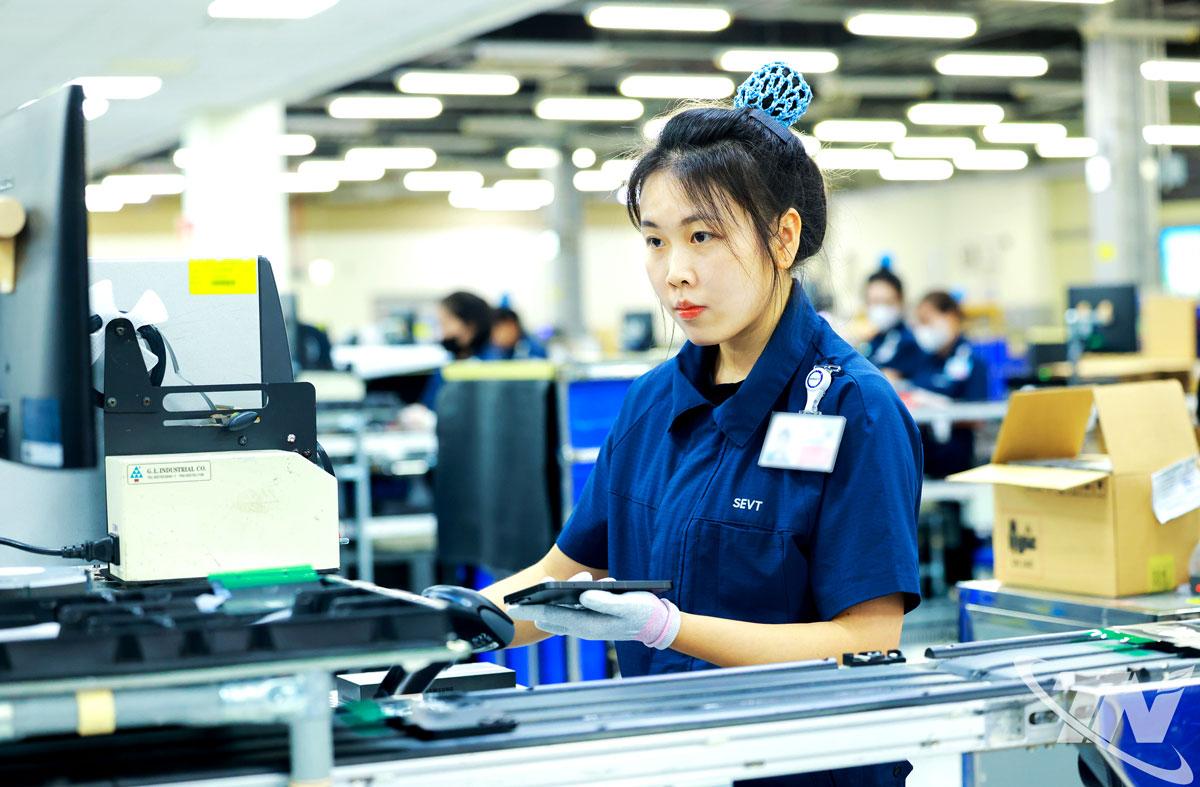 |
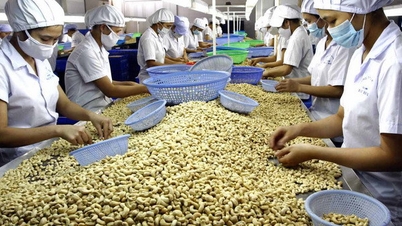
| With its main products being tablets and smartphones, Samsung Electronics Vietnam Thai Nguyen Co., Ltd. makes a significant contribution to the province's economic development. Photo: Provided |
Based on the practical needs of FDI enterprises, the current state of labor supply, and the transformation efforts of the education and training system, it is clear that high-quality human resources are a decisive factor in the industrial development of Thai Nguyen. As investment expands, especially in semiconductors, AI, and automation, the quality of human resources is not only a requirement but a vital condition for retaining investors, upgrading the production value chain, and increasing local competitiveness.
Thai Nguyen's implementation of a training strategy based on a "three-party" linkage, connecting training objectives with recruitment needs, standardizing according to international standards, and orienting towards 2030, demonstrates a clear vision: developing industry based on knowledge, data, and innovation.
If implemented consistently and persistently, this strategy will create a new generation of skilled workers with global thinking and high technological adaptability, becoming the driving force for Thai Nguyen to enter a phase of deep industrialization, aiming to become a high-tech manufacturing center of the northern mountainous region and the whole country, and at the same time becoming a "new resource" to promote sustainable development in the digital economy era.
Targets for semiconductor and AI human resources in Thai Nguyen province by 2030: - 2,000 people with undergraduate and postgraduate degrees - 500 people with college degrees - Over 2,000 people with intermediate level skills Of that, 50% will directly serve the semiconductor industry; and 50% will be for information technology and AI. The goal is to meet the needs of businesses in packaging, testing, manufacturing microchips and AI devices; and to build a new workforce based on people, technology, and data. (According to Plan No. 210/KH-UBND dated November 15, 2024, of the People's Committee of Thai Nguyen province on training human resources in semiconductors and AI until 2030). |
Source: https://baothainguyen.vn/kinh-te/202512/nhan-luc-chat-luong-mo-loi-phat-trien-01041ae/












































































Comment (0)