

 |
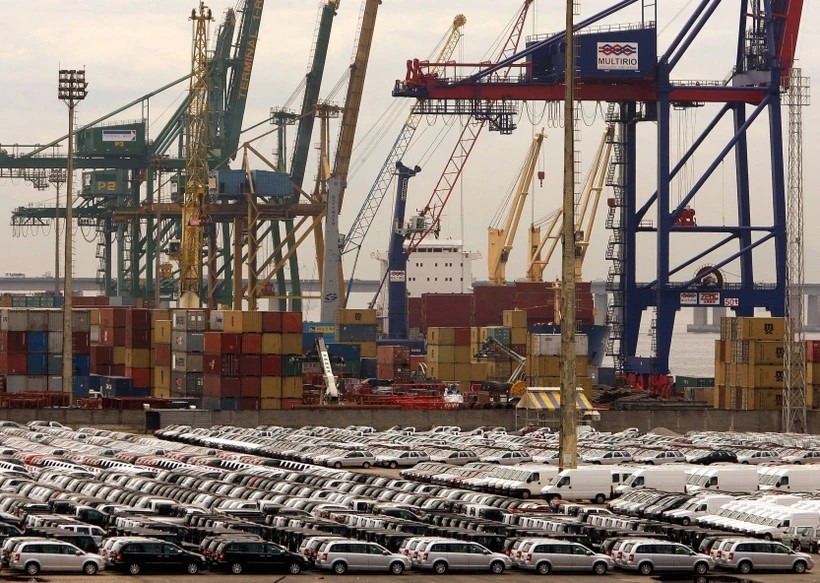
| There are many reasons to be optimistic about the outlook for the global economy in 2024. (Source: AFP) |
First, the global economy has demonstrated remarkable resilience. Since 2020, the world economy has repeatedly suffered shocks from the pandemic, conflicts in Europe, and supply chain disruptions. All of these factors caused record-high inflation and the highest interest rate hikes in decades. However, economies around the world have adapted better than expected, and this continued into 2023.
According to Fitch Ratings' global index, in the third quarter of 2023, global Gross Domestic Product (GDP) was 9% higher than pre-pandemic levels. Businesses have readjusted their logistics systems, Europe has reduced its reliance on gas supplies from Russia, while rising interest rates have not led to a surge in unemployment. This resilience provides a solid foundation for 2024.
Secondly, inflation is falling rapidly. Global inflation was 8.9% last year and is projected to fall to 5.1% by the end of 2024. Food price inflation – from wheat to cooking oil – has fallen sharply, while high energy prices are also gradually decreasing. Supply chain shocks during the pandemic have also eased. Inflation in the services sector remains high, but this is due to a stable job market and rapid wage growth.
Third, concerns about a "Table Mountain" type of monetary policy cycle (referring to interest rates rising and remaining at peak levels for extended periods, like the flat-topped mountain known as Table Mountain in Cape Town, South Africa) have diminished. Major central banks are now likely to cut interest rates as early as 2024, sooner than expected. This is good news for many households and businesses. And although three US regional banks and Credit Suisse collapsed in March 2023, the consequences of high interest rates have been mitigated.
Next came the financial market boom. Wall Street's leading indices neared or surpassed record highs in December 2023. The bond market also ended the year strongly. And the chances of a "soft landing" for the US economy in 2024 increased with the Federal Reserve's success in controlling inflation without causing a recession. Not all economies are expected to grow well. The economies have slowed in the UK and Germany.
China's post-pandemic recovery has also been disappointing. But many other economies are showing promising prospects. India, Mexico, and Vietnam are benefiting from a shift in trade patterns, and investors are looking to increase investment in these markets next year. Prudent economic management is also being implemented in many countries. Greece's government debt has returned to investment-grade levels after a decade of disruption. Central banks in many developing countries are also leading the way in controlling inflation.
Ultimately, 2023 was a good year for the technology sector, as some had expected.
ChatGPT has become the fastest-growing application of all time, and the buzz surrounding AI generation has helped boost the stock market. The adoption of AI generation by businesses in 2024 could help support increased productivity, which has already shown promising signs in the U.S. this year.
Approval for weight-loss drugs, such as Novo Nordisk's Wegovy, could help ease the burden on healthcare. And Toyota's progress in solid-state batteries could be a game-changer for the electric vehicle industry. Even so, the global economy will face challenges in 2024, from elections to rising public debt.
However, after a resilient performance in 2023, there is still a chance for the global economy to perform better than expected.
Source






























































































Comment (0)