

Recycled plastic products already exist, but buyers find it difficult to identify them.
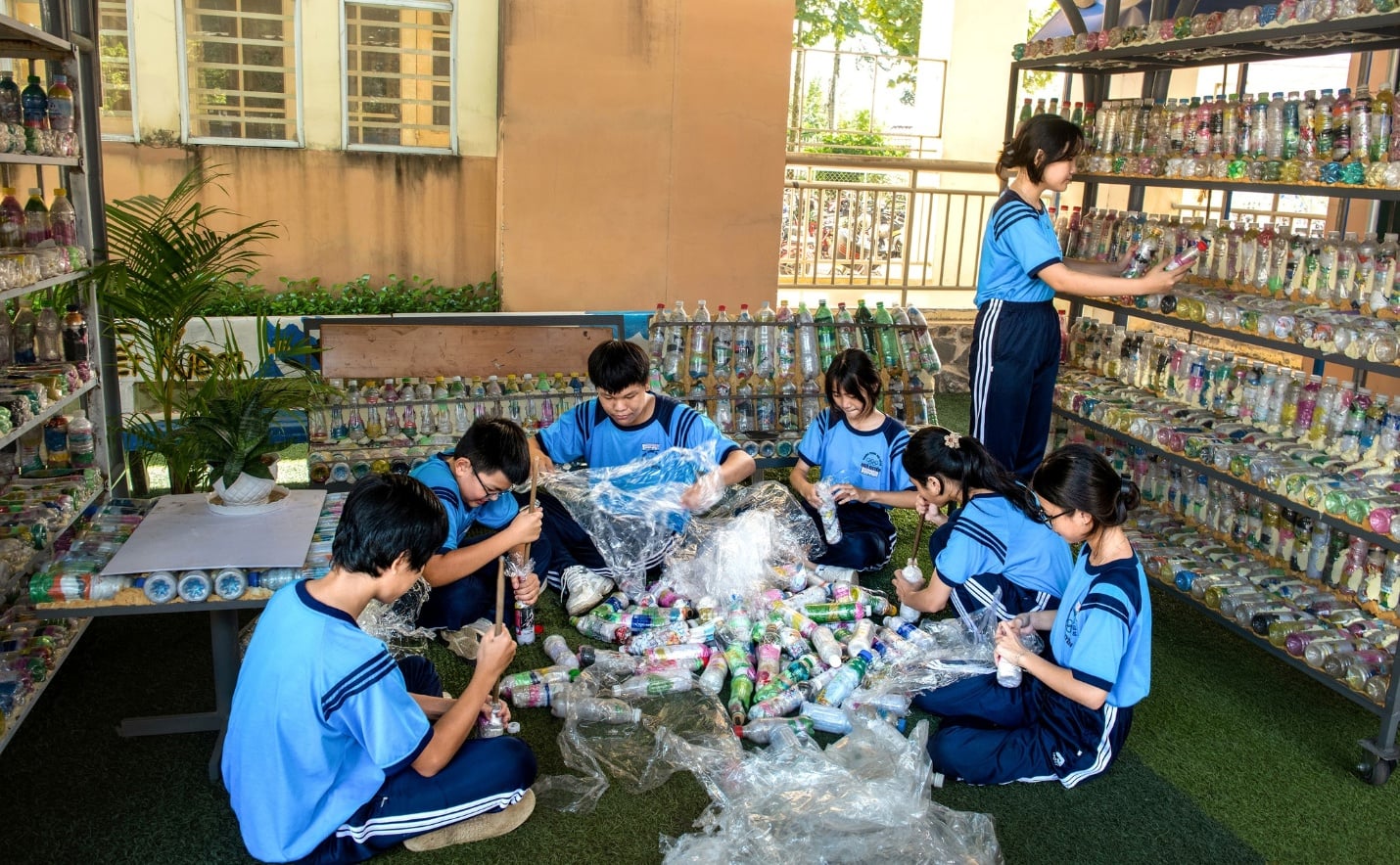 |
| Eco-friendly bricks made from plastic waste. Author: Nguyen Van Dung |
According to observations during field surveys by experts from the project "Integrating Climate Change Resilience and Environmental Protection for the Development of Green Cities," led by the Department of Environment, Ministry of Agriculture and Environment, plastic recycling is quite widespread in many localities such as Nghe An, Hung Yen, and Ho Chi Minh City. Collection and recycling facilities produce many items from waste plastic, such as bottles, pallets, cladding panels, plant pots, and agricultural supplies. These products are also increasingly appearing in local markets.
However, the survey team noted a common situation where recycled products and products made from virgin plastic are sold mixed together, with almost no distinguishing features. Some small traders shared that they find it difficult to differentiate products if manufacturers do not clearly state their origin. In Hung Yen , buyers also expressed concerns about the safety of recycled products due to the lack of information on the packaging. Meanwhile, in Ho Chi Minh City, the acceptance of recycled products is higher, especially in places where sellers can explain the production process or the source of raw materials.
These observations suggest that the market for recycled plastic products is emerging but lacks a fundamental element: information transparency, which directly impacts consumer trust and purchasing decisions.
The biggest barrier: lack of identification standards.
According to the project's research team, the core challenge lies not only in technology or production capacity, but also in the lack of standardized identification and information disclosure. Without mandatory labels or guidelines, businesses find it difficult to demonstrate product quality, and consumers lack a basis for evaluation.
The practice of equalizing prices between products made from virgin and recycled plastic makes it difficult for legitimate, clean businesses to compete. Meanwhile, many companies mix recycled and virgin products without disclosing this, leading to a risk of losing consumer trust.
A system of standards is needed to build trust.
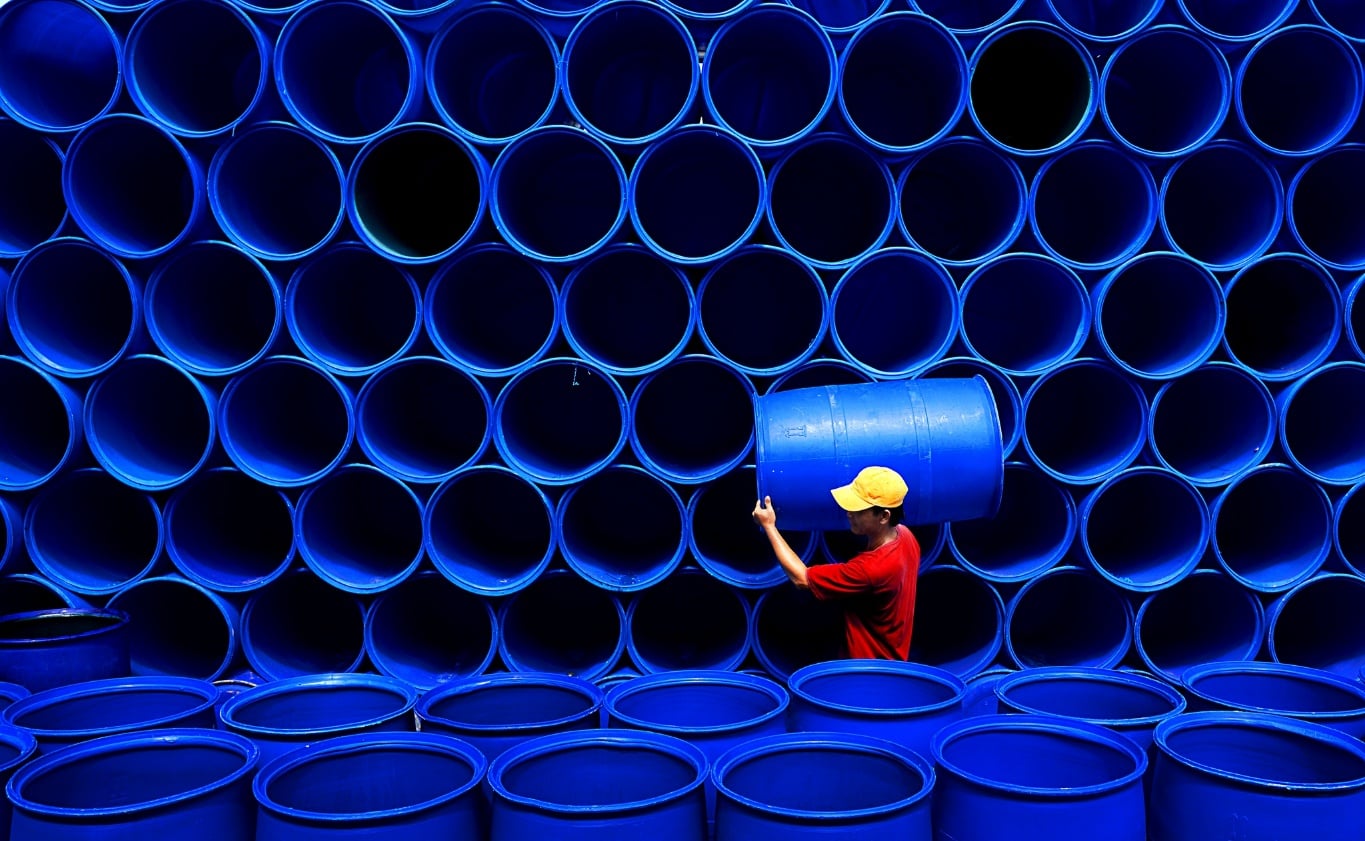 |
| Recycled composite plastic containers. Author: Nguyen Xuan Han |
Project experts believe that the market can only develop sustainably if there is a clear system of standards for recycled plastic products. Issuing identification standards, such as "recycled" labels, information about the type of recycled plastic, and the technology used, will help people easily identify and make the right choices.
Simultaneously, community communication needs to be strengthened so that people understand that choosing recycled plastic products not only helps reduce microplastic pollution but also contributes to reducing greenhouse gas emissions. A change in consumer behavior will be a crucial driving force for market growth.
Plastic recycling: an environmental solution and an economic opportunity.
In the context of Vietnam's move towards a circular economy and green urban development goals, recycled plastic products offer a dual benefit: reducing accumulated waste and opening up a new economic sector based on resource reuse. Experts believe that as the market becomes more transparent, businesses will be more confident in investing in technology, improving quality, and expanding scale, thereby creating a sustainable value chain for recycled materials.
A survey by the project "Integrating Climate Change Resilience and Environmental Protection for the Development of Green Cities" shows that the market potential is real. What is needed now is a policy framework, from technical standards and identification labels to mechanisms to encourage green consumption, so that recycled plastic products not only appear quietly but become a common choice in urban life.
Source: https://huengaynay.vn/kinh-te/nhua-tai-che-tiem-nang-lon-nhung-can-thi-truong-minh-bach-160794.html



























![[Video] The craft of making Dong Ho folk paintings has been inscribed by UNESCO on the List of Crafts in Need of Urgent Safeguarding.](https://vphoto.vietnam.vn/thumb/402x226/vietnam/resource/IMAGE/2025/12/10/1765350246533_tranh-dong-ho-734-jpg.webp)




















































Comment (0)