

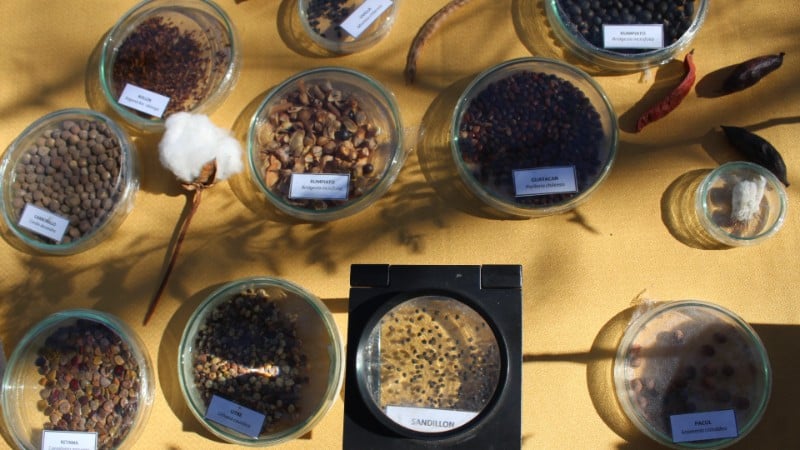
Chile is known worldwide as a vital center of biodiversity due to its large number of endemic species and significant genetic diversity within those species. Of the 4,655 native plant species recorded there, nearly 46% exist only within the country's territory, making Chile a key source of plant genetic resources.
In this context, INIA's Intihuasi Seed Bank in the Coquimbo region aims to preserve Chile's biodiversity and agricultural heritage from natural disasters or the impacts of climate change.
This center is maintaining backup copies of nationally protected seeds, with the capacity to preserve up to 75,000 samples at -18°C and 15% humidity.
Dr. Britt Wallberg, PhD in Applied Biology and Ecology, who heads the Seed Bank, explains the importance of these centers. “Seed banks are essential because they act as an insurance mechanism for each country’s plant genetic resources. For example, in Chile, the same bean variety will grow differently in the Atacama region than in the O’Higgins region.”
Among the plant species stored in this "shelter"—also known as "Chile's Noah's Ark"—are cereals, fodder crops, fruit trees, tubers, vegetables, legumes, medicinal plants, oilseed crops, and many endemic plant species.
Chile's contribution to the global seed bank.
This initiative not only protects genetic resources for use within its territory, but INIA also contributes to the Svalbard Global Seed Bank in Norway, which stores part of the Institute's wheat collection – approximately 100 varieties developed by the Institute – and corn samples.
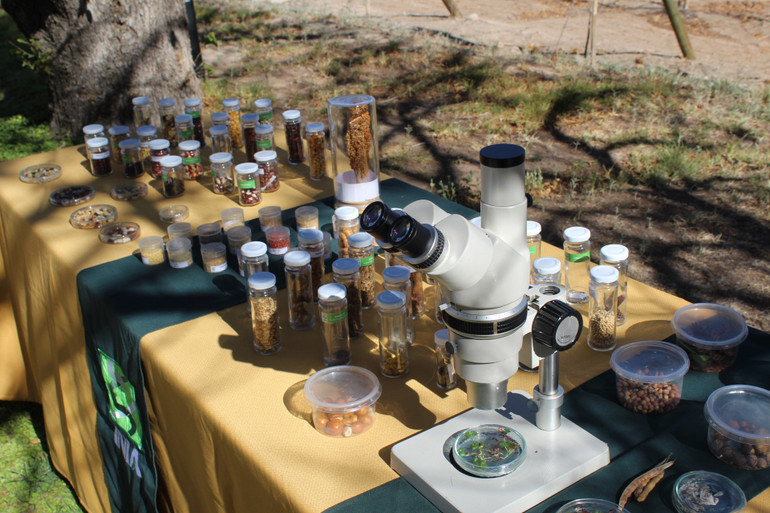
This storage is based on a "Black Box Agreement," under which seeds are under the exclusive control of the state and serve as a reserve in case of natural disasters or emergencies, ensuring the ability to restore crops if losses occur.
Therefore, INIA's Country Director, Carlos Furche, emphasized that Chile's persistent efforts have helped it become one of the leading countries in Latin America in this field.
“We are undertaking a core mission, carried out in a technically sound manner, with all the necessary resources. At the same time, we also possess a strong international cooperation network, facilitating the effective exchange and adoption of experience between Chile and our partners,” said Carlos Furche, Country Director of INIA.
Through these initiatives, INIA aims to strengthen the conservation of the country's agricultural biodiversity. This year, the agency plans to inaugurate a national network of genetic resource banks – the first in Chile – and, in the long term, to establish one in the Magallanes region.
Source: https://nhandan.vn/noi-bao-ton-hat-giong-truc-bien-doi-khi-hau-va-tham-hoa-tiem-tang-post929581.html


![[Image] Close-up of the newly discovered "sacred road" at My Son Sanctuary](/_next/image?url=https%3A%2F%2Fvphoto.vietnam.vn%2Fthumb%2F1200x675%2Fvietnam%2Fresource%2FIMAGE%2F2025%2F12%2F13%2F1765587881240_ndo_br_ms5-jpg.webp&w=3840&q=75)












![[Image] Close-up of the newly discovered "sacred road" at My Son Sanctuary](https://vphoto.vietnam.vn/thumb/402x226/vietnam/resource/IMAGE/2025/12/13/1765587881240_ndo_br_ms5-jpg.webp)
















































Comment (0)