

According to data released Wednesday by a real estate consultancy, Dubai's home prices have surged 225% since hitting their pandemic-induced lows in the third quarter of 2020. The emirate has held the top spot in the rankings for the eighth consecutive quarter.
Tokyo ranked second and third with annual growth of 26.2%, and Manila with 19.9%. Other notable increases were seen in Shanghai, China, with a 6.7% increase, and Singapore, with a 4.2% increase.
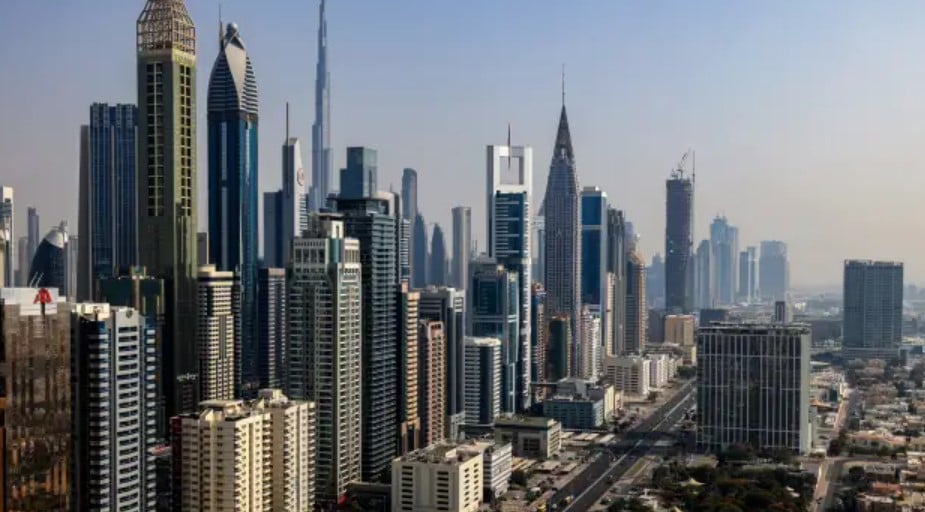
While luxury home prices in Dubai have risen by nearly 50%, this segment in Hanoi and Ho Chi Minh City is not included in the ranking. Photo: Getty Images
Ho Chi Minh City and Hanoi are not on the list.
The report noted: “The influx of foreigners into Singapore, driven by the booming financial and professional services sector, has impacted the rental market more than the sales market,” adding that the difference is partly due to taxes on home purchases by foreign buyers. Since the end of April, foreigners buying property in Singapore have had to pay an additional 60% stamp duty, double the previous 30%.
Hong Kong's housing prices have fallen 1.5% over the past year due to a surge in unsold inventory from newly developed projects. In an effort to stimulate demand, the Hong Kong government has raised the mortgage-to-value ratio to 70% for residential properties valued at HK$15 million (US$1.9 million) or less.
However, Knight Frank analysts said that while this change might be welcomed by buyers, it remains uncertain whether the move will "significantly boost" growth.
Other declines included New York, down 3.9%, and San Francisco, which recorded an 11.1% drop. Frankfurt, Germany, topped the list with a 15.1% decline. Overall, average annual prices increased by 1.5% across the 46 markets in the Knight Frank Prime Global Cities Index.
Liam Bailey, Global Research Director at Knight Frank, said: “The global housing market remains under pressure from the shift toward higher interest rates.”
However, he noted that the index's results confirm that prices are supported by strong underlying demand, weak supply following the disruption of new construction projects during the pandemic, and the return of workers to cities.
Bailey added: “Because uncertainty about the direction of inflation appears to have decreased in recent months, price adjustments in many markets may be less pronounced than would have been expected even three months ago.”
Source



























![[Video] The craft of making Dong Ho folk paintings has been inscribed by UNESCO on the List of Crafts in Need of Urgent Safeguarding.](https://vphoto.vietnam.vn/thumb/402x226/vietnam/resource/IMAGE/2025/12/10/1765350246533_tranh-dong-ho-734-jpg.webp)



































































Comment (0)