


It turns out that humans created and maintained fire 350,000 years earlier than previously understood - Photo: FREEPIK
According to Scientific American , archaeologists have found in Barnham (Suffolk, England) a layer of red-hot earth forming a hearth, two stone axes cracked by high temperatures, and, notably, two fragments of pyrite. This type of rock can produce sparks when struck against flint, and was commonly used to start fires in prehistoric times.
These traces suggest that the people living at Barnham, most likely Neanderthals, knew how to make fire at will.
The discovery, published in the journal Nature , was led by Nick Ashton, a Paleolithic expert at the British Museum. He stated that this is the earliest evidence of fire-making skills ever found in the world .
The ability to actively create and maintain fire was a turning point that helped ancient humans adapt better to their environment. Fire provided warmth, protection from predators, and aided in cooking food, thereby increasing its nutritional value and improving health.
Mastering fire also opened up opportunities for the development of early technologies such as glue making and facilitated social interaction, shaping a culture around the hearth.
Prior to these discoveries, the clearest evidence of fire-making skills had been found at a single site in northern France, less than 350,000 years old than Barnham. Ashton argues that humans certainly knew how to use fire even earlier, but Barnham is the most direct and strongest evidence to date.

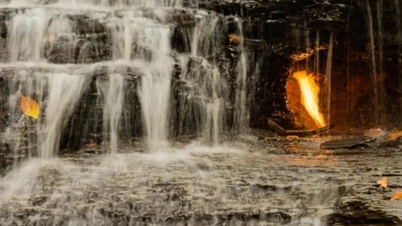
Archaeological sites in eastern England have revealed the oldest evidence yet of humans' ability to create and control fire, marking a significant turning point in evolutionary history. - Photo: Jordan Mansfield
Determining whether a fire was created by humans has always been a major challenge for archaeology. Ash is easily blown away by the wind, calcined sediments can erode, and it is not always possible to distinguish natural fires from man-made fires.
At Barnham, scientists analyzed the reddened soil and found evidence of high-temperature, concentrated wood burning, unlike the characteristics of natural fires. Mineral alterations in the sediments suggest the area was once burned multiple times, a key indicator of human activity.
More importantly, pyrite does not occur naturally in the Barnham area. This means that ancient inhabitants must have collected the mineral from elsewhere and brought it back to use for creating sparks. This is indirect but strong evidence of their understanding and intention in mastering fire.
Although no human bones have been found at this site, the presence of Paleolithic stone axes and traces of habitation helps to identify the owner of the ancient hearth.
Chris Stringer, a human evolution expert at the Natural History Museum in London, said that Neanderthals lived in the Kent area, about 130km from Barnham, during the same period. When sea levels were low, Britain and Europe were connected by a strip of land, allowing groups of people to move back and forth.
Stringer expects that the analytical methods applied at Barnham will help uncover more sites in England and Europe that also show signs of ancient fires, thereby shedding light on the process by which humans conquered one of the most important turning points in civilization.
Source: https://tuoitre.vn/phat-hien-he-lo-con-nguoi-da-biet-tao-lua-tu-400-000-nam-truoc-20251211224516378.htm
























![[Photo] Prime Minister Pham Minh Chinh holds a phone call with the CEO of Russia's Rosatom Corporation.](/_next/image?url=https%3A%2F%2Fvphoto.vietnam.vn%2Fthumb%2F1200x675%2Fvietnam%2Fresource%2FIMAGE%2F2025%2F12%2F11%2F1765464552365_dsc-5295-jpg.webp&w=3840&q=75)















































Comment (0)