

With 11 key technology groups outlined in Decision 1131/QD-TTg, Vietnam aims to participate more deeply in the global technology value chain and build long-term technological self-reliance. However, the actual implementation progress reveals an uneven development picture, reflecting structural limitations that need to be identified and addressed.
Emerging fields and untapped opportunities
Among strategic technology sectors, AI is the fastest-growing area. According to the latest survey data from AWS and Strand Partners (September 2025), approximately 18% of Vietnamese businesses (equivalent to nearly 170,000 businesses) have already adopted AI, and in 2024, an additional 47,000 businesses are expected to start adopting AI. This means that, on average, five businesses are accessing this technology every hour.
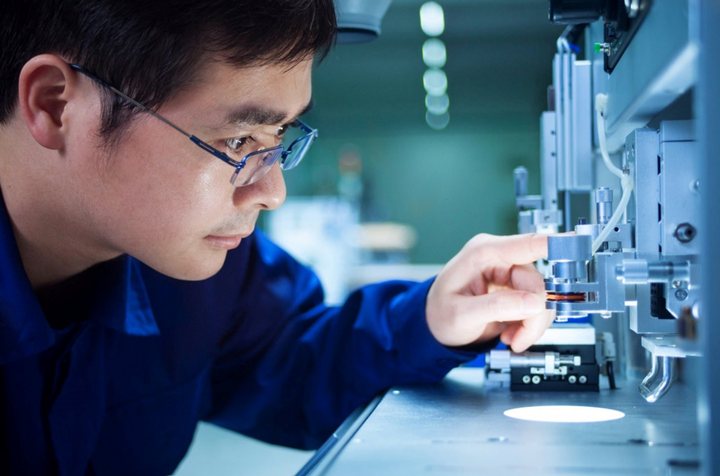
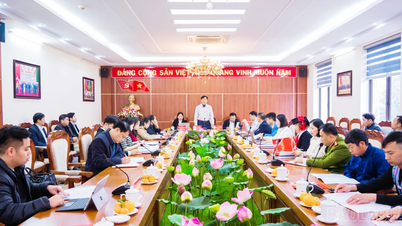
Decision No. 1131/QD-TTg clearly outlines 11 strategic technology groups with 32 strategic technology product groups. (Illustrative image).
The expansion of global technology corporations, particularly NVIDIA, and large-scale recruitment in Vietnam further reinforces Vietnam's role as an emerging AI hub in the region. Simultaneously, the domestic private sector is also investing heavily.
FPT has invested tens of millions of USD in high-performance computing infrastructure, which is currently ranked among the Top 500 most powerful computing infrastructures in the world. This not only helps the AI models developed by FPT excel in speed and training capabilities, but also puts Vietnam on the world map in terms of computing infrastructure.
In the semiconductor sector, Vietnam is making positive progress in the design segment. Vietnam currently has 7,000 integrated circuit design engineers, 6,000 engineers, and 10,000 technicians involved in packaging, testing, and manufacturing equipment.
Simultaneously, the interest of large corporations has further enhanced the industry's prospects. Many large corporations, such as Qualcomm, have expanded their R&D centers and are working closely with universities to train chip design engineers. The emergence of these training programs also demonstrates a significant shift in the education system to meet strategic workforce needs.
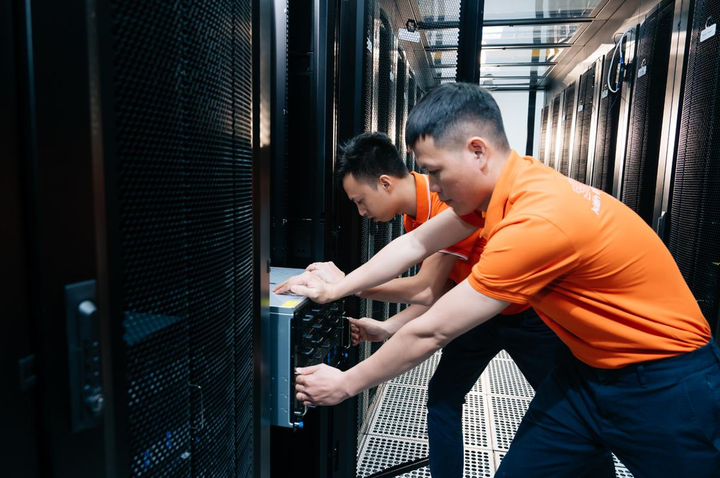
The establishment of FPT AI Factory lays the foundation for promoting sovereign AI in Vietnam (Illustrative image).
However, not all areas within the strategic technology portfolio are developing at a similar pace. Technologies such as robotics and automation, advanced materials and energy, modern biomedical technology, or quantum computing are generally still in the testing, prototype production, or early development stages.
Large capital requirements, complex supply chains, and a shortage of specialized personnel have prevented these ecosystems from fully taking shape. Some emerging application technologies, such as UAVs/drones, also show significant potential, having appeared in agriculture, urban surveillance, and logistics. However, the market remains fragmented, small in scale, and lacks testing corridors, leading to limited commercialization rates.
The biggest "bottlenecks" on the strategic technology deployment journey.
The first and most fundamental limitation is the capacity to master core technologies. According to Mr. Hoang Anh Tu, Deputy Director of the Department of Science, Technology and Engineering, Vietnam "has not yet mastered core and strategic technologies." Without mastering core technologies, competitiveness is limited to integration rather than innovation, and value added primarily relies on imports.
The institutional system and financial mechanisms have not yet created sufficient impetus for breakthrough technologies. A report from the Ministry of Justice indicates that the procedures for registering science and technology tasks, allocating funds, and disbursing funds are still complex and lengthy, making it difficult to implement large-scale R&D projects. The technology ordering mechanism has not yet demonstrated a leading role in the market, and science and technology funds operate according to an administrative model, with little acceptance of risk – which contradicts the inherently "risky" nature of strategic sectors.
Human resources continue to be a systemic barrier. Experts at the scientific seminar "Training High-Quality Human Resources in Digital Technology and Artificial Intelligence in Vietnam - Current Situation and Solutions" noted that current training programs have not kept pace with the demands of the AI and digital technology industry, and there is a lack of public-private partnership models for businesses to participate in building and updating training programs, leading to a gap between training and labor market needs.
Data infrastructure, standards, and technological platforms also create barriers. According to UNDP expert Do Thanh Huyen, Vietnam still lacks a sufficiently large and standardized Vietnamese data repository to train large-scale AI models. When data is fragmented, sharing is limited, and common standards are lacking, many fields such as AI and autonomous robots face difficulties in practical implementation.
Ultimately, the science and technology market and intermediary organizations have yet to create an environment conducive to the dissemination of R&D results. A report from the Ministry of Justice indicates that technology exchanges are not operating effectively; businesses have difficulty accessing information and technological solutions; while the R&D capacity of businesses is generally weak. Many localities have also reported similar situations, demonstrating a lack of synchronization within the innovation ecosystem.
Overall, the deployment of strategic technologies requires strong government involvement and the leading role of major Vietnamese technology companies – those with the practical implementation capacity and the ability to make long-term investments in AI, semiconductors, data, UAVs, robotics, advanced biotechnology, materials, and new technologies. Removing bottlenecks could pave the way for Vietnam to break through, develop strategic technology products, accelerate national competitiveness, and move up the global technology value chain.
Source: https://vtcnews.vn/diem-nghen-tren-hanh-trinh-hien-thuc-hoa-cong-nghe-chien-luoc-sau-quyet-dinh-1131-ar992646.html








































































Comment (0)