

Aquaculture plays a particularly important role in the development of the marine economy , aiming to make Vietnam a strong maritime nation. However, the development of Vietnam's aquaculture industry needs to focus on reducing emissions and promoting green growth, in line with Vietnam's commitments to the international community.
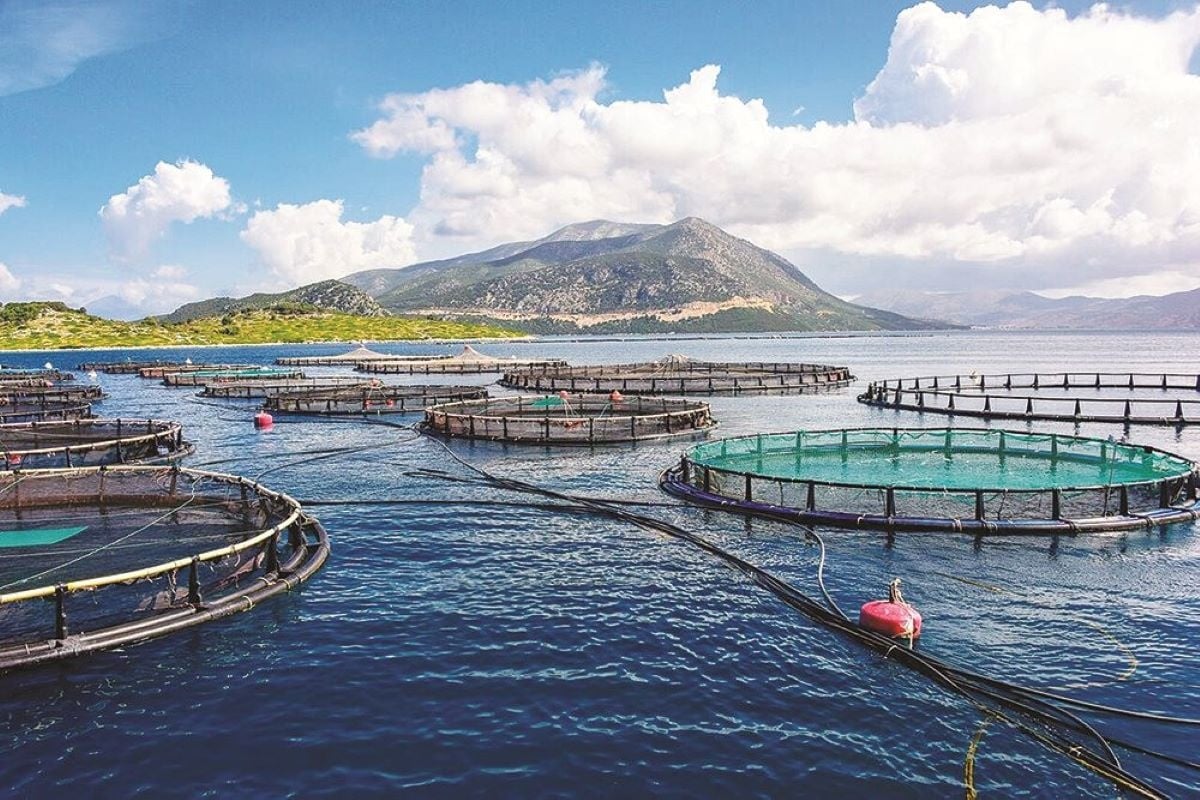 |
| Vietnam has many advantages for developing the aquaculture industry. |
Aquaculture must be linked to environmental protection.
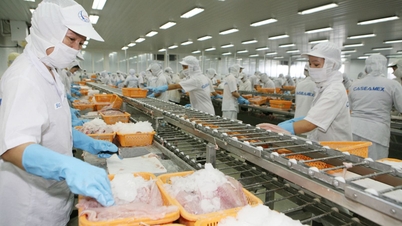
Over the past period, the Government and the Ministry of Agriculture and Rural Development have issued a number of policies and programs to encourage and promote marine aquaculture. As a result, the marine aquaculture industry has begun to take shape in Vietnam, including infrastructure for seed production areas, concentrated farming areas, supporting industries, processing industries, and the development of consumer markets.
From a local perspective, Mr. Nguyen Minh Son, Director of the Department of Agriculture and Rural Development of Quang Ninh province, stated that Quang Ninh possesses many inherent strengths for developing the marine economy and fisheries, with over 2,000 large and small islands, a 250 km long coastline stretching from Mong Cai to Quang Yen, 40,000 hectares of tidal flats, and over 20,000 hectares of bays and inlets. To date, Quang Ninh's marine aquaculture industry has achieved certain results. In 2023, the total aquaculture area reached 42,292 hectares; of which: inland aquaculture reached 32,092 hectares, and marine aquaculture reached 10,200 hectares.
According to Mr. Nguyen Minh Son, the province's highest goal is to sustainably develop the marine aquaculture industry, attract investment, and create new products for marine tourism, utilizing the abundant resources the province possesses. Quang Ninh has identified its advantages in developing the marine aquaculture industry, with the aim of avoiding conflicts with the tourism industry and instead creating added value; using environmentally friendly materials and applying higher standards for marine aquaculture operations. Quang Ninh has planned aquaculture activities down to the village level. "All marine farming households are reviewed. From there, households planning to switch professions can be allocated sea areas to transition from fishing to aquaculture," Mr. Nguyen Minh Son shared.
Mr. Tran Dinh Luan, Director of the Fisheries Department (Ministry of Agriculture and Rural Development), stated that aquaculture plays a particularly important role in the development of the marine economy, aiming to make Vietnam a strong maritime nation, prosperous from the sea in the century of the sea and ocean. "Vietnam has the potential and advantages for developing aquaculture. However, to achieve greater success and create a thriving ecosystem, we still face many challenges that need to be overcome, especially in technology and policy mechanisms regarding the granting of sea surface permits."
No locality has yet been allocated sea areas.
Vietnam is bordered by the sea on three sides, endowed with many natural advantages for developing its marine economy. However, the development of aquaculture in our country still faces many limitations due to a lack of policy mechanisms, science and technology; issues such as production linkages, investment resources, and the granting of aquaculture zone codes to support sustainable aquaculture development have not been thoroughly resolved.
Sharing his views on this issue, Mr. Nguyen Huu Dung, Chairman of the Vietnam Aquaculture Association, said that one of the main difficulties facing aquaculture businesses is that, to date, no locality has assigned sea areas to businesses and fishermen for management. "This is a major obstacle, making it difficult for businesses to invest in this sector due to licensing and legal issues. Many businesses have faced difficulties for many years," Mr. Dung shared.
Furthermore, the supply of skilled human resources for the aquaculture industry is limited due to the lack of specialized training programs in aquaculture. The Ministry of Agriculture and Rural Development also lacks a program to promote high-tech aquaculture practices among coastal communities. The absence of regulations and standards for aquaculture has resulted in a lack of registered aquaculture farms. On the other hand, the high risks involved in aquaculture, coupled with the current lack of insurance coverage, deter many businesses from pursuing sustainable aquaculture. This reality demonstrates that attracting investment to the aquaculture industry faces numerous challenges, requiring close coordination among ministries and agencies, as well as flexible and effective policy solutions from local authorities.
According to Mr. Tran Dinh Luan, the biggest bottleneck in the marine aquaculture industry is scaling up the production of broodstock into an industrial scale. Therefore, it is necessary to combine research and development of broodstock on a larger scale with the participation of research institutions and universities. In addition, cooperation is needed to research environmentally friendly materials with low emissions, ensuring the lowest feed conversion ratio and minimizing environmental waste, as well as integrating various components into the cyclical nutrition system. Mr. Luan believes that the development space for aquaculture should not be limited by existing plans but should transcend boundaries and integrate with other economic sectors such as tourism.
Nguyen Huu Dung, Chairman of the Vietnam Aquaculture Association, shared that in Norway, businesses have to bid for aquaculture areas and even have to use the sea as collateral for aquaculture. Therefore, perhaps Vietnam needs to consider the suitability of this approach, thereby creating a favorable environment for the development of the aquaculture industry.
Regarding insurance policies for the aquaculture industry, Mr. Tran Dinh Luan stated that Vietnam currently has a pilot program for shrimp and catfish insurance. In the long term, this will serve as a foundation for the Ministry of Agriculture and Rural Development and other relevant ministries and agencies to create conditions for aquaculture businesses to register for suitable insurance packages.
Source link


![[Photo] Prime Minister Pham Minh Chinh attends the Conference summarizing and implementing tasks of the judicial sector.](/_next/image?url=https%3A%2F%2Fvphoto.vietnam.vn%2Fthumb%2F1200x675%2Fvietnam%2Fresource%2FIMAGE%2F2025%2F12%2F13%2F1765616082148_dsc-5565-jpg.webp&w=3840&q=75)









![Looking back at the peak month of combating IUU: [Part 3] Synchronizing fisheries infrastructure](https://vphoto.vietnam.vn/thumb/402x226/vietnam/resource/IMAGE/2025/12/13/1765608279533_2109-b32-133759_237.jpeg)


































































Comment (0)