

 |
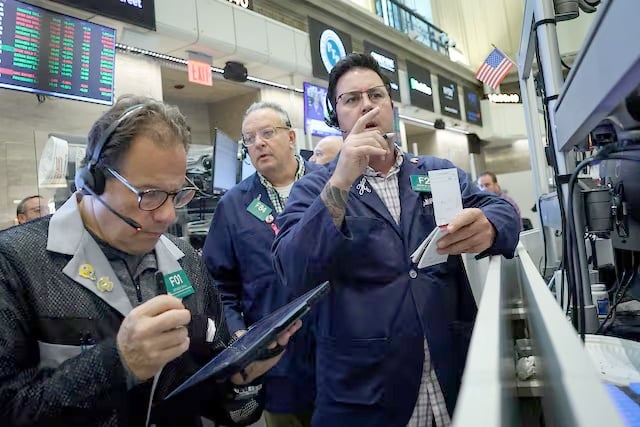
| Optimism about monetary policy pushes US stocks up, Boeing and technology groups become the focus |
At the end of the session, Dow Jones increased 185.13 points (+0.39%) to 47,474.46 points; S&P 500 increased 16.74 points (+0.25%) to 6,829.37 points; and Nasdaq Composite led the way with an increase of 137.75 points (+0.59%), closing at 23,413.67 points. The main driving force of the market came from the recovery of the technology group and especially the strong breakthrough of Boeing, which was the factor that pushed Dow Jones to increase the most in the session.
The most notable highlight was Boeing (BA), which rose 10.1%, contributing about 117 points to the Dow. The increase stemmed from the company's optimistic forecast that deliveries of its 737 and 787 aircraft next year will increase significantly. This positive outlook helped Boeing not only lead the Dow but also push the S&P 500 industrials up 0.9%, becoming the strongest performing sector among the 11 major sectors.
This development opens up opportunities for cyclical industrial stocks, which benefit from expectations of economic growth as the Fed loosens policy.
Technology stocks continued to be a key support. Large caps such as Apple, Nvidia and Microsoft all rose about 1%, while Intel surged, helping to bolster the Nasdaq. The gains in megacaps reflect expectations that lower interest rates will reduce the cost of capital, supporting valuations of high-growth companies.
Previously, the market was under pressure when US government bond yields soared due to the impact of the sharp increase in Japanese bond yields, along with the decline of bitcoin and related stocks. However, in the session on December 3, bond yields cooled down and bitcoin recovered, helping to stabilize market sentiment.
According to the CME FedWatch Tool, the probability of the Fed cutting by 25 basis points at its December meeting has increased to 89.2%, compared to 63% a month ago, showing that market expectations are very high.
Still, analysts say caution is needed. Recent data show the US economy is cooling, but inflation is still at risk of returning. The release of the Personal Consumption Expenditures (PCE) Index, the Fed's preferred inflation measure, later this week will play a key role in determining the policy stance.
In addition, the market is also paying attention to who will succeed Fed Chairman Jerome Powell when his term ends next year, with White House economic adviser Kevin Hassett seen as the leading candidate.
On the downside, Procter & Gamble lost 1.1% due to the impact of the US government shutdown, while Warner Bros Discovery gained 2.8% after receiving a second round of bids, including one from Netflix.
Cryptocurrency-related stocks also rallied as bitcoin prices rebounded. MicroStrategy rose 5.8% while Coinbase gained 1.3%.
Total market liquidity reached 15.35 billion shares, lower than the 20-day average of 18.42 billion, reflecting investor caution ahead of the Fed's policy decision.
From the developments of the December 3 session, analysts said that investors can consider opportunities in the following groups of stocks: Cyclical industrial stocks such as Boeing, which benefit strongly from expectations of the Fed lowering interest rates; High-growth technology stocks, which directly benefit from lower capital costs; Defensive groups such as consumer staples or services, in case the market shifts to a state of seeking safety.
However, the market remains sensitive to signals from the Fed and important economic data. Therefore, a strategy of closely observing signals of inflation and monetary policy will play a key role for investors during this period.
Source: https://thoibaonganhang.vn/pho-wall-tang-diem-manh-nho-ky-vong-fed-ha-lai-suat-174559.html
![[Photo] Parade to celebrate the 50th anniversary of Laos' National Day](/_next/image?url=https%3A%2F%2Fvphoto.vietnam.vn%2Fthumb%2F1200x675%2Fvietnam%2Fresource%2FIMAGE%2F2025%2F12%2F02%2F1764691918289_ndo_br_0-jpg.webp&w=3840&q=75)




![[Photo] Worshiping the Tuyet Son statue - a nearly 400-year-old treasure at Keo Pagoda](/_next/image?url=https%3A%2F%2Fvphoto.vietnam.vn%2Fthumb%2F1200x675%2Fvietnam%2Fresource%2FIMAGE%2F2025%2F12%2F02%2F1764679323086_ndo_br_tempimageomw0hi-4884-jpg.webp&w=3840&q=75)




























![[Video] Protecting World Heritage from Extreme Climate Change](https://vphoto.vietnam.vn/thumb/402x226/vietnam/resource/IMAGE/2025/12/03/1764721929017_dung00-57-35-42982still012-jpg.webp)
































































Comment (0)