


Developing a comprehensive solution to protect workers' rights when amending the Social Insurance Law. Photo: Tay Son
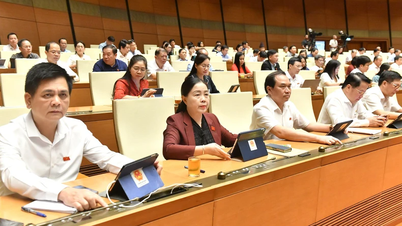
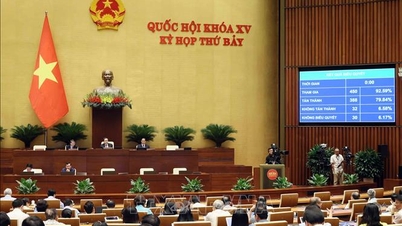
Continuing the agenda of the 7th Session of the 15th National Assembly, on the morning of May 27th, the National Assembly will discuss in the plenary hall several contentious issues in the draft Law on Social Insurance (amended). Before the discussion, Ms. Nguyen Thuy Anh, Member of the Standing Committee of the National Assembly and Chairwoman of the National Assembly's Social Affairs Committee, will present the Report explaining, receiving feedback, and revising the draft Law on Social Insurance (amended). After the National Assembly's discussion, the presenting agency and the agency in charge of verification will coordinate to explain and clarify some issues raised by National Assembly deputies. One of the issues of great public concern remains the most reasonable design for the lump-sum withdrawal of social insurance benefits. Since the draft Law on Social Insurance (amended) was first released for public comment, this has been a matter that has received many contributions from both experts and workers. The draft revised Social Insurance Law proposes two options for withdrawing social insurance contributions in a lump sum: Option 1 allows employees who have been unemployed for 12 months to withdraw their social insurance contributions in a lump sum. Option 2 limits employees to withdrawing no more than 50% of the total time they have contributed to the retirement and death benefit fund. In its submission to the National Assembly, the Government stated that in the 7 years since the implementation of the 2014 Social Insurance Law, over 476,000 people who received lump-sum social insurance benefits had participated in social insurance for more than 10 years and were 40 years old or older. In addition, over 53,000 people who had reached retirement age had to receive lump-sum benefits because they had not yet completed the 20 years of mandatory social insurance contributions; and over 20,000 people who, upon reaching retirement age, had not yet completed the required contribution period had to make a lump-sum payment for the remaining period to receive a pension. If the minimum contribution period remains at 20 years, these individuals will have little chance of receiving a pension. Therefore, reducing the minimum contribution period to 15 years will create opportunities for those who join late (starting at 45-47 years old) or those who have intermittent contributions, resulting in not having accumulated 20 years of social insurance contributions by retirement age, to receive a monthly pension instead of a lump-sum payment. With the above regulation, the pension of these individuals may be lower than those with longer contribution periods if the salary used as the basis for mandatory social insurance contributions or the income used as the basis for voluntary social insurance contributions is the same. However, these individuals, who previously did not qualify for a pension and received a lump-sum payment (if they did not choose to voluntarily contribute for the remaining period), will now have the opportunity to receive a monthly pension. Thus, even though the pension may be more modest than those with longer contribution periods, the stable monthly pension, periodically adjusted by the State, and health insurance benefits will ensure a better life for workers in retirement.Laodong.vn
Source: https://laodong.vn/thoi-su/quoc-hoi-thao-luan-phuong-an-rut-bhxh-mot-lan-thoi-gian-dong-bao-hiem-1345071.ldo


![[Image] Close-up of the newly discovered "sacred road" at My Son Sanctuary](/_next/image?url=https%3A%2F%2Fvphoto.vietnam.vn%2Fthumb%2F1200x675%2Fvietnam%2Fresource%2FIMAGE%2F2025%2F12%2F13%2F1765587881240_ndo_br_ms5-jpg.webp&w=3840&q=75)















































































Comment (0)