

 |
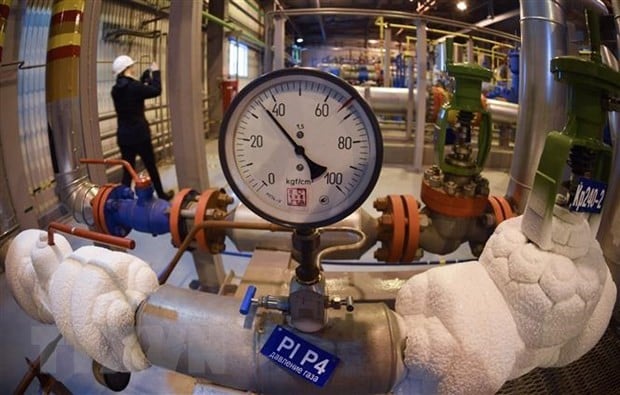
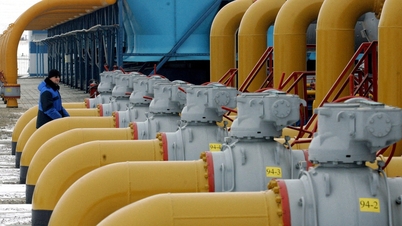
| Inside the Bovanenkovo gas supply facility on the Yamal Peninsula, Russia. (Source: AFP) |
Last winter passed without a serious gas shortage thanks to the timely and urgent actions of European Union (EU) members. However, in a recent article on The Conversation , Professor Michael Bradshaw, a global energy professor at Warwick Business School, University of Warwick, UK, warned that the gas supply problem is far from solved in future winters.
Russia's special military operation in Ukraine (starting in February 2022) caused an unexpected energy shock for Europe. Facing the prospect of a severe shortage of Russian gas, there are concerns that Europe's energy infrastructure will be unable to meet demand for the winter of 2022-2023, potentially leading to economic collapse.
However, a mild winter and the gradual implementation of the EU's plan to reduce energy consumption and buy more from alternative suppliers have kept the region from being defeated in the energy shortage, despite some supply difficulties.
Germany, Italy and other countries have weaned themselves off Russian gas without suffering serious power shortages.
Since then, there has been more positive news for Europe. Energy prices have fallen steadily in 2023, while the continent's gas reserves reached 90% of capacity three months ahead of the target (November) and could even reach 100% this September.
Politicians like German Energy Minister Robert Habeck say the worst of the energy crisis is over. But, as we shall see, it is still a bit early to be so confident.
New vulnerability
The share of EU pipeline gas imports from Russia has fallen from 39% to just 17% between early 2022 and early 2023. In response to this shift, the EU has become more reliant on liquefied natural gas (LNG) shipments than before.
The EU's total share of LNG imports increased from 19% in 2021 to around 39% in 2022, amid rapid infrastructure upgrades aimed at increasing LNG capacity by a third between 2021 and 2024. The fact remains that 13% of EU LNG imports still come from Russia, a country whose exports have also increased significantly since the outbreak of the conflict in Ukraine.
This surge in LNG has left European countries vulnerable to market fluctuations – especially as 70% of imports are bought on a short-term basis rather than using the long-term contracts common in Asia.
For example, European benchmark gas prices have risen in recent weeks amid concerns about strikes at some Australian LNG plants, suggesting that supplies remain tight and more likely to be disrupted in today’s highly interconnected global market.
To synchronize LNG demand, the European Commission (EC) has launched initiatives such as the EU Energy Platform – an IT platform that makes it easier for suppliers in member states to purchase fuel together. However, it is unclear what level of supply can be channeled through this tool as it has yet to be tested. Furthermore, concerns have arisen that this type of state intervention could backfire and undermine market functioning.
In terms of pipeline gas, Norway has overtaken Russia to become Europe’s top supplier, meeting 46% of the continent’s needs by early 2023 (up from 38% a year earlier). However, this additional load has put a strain on Norway’s gas infrastructure.
In May and June, delayed pipeline maintenance slowed flows, driving prices higher. This once again illustrates just how tight the European market currently is. The prolonged maintenance in Norway is clearly likely to lead to further disruptions in the future.
Meanwhile, the EU is still expected to purchase around 22 bcm (billion cubic meters) of natural gas from Russia this year. A large portion of this gas passes through Ukraine, and given that the current Russia-Ukraine transit agreement is unlikely to be renewed after its expiration in 2024, this supply route is at risk of disruption.
As part of its pivot away from Russia, the EU has managed to reduce its gas consumption by 13% by 2022 (against a target of 15%), according to the International Energy Agency (IEA). Conflict-weary EU states may not fare well on this front in the coming months.
The fact that prices have fallen, and that some countries did not reduce consumption last winter, has been of little help. Only 14 of the 27 EU members have implemented mandatory energy cuts, while Eastern countries like Poland, Romania, and Bulgaria have done little to reduce consumption. A gas shortage across Europe this winter could undermine calls for solidarity within the bloc.
What will happen?
The reality is that if Europe is to avoid a spike in gas prices, for at least two or three more winters it will have to hope for mild weather across the Northern Hemisphere without major disruptions to global LNG supplies.
Even as things stand, gas prices in Europe are still around 50% higher than their long-term pre-conflict average, which is causing economic pain for both households and businesses.
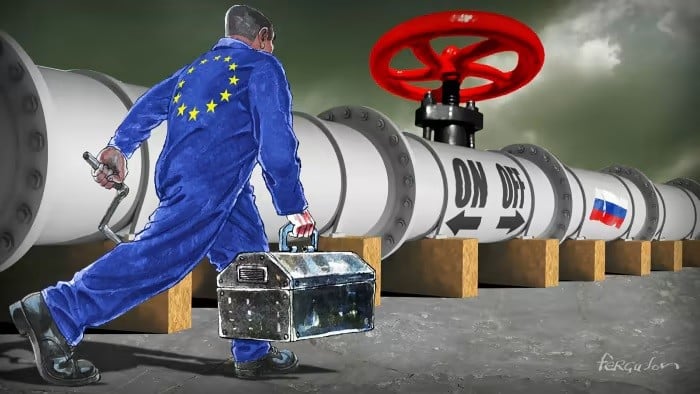 |
| Gas pressure will ease from at least the mid-2020s. |
This is particularly important for Germany, the EU's industrial powerhouse, given its energy-intensive automotive and chemical industries. There are growing concerns that continued high energy prices could fuel deindustrialization as energy-intensive industries relocate.
However, the good news is that pressure on gas will ease at least from the mid-2020s. Significant new LNG supplies will emerge in the US and Qatar, and the market will rebalance. Under planned energy cuts, European gas demand will also fall significantly – by 40% by 2030.
There are even rumors of oversupply by the end of this decade, depending on increased deployment of renewable energy in Europe and the commissioning of a new generation of nuclear power plants. This would significantly reduce Europe's need for gas imports, but this would only happen if the bloc coordinated effectively.
We've seen what EU countries can achieve in the months following Russia's military campaign in Ukraine. France supplied gas to Germany, helping Berlin reduce its dependence on Russia, and Germany, in turn, supplied electricity to French cities to compensate for power outages caused by nuclear power plant maintenance.
Nevertheless, challenges remain for the bloc. While France is trying to garner support for modernizing nuclear power plants both domestically and elsewhere in Europe, Paris is facing opposition from groups such as the German-led “Friends of Innovation,” which advocate for building and developing only renewable energy. This division could be a serious obstacle to achieving a faster energy transition away from fossil fuels.
Therefore, despite seeking to distance itself from Russian pipeline gas, Europe will still face global market volatility unless countries significantly reduce their demand in the coming years.
Source

![[Photo] Prime Minister Pham Minh Chinh holds a phone call with the CEO of Russia's Rosatom Corporation.](/_next/image?url=https%3A%2F%2Fvphoto.vietnam.vn%2Fthumb%2F1200x675%2Fvietnam%2Fresource%2FIMAGE%2F2025%2F12%2F11%2F1765464552365_dsc-5295-jpg.webp&w=3840&q=75)

![[Photo] Closing Ceremony of the 10th Session of the 15th National Assembly](/_next/image?url=https%3A%2F%2Fvphoto.vietnam.vn%2Fthumb%2F1200x675%2Fvietnam%2Fresource%2FIMAGE%2F2025%2F12%2F11%2F1765448959967_image-1437-jpg.webp&w=3840&q=75)








































![[OFFICIAL] MISA GROUP ANNOUNCES ITS PIONEERING BRAND POSITIONING IN BUILDING AGENTIC AI FOR BUSINESSES, HOUSEHOLDS, AND THE GOVERNMENT](https://vphoto.vietnam.vn/thumb/402x226/vietnam/resource/IMAGE/2025/12/11/1765444754256_agentic-ai_postfb-scaled.png)









































Comment (0)