

Despite the measles outbreak, many parents remain indifferent and do not vaccinate their children.
According to doctors, while measles is rampant, some parents are still "anti-vaccine," failing to recognize the importance of vaccinating their children to prevent the disease.
Risk of measles outbreak during back-to-school season.
With the start of the school year approaching and the weather gradually cooling down from now until the end of the year, these conditions are favorable for the spread of measles. If preventive and control measures are not implemented quickly, measles will continue to increase.
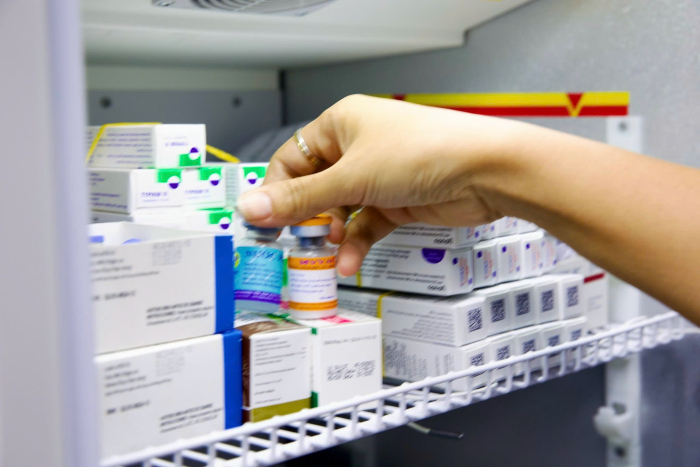 |
| According to doctors, even while the measles epidemic is raging, there are still some parents who are "anti-vaccine," requiring a lot of persuasion . Photo: Chi Cuong |
In Ho Chi Minh City, the epidemic is developing in a complex and escalating manner, with over 90% of measles cases in the South being children under 15 years old, posing a burden on pediatric hospitals.
To reduce the risk of the disease spreading, a representative from the Ho Chi Minh City Department of Health stated that it is necessary to control the outbreak in the community, schools, and hospitals.
In particular, Ho Chi Minh City is currently conducting vaccinations throughout the holiday period to ensure immunity for children, but according to doctors, there are still some parents who are "anti-vaccine," requiring a lot of persuasion.
According to Ms. Le Hong Nga, Deputy Director of the Ho Chi Minh City Center for Disease Control, the measles vaccination campaign during this holiday period facilitates people's ability to arrange their work schedules and bring their children for vaccinations to prevent the disease.
In particular, vaccination will protect children who are not yet old enough to receive the measles vaccine or who have a serious illness that prevents them from being vaccinated.
Ms. Nga noted that for babies who are not yet old enough to be vaccinated or for those who cannot be vaccinated due to medical conditions, those around them need to be vaccinated to protect them.
"We need to take preventive measures such as washing hands frequently with soap and water, and those with symptoms like fever or rash should limit contact with unvaccinated or unvaccinated people," advised Ms. Le Hong Nga.
Regarding vaccination efforts in Ho Chi Minh City, Associate Professor Dr. Tang Chi Thuong, Director of the Department of Health, emphasized the need for local Centers for Disease Control (HCDC) and district health centers to urgently implement activities to strengthen community immunity. Simultaneously, hospitals should immediately implement measures to protect children in high-risk groups, all aimed at reducing the number of cases and minimizing fatalities.
For the above solutions to effectively control measles outbreaks, it is necessary to strengthen communication efforts to encourage people to proactively implement disease prevention measures and participate in vaccination campaigns.
At the same time, the Inspectorate of the Department of Health is required to promptly detect and handle cases of "anti-vaccine" propaganda and cases of disseminating false information that causes panic in the community.
Reducing the spread of measles through vaccination.
Health experts consider measles a global threat because the measles virus, belonging to the Paramyxoviridae family, spreads rapidly through the respiratory tract from sick people to healthy people in the community or even across borders.
Measles is dangerous because it not only causes acute symptoms but also puts patients at risk of nervous system infections, musculoskeletal disorders, multi-organ damage, and can leave many severe and long-lasting complications, even lifelong ones, such as encephalitis, meningitis, otitis media, pneumonia, diarrhea, corneal ulcers, and blindness.
In addition, measles is particularly dangerous because it can erase immune memory, destroying an average of about 40 types of antibodies that fight off pathogens.
In children, a 2019 study by geneticist Stephen Elledge at Harvard University showed that measles eliminates between 11% and 73% of protective antibodies in children.
In other words, when a person contracts measles, their immune system is destroyed and resets to its initial, immature, and underdeveloped state, like that of a newborn baby.
To minimize risks and prevent the resurgence of measles, the WHO emphasizes that vaccination is the only way to protect children and adults from this potentially dangerous disease. Countries worldwide are required to achieve and maintain a coverage rate of over 95% with two doses of the measles vaccine.
According to Dr. Bui Thi Viet Hoa from the Safpo/Potec vaccination system, children and adults should proactively get vaccinated against measles fully and on schedule to help the body produce specific antibodies against the measles virus, effectively preventing the risk of contracting measles and its severe complications, with an effectiveness rate of up to 98%.
In addition, according to Dr. Viet Hoa, everyone should proactively clean their eyes, nose, and throat with antiseptic solution daily. Limit gatherings in crowded places, avoid close contact with people showing symptoms of measles or suspected of having the disease, and do not share personal items with infected individuals. Maintain a clean living environment and supplement your diet with foods that boost the immune system.
If you experience symptoms of measles (fever, runny nose, dry cough, red eyes, sensitivity to light, rash all over the body), you should quickly go to the nearest medical center or facility for examination and timely treatment.
Anti-vaccine sentiment is a global threat.
Vaccination is the most effective way to prevent disease. However, in recent times, many people have remained indifferent to vaccination, failing to fully understand the benefits it provides.
The anti-vaccine movement is a huge obstacle preventing the resurgence of diseases that were once thought to be extinct, diseases that could have been prevented.
Anti-vaccine advocates don't fully understand the benefits of vaccination; they're just hearing rumors or focusing on a few minor incidents. That's why the WHO lists the anti-vaccine movement as a new global health threat.
According to Doctor Bui Thi Viet Hoa, vaccination not only helps protect a specific individual, but also helps prevent disease for the entire community.
The effectiveness of vaccines is undeniable. They are considered the most effective preventive measure to protect the health of vaccinated individuals and avoid major outbreaks that could affect the health and lives of the community.
The World Health Organization (WHO) estimates that 85-95% of vaccinated individuals will develop specific immunity that protects them from contracting the disease, preventing death or long-term complications caused by the epidemic.
Thanks to vaccines, approximately 2.5 million children worldwide are saved each year, escaping the risk of death from infectious diseases.
Vaccines are now available for 30 infectious diseases, and approximately 190 countries and territories have implemented universal immunization programs for their entire populations.
These figures demonstrate the benefits of vaccines to society as a whole. According to the WHO, vaccines can help thousands of people avoid disability, save millions of lives worldwide, and save billions of dollars in healthcare costs each year.
Numerous studies have shown that the financial burden of medical treatment has a significant impact on families and society as a whole.
When people are fully vaccinated, it creates a healthier community, reduces illness, and minimizes healthcare costs in the long run.
This significantly reduces the burden on healthcare, helping to stabilize and improve the quality of life. For example, for every $1 spent on measles-mumps-rubella (MMR) vaccines, $21 in healthcare costs will be saved (according to a report by the US National Institutes of Health).
Source: https://baodautu.vn/soi-hoanh-hanh-nhieu-phu-huynh-van-tho-o-khong-tiem-chung-cho-tre-d223933.html








































































Comment (0)