

Based on Decision No. 165/QD-TTg dated February 28, 2023, of the Prime Minister approving the restructuring plan for the industry and trade sector until 2030, the Department of Industry and Trade of Thanh Hoa Province issues the "Action Plan for implementing the restructuring plan for the industry and trade sector in Thanh Hoa Province until 2030" to promote the shift in economic structure, improve the quality of growth, labor productivity, and competitiveness.
 The trade and service sector is one of the key targets of the industry and trade restructuring plan. In the photo: High-end imported products are displayed at Luxury Foods store, Dong Huong ward ( Thanh Hoa city).
The plan outlines the goal of developing the industrial sector in a harmonious combination of breadth and depth, with a particular focus on development in depth. This includes breakthrough mechanisms and policies to attract and expand the scale of production in strong industries, making Thanh Hoa province one of the major centers of heavy industry in the North Central region and the country, with a focus on developing energy and processing industries. It also emphasizes the rational development of labor-intensive industries to create jobs and facilitate economic restructuring; prioritizing the attraction of new, high-tech industries to create new growth drivers. Simultaneously, it aims to promote the development of supporting industries, gradually forming and developing clusters linking key industries.
The plan emphasizes the importance of the service trade sector, aiming for rapid and diverse development of high-quality services and products with high added value. It promotes the development of modern commercial infrastructure, encourages the expansion of mini-supermarkets and convenience stores, and supports the formation of large enterprises in the distribution sector, shifting traditional distribution systems to modern distribution models.
The goal is to achieve an average annual growth rate of approximately 16.4% in industrial added value during the 2021-2025 period, and 8.9% in the service sector during the 2026-2030 period; and approximately 12.1% in industrial added value and 8.5% in the service sector during the 2026-2030 period. Export turnover is projected to reach US$15 billion by 2030. The industrial production index (IIP) is expected to grow at an average rate of 14.6% per year. The proportion of B2C e-commerce sales (including both goods and online consumer services) compared to total retail sales of goods and consumer services is targeted to reach 10% by 2025 and 13% by 2030.
The plan also specifically outlines the comprehensive development of the province's industrial production system through upgrading and developing the supply chains and value chains of industrial sectors. Emphasis is placed on localizing the supply chains of industrial sectors to reduce dependence on imported machinery, equipment, and raw materials, and to enhance self-reliance, increase domestic added value, improve the competitiveness of products, and strengthen the position of Thanh Hoa businesses within the value chain. In particular, it focuses on greening industries, ensuring the efficient and economical use of resources and energy. Notably, the development of mechanical engineering, metallurgy, chemicals, materials, and industries serving the development of the mechanical engineering sector in the Nghi Son Economic Zone and other industrial parks and clusters has helped the industry to form and operate effectively; creating momentum for growth and promoting other industries.
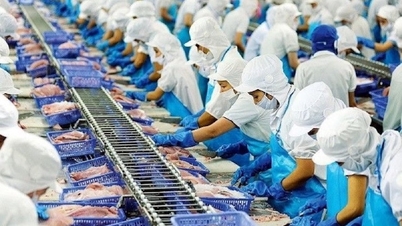
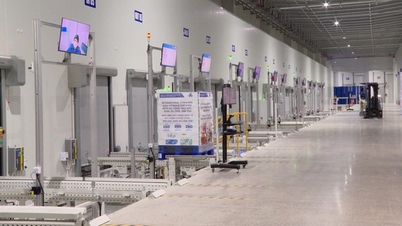
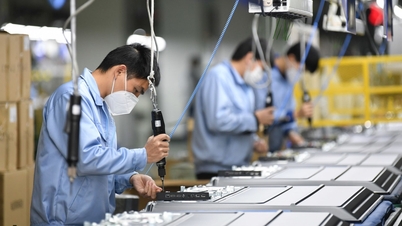
 Workers are seen at the factory of Sao Mai Food Trading and Import-Export Joint Stock Company (Thanh Hoa City).
According to the Department of Industry and Trade, the next phase will see the continued development and upgrading of the industrial sector to high value-added stages in the global value chain, aiming to enhance competitiveness and participate more deeply in global value chains such as textiles, chemicals, pharmaceuticals, and agricultural, forestry, and aquatic product processing. This will be coupled with strengthening process improvements and smart, automated production technologies. The application and transfer of science and technology with advanced domestic and foreign enterprises will be enhanced to improve management capacity and production and business organization. Investment will be attracted to supporting industrial projects for the textile and footwear industries that utilize modern technology and environmental protection to provide local raw materials for the province's garment and footwear industries.
Furthermore, it is necessary to diversify export markets to avoid over-reliance on a few markets and minimize the negative impact of trade conflicts. Emphasis should be placed on developing exports through cross-border e-commerce and foreign distribution systems. Leverage new-generation Free Trade Agreements (FTAs) and the province's foreign relations activities to boost exports of goods and services, maximizing the utilization of domestic and foreign sources to increase export value; strengthen support to enhance the capacity of businesses, especially small and medium-sized enterprises, to meet the standards and regulations of export markets and rules of origin to effectively utilize signed FTAs. Support businesses in proactively responding to and effectively handling foreign trade defense investigations against exported goods.
Furthermore, the focus is on supporting, forming, and developing large commercial enterprises capable of leading the market, controlling warehouse systems, logistics centers, and supply chains to stabilize market supply and demand. Support is also provided for the formation of businesses, commercial cooperatives, and household businesses to shift their distribution systems to modern forms such as supermarkets, shopping malls, and convenience stores. The development of domestic consumer goods supply chains is also prioritized, with a focus on essential agricultural and food product supply chains, aiming to reduce complexity and streamline the distribution system, thereby improving efficiency for both producers and consumers.
Text and photos: Chi Pham
Source






















































































Comment (0)