

At the seminar "Removing Non-Tariff Barriers for ASEAN's Shared Prosperity," organized by the Finance and Investment Newspaper in collaboration with the New Zealand Embassy on the morning of June 27th, representatives from industry associations and businesses shared their experiences regarding the difficulties and obstacles they face in their business operations when dealing with numerous requirements from key import markets.
Non-tariff cost burden
Speaking at the seminar, Ms. Le Hang, Deputy General Secretary of the Vietnam Association of Seafood Processing and Export (VASEP), said that in the operations of seafood businesses, many products require fast transportation times, so inadequacies in overlapping procedures will cause costs for businesses and affect product reputation.
Non-tariff barriers significantly impact seafood exports to ASEAN markets, with several key obstacles identified from various sources. These barriers often relate to regulatory measures, certification requirements, and technical standards that complicate market access.
 |
| Ms. Le Hang - Deputy General Secretary of the Vietnam Association of Seafood Processing and Export (VASEP). Photo: Chi Cuong |
The ASEAN market is very important for seafood export businesses due to its geographical location and compatibility in food demand. However, the Deputy Secretary General of VASEP also stated that some key markets (such as Thailand and Malaysia) have technical barriers with stringent standards for imported products.
For example, some ASEAN countries apply specific labeling requirements, such as detailed product descriptions, nutritional information, origin, and language requirements (e.g., Bahasa Malaysia in Malaysia or Thai in Thailand). Adapting labels to meet the specific requirements of each country can cost between $5,000 and $20,000 per product line, depending on the complexity of the redesign and translation, posing a challenge for small and medium-sized enterprises (SMEs).
At the same time, these countries also have other barriers to protect their domestic products, so specific requirements for import licenses, registration of exporter lists, etc., create obstacles and difficulties for businesses.
Domestic regulations in ASEAN countries, such as quarantine requirements, labeling standards, and Halal certification, have a significant impact on the costs and time required for seafood exports.
Representing businesses in the logistics industry, Ms. Chu Kieu Lien, Director of T&M Forwarding Company, Hanoi Branch, also expressed her sympathy with the common difficulties currently faced by businesses.
Ms. Chu Kieu Lien stated that most of the problems in different countries are similar. The cumbersome and inconsistent systems, coupled with the fact that some countries have not yet adopted digitalization in their procedures, make the licensing process difficult, while small and medium-sized enterprises (SMEs) lack sufficient investment capital.
 |
| Ms. Chu Kieu Lien, Director of T&M Forwarding Company, Hanoi Branch. Photo: Chi Cuong |
In logistics, maritime transport, and port operations, representatives T&M Forwarding Company points out three impacts of non-tariff barriers.
Firstly, non-tariff barriers significantly increase operating costs. Complex or inconsistent quality control and labeling requirements across markets force businesses to invest more in internal control systems, personnel, and documentation.
Secondly, supply chains are disrupted by lengthy inspection procedures, ranging from plant and animal quarantine to port security requirements or lengthy customs clearance processes in some countries. Delayed cargo release directly impacts shipping schedules, port productivity, and the reliability of logistics services.
Thirdly, environmental regulations and greenhouse gas emissions are creating an additional layer of barriers, forcing shipping companies to invest in fleet upgrades, fuel conversion, or carbon credits – while not all companies have the financial or technological capacity to meet these requirements.
Living with a fence
Although each industry and market is subject to different measures affecting business costs, Ms. Le Hang, Deputy General Secretary of VASEP, believes that the measures currently being applied in the ASEAN region are inevitable market forces, and businesses need to adapt.
However, in addition to confronting these barriers, businesses also expect improvements in policies and bargaining power across various aspects to mitigate risks from non-tariff barriers.
Ms. Le Hang cited the example that, with regard to Halal certification (a mandatory certification in major markets such as Indonesia and Malaysia), Vietnam still lacks a certification body that is widely recognized within ASEAN.
“One of the keywords that VASEP wants to convey to its members and the seafood business community is Proactiveness and Adaptability. To gain more recognition, the business community must be proactive in the face of market fluctuations, changes in regulations, supply and demand, thereby changing market strategies accordingly, updating and improving capabilities, and proactively applying science and technology to innovation in the production chain, creating products suitable for different segments and different markets,” the Deputy Secretary General of VASEP emphasized.
On behalf of the Vietnam Wood and Forest Products Association, Mr. Ngo Sy Hoai - Vice President and General Secretary of the Association - stated that Vietnam ranks second in wood processing and export, only behind China, and this is the time for businesses to re-evaluate the ASEAN intra-bloc market. In the face of the rise of protectionism, as ASEAN countries coordinate and harmonize certain policies, we can strengthen intra-regional trade in other products.
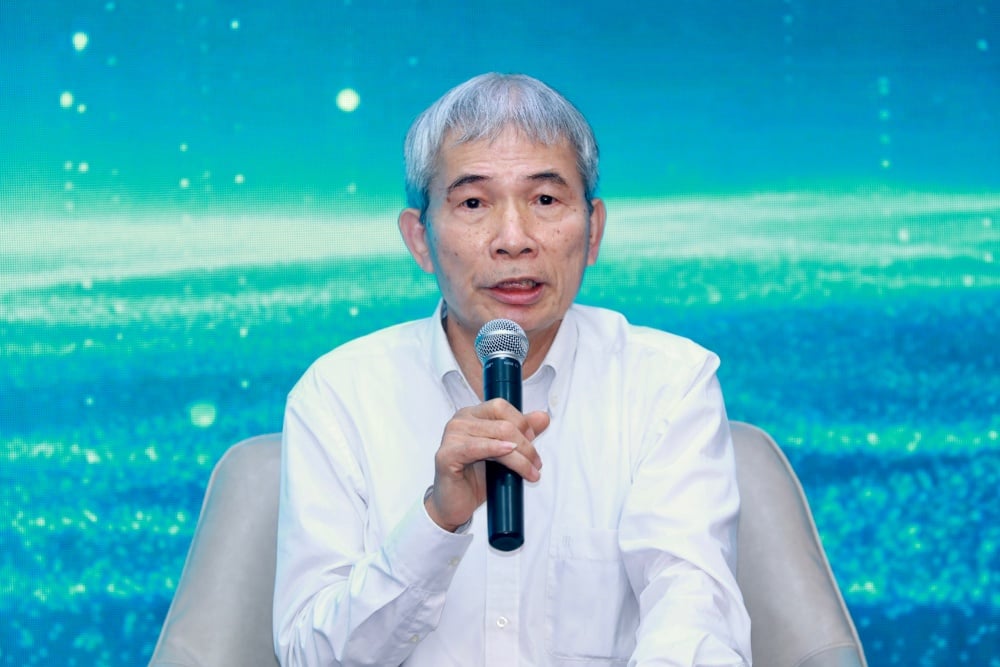 |
| Mr. Ngo Sy Hoai - Vice President and General Secretary of the Vietnam Wood and Forest Products Association. Photo: Chi Cuong |
Mr. Ngo Sy Hoai stated that the timber industry is a bulky sector with very high transportation costs. If we can better utilize transportation costs and logistics processes, we can achieve advantages in trade within the bloc. Currently, associations mainly strengthen bilateral relations, such as the Indonesia-Vietnam-Malaysia Timber Association, but within the timber industry, there is currently no common association in the ASEAN region, and the situation is similar for other industries as well.
The Vice President of the Vietnam Wood and Forest Products Association believes that if businesses stand together and receive increased policy support, and if ASEAN countries sit down together, the burden of non-tariff barriers will be significantly eased.
Source: https://baodautu.vn/tang-cuong-suc-manh-noi-khoi-doanh-nghiep-tim-duong-go-rao-can-phi-thue-quan-d315222.html


![[Photo] Closing Ceremony of the 10th Session of the 15th National Assembly](/_next/image?url=https%3A%2F%2Fvphoto.vietnam.vn%2Fthumb%2F1200x675%2Fvietnam%2Fresource%2FIMAGE%2F2025%2F12%2F11%2F1765448959967_image-1437-jpg.webp&w=3840&q=75)
![[Photo] Prime Minister Pham Minh Chinh holds a phone call with the CEO of Russia's Rosatom Corporation.](/_next/image?url=https%3A%2F%2Fvphoto.vietnam.vn%2Fthumb%2F1200x675%2Fvietnam%2Fresource%2FIMAGE%2F2025%2F12%2F11%2F1765464552365_dsc-5295-jpg.webp&w=3840&q=75)


































![[OFFICIAL] MISA GROUP ANNOUNCES ITS PIONEERING BRAND POSITIONING IN BUILDING AGENTIC AI FOR BUSINESSES, HOUSEHOLDS, AND THE GOVERNMENT](https://vphoto.vietnam.vn/thumb/402x226/vietnam/resource/IMAGE/2025/12/11/1765444754256_agentic-ai_postfb-scaled.png)








































Comment (0)