

The preference for capital flows into developed markets has led to a wave of foreign capital outflows from Vietnamese stocks, along with many other countries in the region. Efforts to upgrade Vietnam's market status, coupled with a stable macroeconomic foundation, could make it a desirable destination when capital flows reverse.
Significant changes in the new draft.
Nearly four months after its announcement, the draft circular amending and supplementing four circulars on transactions, registration, custody and clearing, operations of securities companies, and information disclosure has now completed the consultation process with affected parties.
According to the Ministry of Finance , the feedback received was collected and incorporated into the final draft, which includes many fundamental changes, especially in the content related to transactions by foreign investors.
Under the new regulations, foreign institutional investors can buy securities without having 100% of the funds in their account. The specific margin ratio is determined by the securities company based on its own assessment of the client's creditworthiness.
However, the settlement flowchart based on the new draft has undergone significant changes compared to the initial draft. The time when investors need to have sufficient funds in their accounts before the depository member confirms the transaction results with the Vietnam Securities Depository and Clearing Corporation (VSDC) has been moved from approximately 2:30 PM on day T+1 (one day after the transaction) to early morning on day T+2. Thus, from the time the foreign institution must have funds in its account until the securities are received, the time remaining is only a few hours.
Speaking at a seminar earlier this July, Mr. Bui Hoang Hai, Vice Chairman of the State Securities Commission, said that shortening the time frame aims to better meet the Payment Cycle (DvP) criteria according to international standards.
This is also a limitation that FTSE Russell pointed out for the Vietnamese market, along with the criterion of "Payment - costs associated with failed transactions".
Checking investors' available funds before executing transactions to ensure safety is common practice in Vietnam, resulting in a market free of failed transactions. Therefore, the criterion "Payment - costs related to failed transactions" is not evaluated. A solution to this limitation is to allow securities companies to provide payment support for foreign institutional investors.
Regarding the legal basis, representatives from the State Securities Commission stated that 95% of the work has been completed, so the final draft, after being published for public comment, will be submitted for promulgation and will soon take effect.
In the implementation phase, securities companies face pressure regarding capital to mitigate settlement risks and the need to upgrade their risk management systems. According to Mr. Nguyen Khac Hai, Director of the Legal and Compliance Control Division at SSI Securities, the fact that most securities companies plan to increase capital in 2024 and 2025 is also a preparation for this major undertaking.
The challenge of attracting foreign indirect investment.
The policy, direction, and determination to solve the problem of upgrading Vietnam's stock market from a frontier market to an emerging market are evident and have been recognized by international organizations in recent times. Many organizations with years of experience in bringing foreign capital into the Vietnamese market also believe that the upgrade could be one of the important events that prompts foreign funds to actively invest if the prospects and progress in the upgrade roadmap are clear.
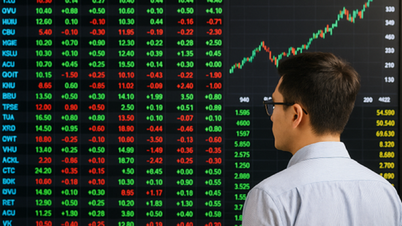
However, it is undeniable that foreign investors are still relentlessly selling off shares in the Vietnamese stock market, with a net selling value of approximately $2.3 billion, increasingly approaching the record net selling value recorded for the entire year of 2023.
Not only in Vietnam, but also in Thailand, net selling value quickly exceeded $3 billion. The SET index of the Thai Stock Exchange fell below 1,300 points, its lowest level in four years.
Money is flowing into the US thanks to persistently high USD interest rates, while the currencies of many other countries are depreciating. Therefore, according to experts, it is understandable that some funds are changing their strategies to invest in less risky markets with greater short-term opportunities.
Besides being affected by global capital flows, the Thai stock market also faces political instability. The country's GDP growth this year is projected to be below 3% – a level that the Governor of the Bank of Thailand (BOT) recently stated is insufficient to support sustainable long-term economic expansion.
To revive the market, at the end of June, the Thai Ministry of Finance and securities market regulators announced rather drastic measures, focusing on adjusting some conditions for the Thai ESG Fund, applying preferential tax rates for investors, and encouraging listed companies to comply with ESG regulations. The policy of imposing additional personal income tax on foreign investment, effective from the beginning of the year, also encourages capital to remain in the country.
Attracting foreign indirect investment back into the stock market is a challenge not only for the Vietnamese stock market. However, the stability of macroeconomic indicators despite global difficulties and fluctuations, along with the stable business performance of listed companies, will be the top priority for investors to invest their money.
Source: https://baodautu.vn/tang-toc-go-nut-that-cho-khoi-ngoai-d219801.html
![[Photo] General Secretary and President To Lam meets with National Assembly delegates from ethnic minorities.](https://vphoto.vietnam.vn/thumb/1200x675/vietnam/resource/IMAGE/2026/04/20/1776696701056_a1-bnd-8331-3342-jpg.webp)


![[Image] National Assembly discusses the implementation of the socio-economic development plan.](https://vphoto.vietnam.vn/thumb/1200x675/vietnam/resource/IMAGE/2026/04/20/1776696707422_ndo_br_img-20260420-185419-jpg.webp)



















































































Comment (0)