

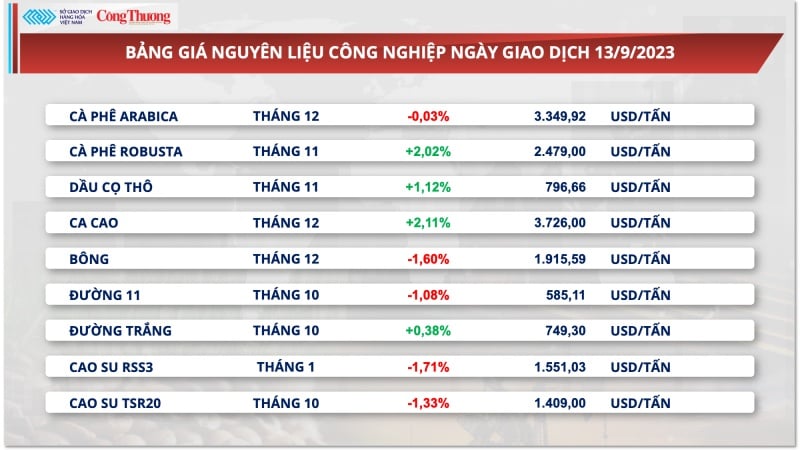
According to statistics from the Vietnam Commodity Exchange (MXV), Arabica coffee prices experienced a volatile trading session, closing slightly down 0.03% compared to the reference price. The conflict between positive signals from inventories on the ICE-US exchange and selling demand from Brazilian farmers created a tug-of-war between buying and selling forces.
The ICE-US exchange has received 19,820 bags of graded Arabica coffee awaiting sorting from Brazil. This raises expectations that inventories will soon recover and help ensure a stable coffee supply in the market.
Meanwhile, the Brazilian Real strengthened, causing the USD/Brazil Real exchange rate to fall by 0.64% yesterday. The narrowing exchange rate differential has prompted Brazilian farmers to limit coffee sales due to receiving less local currency.
 |
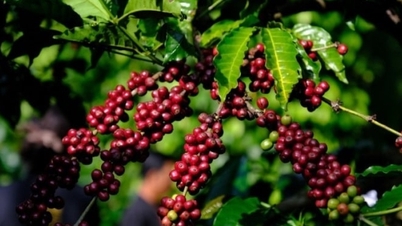
| Robusta coffee prices continue to rise. |
Conversely, Robusta prices surged by more than 2% yesterday. Slowing Robusta exports from Brazil, coupled with continued supply shortages in Vietnam, supported the price increase.
According to CECAFE, Brazil exported nearly 143,470 bags of Robusta beans in the first 11 days of August, lower than the approximately 150,000 bags exported during the same period the previous month. Meanwhile, Vietnam's coffee exports in August remained down more than 25% compared to the same period last year.
Following the global price trend, this morning on the domestic market, the price of bulk green coffee beans in the Central Highlands and Southern provinces simultaneously recorded sharp increases of 600-800 VND/kg. Accordingly, the domestic coffee purchase price reached 65,500-66,500 VND/kg, the highest in the past week.
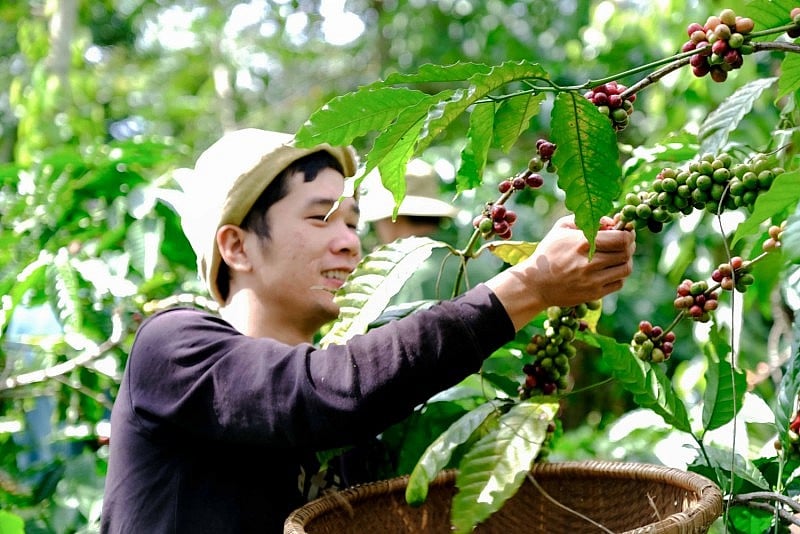 |
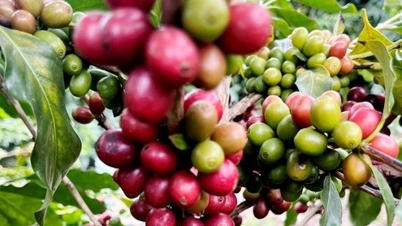
| Coffee export prices have risen to record levels. |
Regarding exports, according to data released by the General Department of Customs, Vietnam's coffee exports in August fell to their lowest level since November last year, reaching 84,647 tons, valued at $258.5 million, a decrease of 22.3% in volume and 16% in value compared to the previous month.
In the first eight months of the year, coffee exports reached 1.2 million tons, generating nearly $3 billion in revenue. Compared to the same period last year, exports decreased by 5.4% in volume but increased by 3.1% in value thanks to higher selling prices.
Thus, the total amount of coffee exported in the first 11 months of the 2022-2023 crop year (from October 2022 to August 2023) reached over 1.6 million tons, a slight decrease of 2% compared to the same period of the previous crop year.
With current crop production projected at only 1.5-1.6 million tons, a 10-15% decrease compared to the 2021-2022 crop year, the supply of coffee for export is now almost exhausted and is not expected to improve until November when the supply from the new 2023-2024 harvest enters the market.
However, low inventory levels pushed export coffee prices in August to a new record high of $3,054 per ton, an 8% increase from the previous month and a 30% increase (nearly $700 per ton) compared to the same period last year.
Overall, in the first eight months of the year, the average export price of coffee increased by nearly 9% to $2,463 per ton.
According to the Import-Export Department ( Ministry of Industry and Trade ), favorable weather in Brazil and the availability of new crop goods have negatively impacted world coffee prices, despite forecasts of a global shortage of 7.3 million bags of all types of coffee in the 2023-2024 crop year and reports of inventories on the two exchanges falling to multi-year lows.
In addition, the appreciation of the US dollar has prompted funds and speculators to aggressively liquidate their holdings and shift capital to derivative markets and the US stock market due to more attractive returns. Meanwhile, exchange rate fluctuations have also led Brazilian coffee growers to increase sales.
However, the decline is expected to be short-lived as low robusta coffee inventories will positively impact prices in the global coffee market.
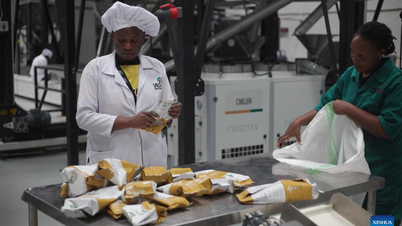
In the first few months of this year, the structure of exported coffee varieties also saw positive changes with a strong increase in processed coffee.
According to data from the Import-Export Department, the export value of processed coffee increased by nearly 22% in the first seven months of this year to $448.7 million, accounting for 17% of the country's total coffee export value, up from 15% in the same period last year.
Conversely, the share of green coffee beans (including robusta and arabica) decreased to 83.3% compared to 85% in the same period. This was mainly due to a 34.6% decrease in arabica coffee exports, while robusta exports increased by 3.9%.
To achieve the export target of 5-6 billion USD by 2030, the coffee industry's strategy is to promote processed coffee products (roasted and ground coffee, instant coffee, etc.) rather than focusing on the quantity of green coffee beans, because past lessons show that if the planted area is further increased, the "nightmare" of oversupply and falling prices will return.
Source link


![[Photo] Prime Minister Pham Minh Chinh holds a phone call with the CEO of Russia's Rosatom Corporation.](/_next/image?url=https%3A%2F%2Fvphoto.vietnam.vn%2Fthumb%2F1200x675%2Fvietnam%2Fresource%2FIMAGE%2F2025%2F12%2F11%2F1765464552365_dsc-5295-jpg.webp&w=3840&q=75)




























































Comment (0)