

A boost for Vietnam-China tourism .
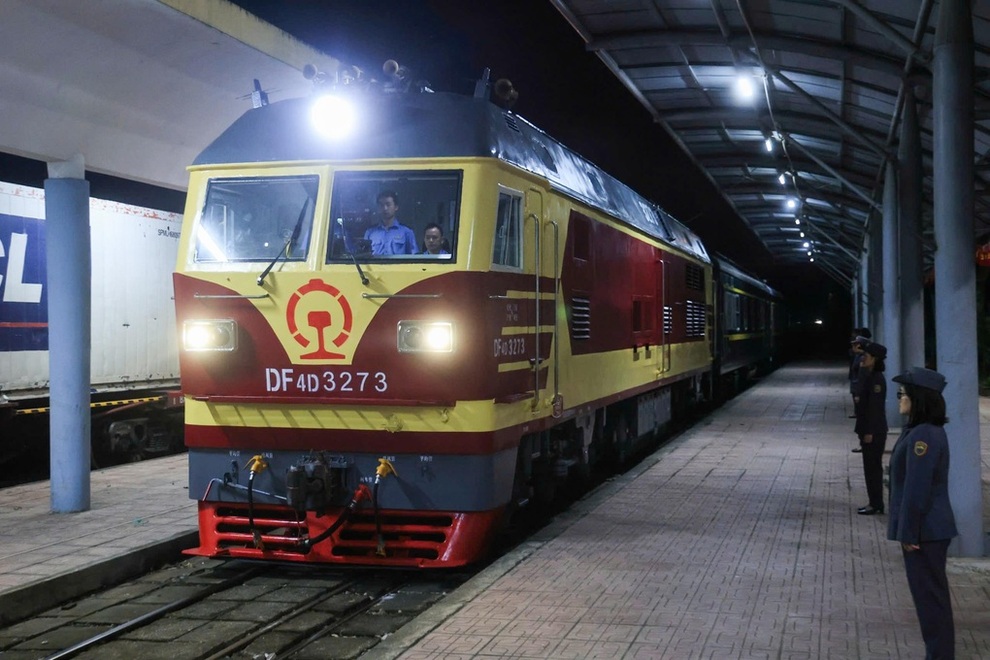
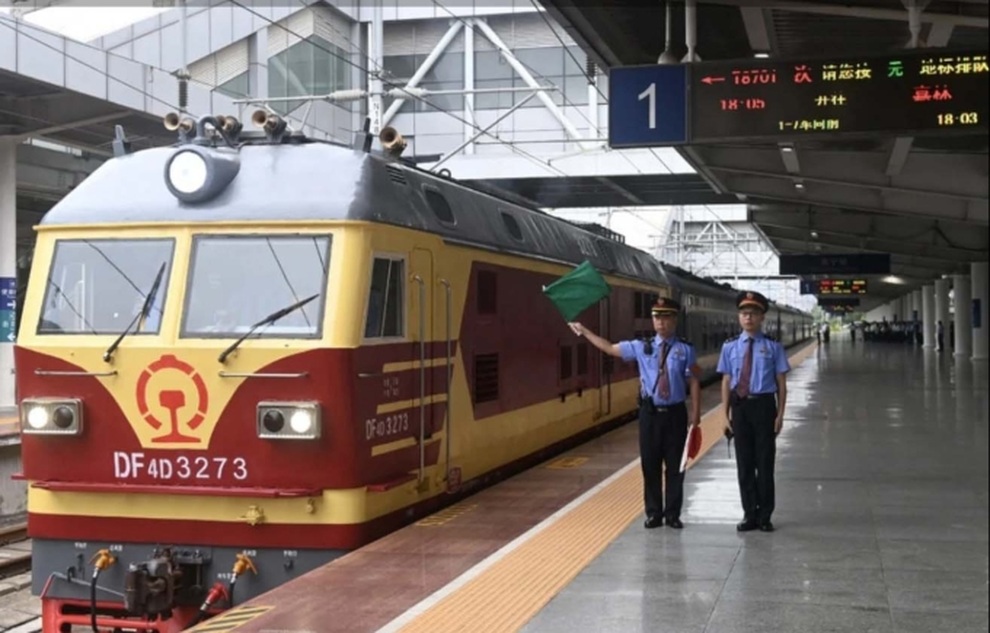
After a five-year hiatus due to the Covid-19 pandemic, China and Vietnam have officially resumed the international passenger train service between the two countries.
Experts believe this move will contribute to boosting the already booming bilateral tourism and facilitate the attraction of more international tourists to China without requiring visas.
In recent years, Beijing has relaxed its visa policy, expanding the list of visa-exempt countries to support the tourism industry's recovery after the pandemic. Accordingly, Vietnamese citizens can enter China without a visa if they participate in group tours organized by Chinese travel companies.
According to Xinhua News Agency, the international train service between Nanning (in the Guangxi Zhuang Autonomous Region) and Hanoi officially resumed operation on May 25th. The journey takes 11.5 hours.
The train line was put into operation in 2009 but was suspended from February 2020 when many Asian countries simultaneously closed their borders to prevent the spread of the disease.
Experts believe that restoring this railway line will contribute to boosting two-way tourism along the 1,297km land border between the two countries.
"In the last two years, there has been an increasing number of Vietnamese tourists visiting China. The Vietnamese economy is also developing rapidly," said Steven Zhao, CEO of Guilin-based online travel company China Highlights.
According to Mr. Zhao, after arriving in Nanning, passengers from Vietnam can easily connect to China's high-speed rail network to reach popular tourist cities such as Beijing or Shanghai.
Data from market research firm Statista shows that in 2023, tourists from Vietnam accounted for approximately 4% of the total number of visitors entering mainland China.
In the third quarter of 2024 alone, according to statistics from the Chinese Ministry of Culture and Tourism, this number reached 23,500, second only to Hong Kong (China) in terms of international visitors to the country.
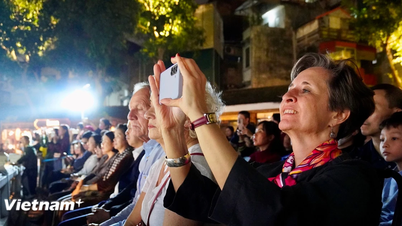
According to Mr. Zhao, Hanoi, the capital city, is also a popular destination for many Western tourists.
The resumption of the train service will facilitate this group of tourists' visits to China without needing a visa. It is known that China currently applies a 30-day visa-free policy for citizens of 38 countries, including Australia, Singapore, and many European nations.
Meanwhile, Dan Martin, an international business consultant at Dezan Shira & Associates, currently based in Hanoi, believes that with the increasing number of Chinese tourists visiting Vietnam, reopening the Hanoi-Nanning route is also expected to better serve Chinese passengers wishing to visit the Southeast Asian country.
"In Hanoi, a significant proportion of the total number of tourists are Chinese," Martin said.
According to data from the National Statistics Office of Vietnam, in 2024, the number of Chinese tourists visiting Vietnam exceeded 3.7 million, making it the fastest-growing market for Vietnam's tourism industry.
The Global Times, citing Chinese government sources, reported that nearly 1.6 million Chinese people visited Vietnam in the first quarter of this year alone.
During the period when the railway service was suspended, the majority of Vietnamese tourists opted for budget flights to China. Another group traveled by bus.
Xinhua News Agency noted that the newly restored T8701 train line, which uses sleeper carriages, is considered part of the two countries' efforts to strengthen cross-border rail connectivity.
It is known that China and Vietnam currently rely heavily on railway systems to support their trade activities, especially in the manufacturing and export sectors, as these activities become increasingly vibrant.
Cases where a visa is not required when traveling by train from Hanoi to Nanning.
Vietnamese citizens need to present their passports and may be exempt from visa requirements when entering China if traveling as part of a tour group organized by a Chinese travel company.
Entry is permitted through certain border crossings, including Nanning.
Tourists must strictly adhere to the tour itinerary and are not allowed to leave the group. However, this is a visa exemption policy for group tours, applicable to short-term stays.
If tourists travel independently (buying train tickets and traveling on their own), they still need to apply for a Chinese visa as usual.
Tickets for the Hanoi - Nanning route cost approximately one million dong. The Hanoi - Beijing route costs nearly 9.4 million dong. Children under 4 years old travel free, while those aged 4 to 12 receive a 50% discount (one child per adult). Groups of 6 or more receive a 25% discount on tickets.
Source: https://dantri.com.vn/du-lich/tau-tu-ha-noi-toi-nam-ninh-gia-ve-1-trieu-dongnguoi-khach-khong-can-visa-20250527143648598.htm



![[Photo] Closing Ceremony of the 10th Session of the 15th National Assembly](/_next/image?url=https%3A%2F%2Fvphoto.vietnam.vn%2Fthumb%2F1200x675%2Fvietnam%2Fresource%2FIMAGE%2F2025%2F12%2F11%2F1765448959967_image-1437-jpg.webp&w=3840&q=75)
![[Photo] Prime Minister Pham Minh Chinh holds a phone call with the CEO of Russia's Rosatom Corporation.](/_next/image?url=https%3A%2F%2Fvphoto.vietnam.vn%2Fthumb%2F1200x675%2Fvietnam%2Fresource%2FIMAGE%2F2025%2F12%2F11%2F1765464552365_dsc-5295-jpg.webp&w=3840&q=75)

































![[OFFICIAL] MISA GROUP ANNOUNCES ITS PIONEERING BRAND POSITIONING IN BUILDING AGENTIC AI FOR BUSINESSES, HOUSEHOLDS, AND THE GOVERNMENT](https://vphoto.vietnam.vn/thumb/402x226/vietnam/resource/IMAGE/2025/12/11/1765444754256_agentic-ai_postfb-scaled.png)













































Comment (0)