

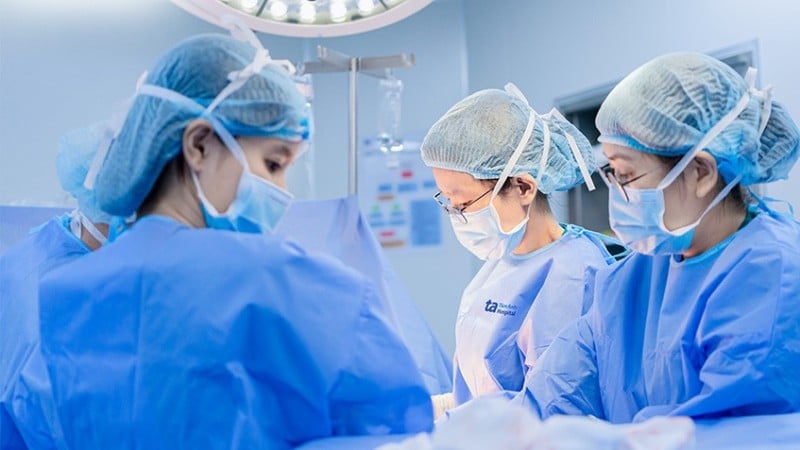
The pregnant woman had her first trimester check-up at a local private clinic, which showed no abnormalities. She was screened for high-risk preeclampsia and given aspirin as a preventative measure. At 20 weeks of pregnancy, she visited Tam Anh General Hospital in Ho Chi Minh City for a check-up.
Dr. Nguyen Thi Lien Phuong, a specialist in fetal medicine, discovered during an ultrasound that the fetal heart and stomach were located on the right side (normally on the left), indicating situs inversus. This is a condition where the body's organs are positioned in the opposite direction to their normal anatomical positions.
According to Dr. Phuong, situs inversus can occur alone without other abnormalities, or it can also appear together with other congenital defects. Approximately 5-10% of children with situs inversus have congenital heart defects.
Depending on the severity of the condition, infants may be born without any symptoms, and the reversed organs may function normally. If situs inversus is accompanied by other abnormalities, the infant is at risk of respiratory failure, pneumonia, bronchitis, infections, bowel dysfunction, incomplete bowel rotation, etc.
The pregnant woman was advised by a fetal medicine specialist to undergo amniocentesis to determine the cause of situs inversus. Advanced gene sequencing revealed that the fetus carried a heterozygous MMP21 gene mutation, an autosomal dominant trait associated with heterotaxy syndrome.
Situs inversus, associated with heterotaxy syndrome, often results in an abnormal arrangement of organs in the chest and abdomen, causing complex heart defects and other serious complications.
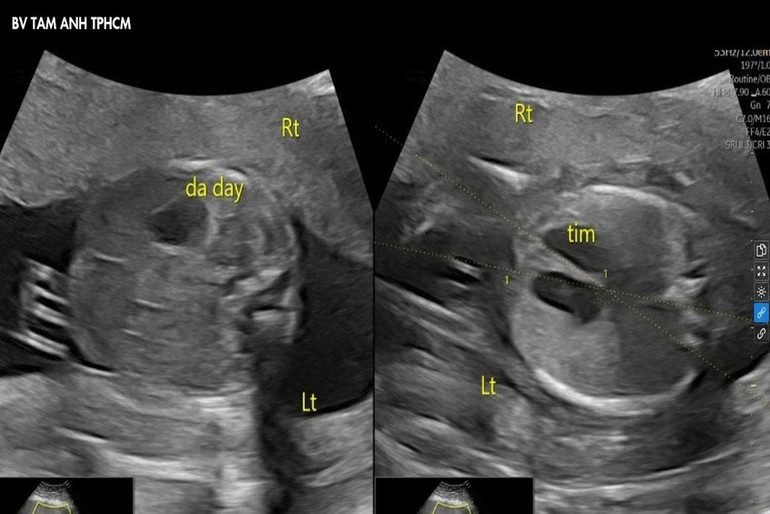
In this case, routine prenatal ultrasound confirmed that the fetal organs were reversed in a "mirror image" fashion, with no accompanying abnormalities. This is very rare, and there are no complete statistics in the world's medical literature. The child has a positive prognosis and is unlikely to experience serious health problems.
Pregnant women are advised to eat a balanced diet, increase their intake of green vegetables and fruits, reduce sugar and salt intake, drink enough water, exercise as much as possible, and avoid stress to control the risk of preeclampsia.
At 39 weeks of gestation, the baby girl was born healthy, weighing 3.5 kg. The doctor advised the family to monitor the child's health, take her to the doctor immediately if any abnormalities occurred, and inform the doctors about the baby's situs inversus.
"This makes diagnosing future illnesses easier. For example, if a child has appendicitis, the symptoms will appear in the opposite location compared to a normal person," Dr. Phuong explained.
Situs inversus occurs primarily due to gene mutations in one or more different genes. More than 100 genes are associated with this condition, including ANKS3, NME7, NODAL, CCDC11, WDR16, MMP21, PKD1L1, DNAH9, etc.
Gene mutations can be inherited in several ways, including autosomal dominant, autosomal recessive, X-linked, or novel mutations, depending on the specific gene involved.
Situs inversus is a broad spectrum of organ positional abnormalities, classified as complete or partial situs inversus. In cases of fetal situs inversus without accompanying abnormalities, the child is usually asymptomatic and can live a normal life. In some cases, it is associated with other congenital defects or syndromes, and depending on the extent to which it affects vital functions, doctors may recommend appropriate treatment.
Doctors recommend that all pregnant women undergo screening for fetal abnormalities and genetic diseases at specialized medical centers. Pregnant women need to have prenatal checkups on schedule, especially at important milestones such as the first trimester (11-13 weeks and 6 days), second trimester (20-24 weeks), and third trimester (28 weeks). Depending on the specific case, the doctor will develop a suitable pregnancy management plan to ensure the safety of both mother and baby.
Source: https://nhandan.vn/thai-nhi-bi-dao-nguoc-phu-tang-theo-kieu-soi-guong-chao-doi-khoe-manh-post929294.html













![[Video] National Assembly passes the amended Civil Servant Law with 92.39% of delegates voting in favor](https://vphoto.vietnam.vn/thumb/402x226/vietnam/resource/IMAGE/2025/12/10/1765379039932_1-6690-3945-png.webp)






![[Video] The craft of making Dong Ho folk paintings has been inscribed by UNESCO on the List of Crafts in Need of Urgent Safeguarding.](https://vphoto.vietnam.vn/thumb/402x226/vietnam/resource/IMAGE/2025/12/10/1765350246533_tranh-dong-ho-734-jpg.webp)






















































Comment (0)