

Leading us on a tour of his lush green dragon fruit orchard stretching across the hillside, Mr. Nguyen Dac Thanh from Hong Thai village, Lap Thach commune, recounted: “In the past, this area only grew acacia trees, yielding meager income, and our family was always struggling. My father, Mr. Nguyen Thanh Long, was always concerned about finding new plant varieties to cultivate to improve production efficiency and increase income. In 2005, he boldly introduced red-fleshed dragon fruit to experiment with cultivation and was the first person to grow red-fleshed dragon fruit on this land. At that time, everyone doubted the survival of this new crop on barren land. But after just over a year of planting and caring for it according to proper technical procedures, the dragon fruit yielded a harvest and brought economic benefits far beyond expectations.”
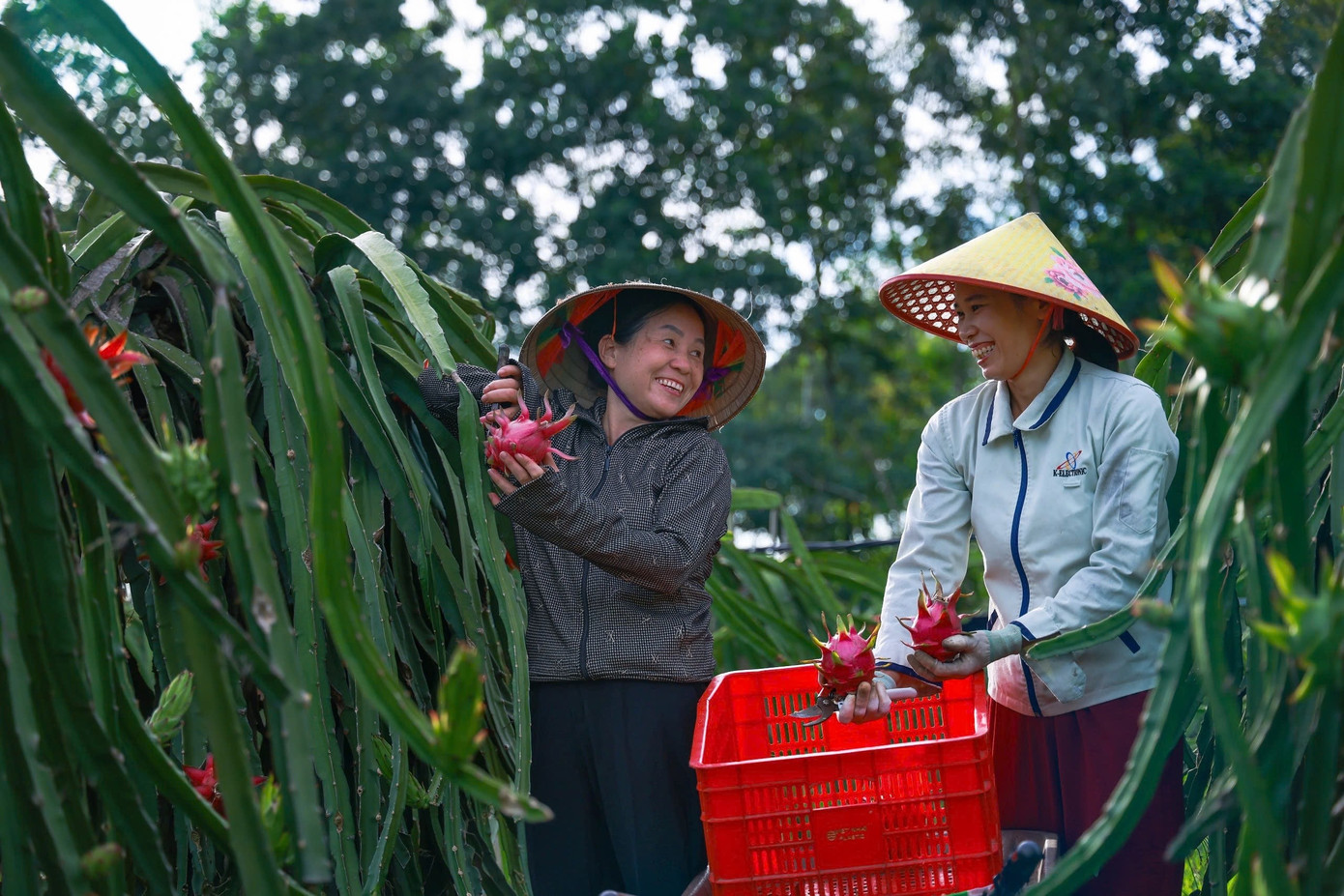
Building on the success of the pilot project initiated by his father, Mr. Nguyen Dac Thanh realized that the local soil was particularly suitable for red-fleshed dragon fruit. He continued to learn more about red-fleshed dragon fruit cultivation techniques through media and expanded his family's planting area. At the same time, he helped many households in the commune switch from less efficient traditional crops to dragon fruit cultivation. After only about 7 months of planting, the dragon fruit yielded its first harvest, boasting a rich, sweet flavor that was popular in markets both within and outside the province. The economic value of this crop increased 10-12 times compared to other fruit trees, providing people with significantly higher and more stable incomes than before.
Currently, Mr. Thanh's family owns more than 10 hectares of red-fleshed dragon fruit, of which 6 hectares are grown off-season according to VietGAP standards. Off-season dragon fruit sells for about 30,000 VND/kg, 40-50% higher than the main season, helping to increase profits by 30-40%. After deducting expenses such as fertilizer, labor, and care, he earns a profit of over 1 billion VND, Mr. Thanh said.
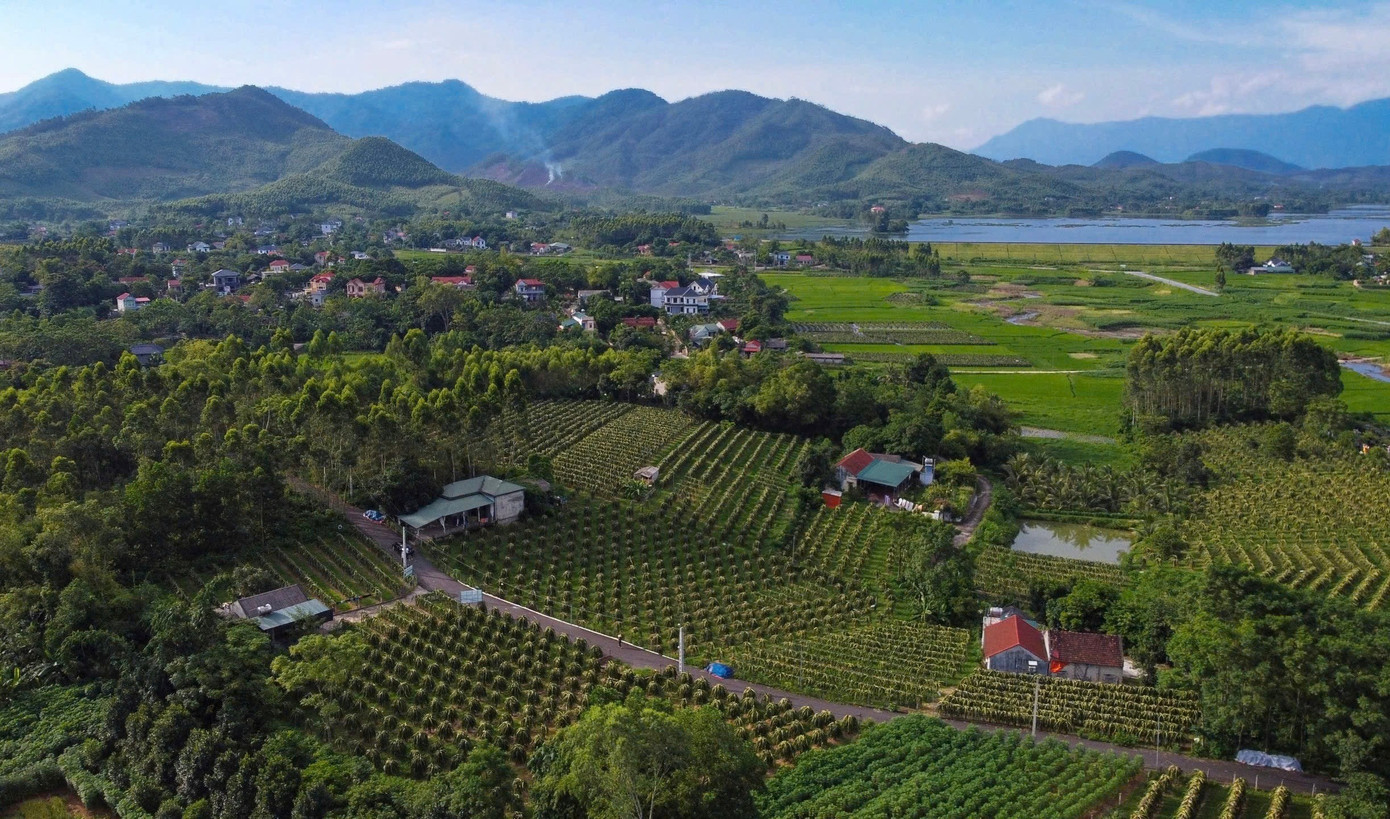
Based on the achievements and practical development requirements of dragon fruit cultivation in the locality, the People's Committee of Vinh Phuc province (formerly) reviewed, planned, and implemented a pilot dragon fruit planting project from 2011 to 2013. By 2018, the pilot program for investing in the sustainable development of dragon fruit production areas for export and domestic consumption continued, following a production-consumption linkage model, covering 300 hectares, mainly concentrated in Lap Thach commune (now).
As one of the households participating in the project since 2012, Ms. Nguyen Thi Minh Phuong from Tam Phu village, Lap Thach commune, shared: “My family used to be a poor household. We had a large area of hilly land but only planted eucalyptus trees, which yielded very low economic returns. When the project was launched, with the province providing fertilizer and technical support, we boldly cleared the eucalyptus trees on the hill to plant 300 red-fleshed dragon fruit trees.”
Thanks to the crop diversification, Ms. Phuong's family life has gradually improved. From a difficult situation, her family has escaped poverty, has a stable income, and is able to buy more land to expand production. Currently, the family's dragon fruit plantation has increased to 3.2 hectares with 4,000 trees. With an average selling price of 25,000 - 30,000 VND/kg, the family earns about 1.4 billion VND per year, and after deducting expenses, the profit is about 600 million VND.
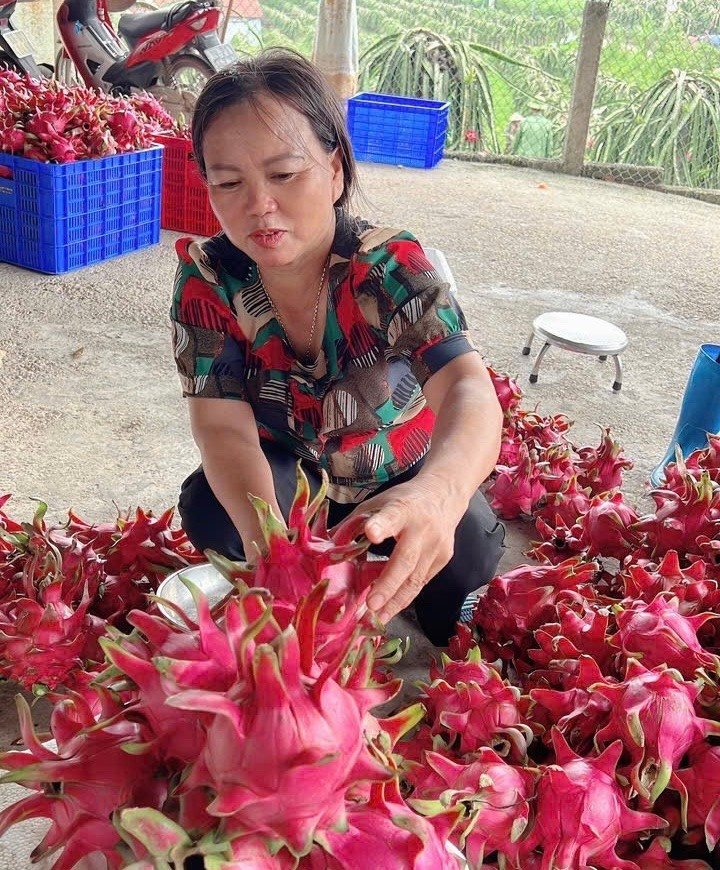
After nearly 20 years of introducing red-fleshed dragon fruit to the land of Lap Thach, it has contributed to stabilizing income and developing a sustainable economy for local households. The scale of cultivation is expanding, mainly concentrated in the villages of Tam Phu, Dong Nui, Con Voi, Phao Trang, Thanh Cong, Xuan Trach, and Rung Trung. Thanks to suitable climatic conditions and the application of cultivation techniques, the average yield reaches over 22 quintals/hectare, with the total production in the region estimated at nearly 300 tons per year. With selling prices ranging from 25,000 to 30,000 VND/kg, after deducting costs, each hectare of dragon fruit yields a profit of 250-300 million VND.
Speaking with a reporter from Tien Phong Newspaper, Mr. Vu Dinh Tho, Deputy Head of the Economic and Budget Committee of the People's Council of Lap Thach commune, said: "The entire commune has more than 100 households participating in the red-fleshed dragon fruit cultivation project, of which 35% are poor and near-poor households. After only 5 years, most have risen out of poverty, and many households have become relatively well-off. The commune has identified red-fleshed dragon fruit as a key economic crop, so we will expand the area from 200 hectares to 300 hectares, while increasing the percentage of area meeting VietGAP standards, and moving towards GlobalGAP to serve official export."
Source: https://tienphong.vn/thanh-long-ruot-do-giup-nong-dan-phu-tho-but-len-thoat-ngheo-post1803588.tpo








![Looking back at the peak month of combating IUU: [Part 3] Synchronizing fisheries infrastructure](https://vphoto.vietnam.vn/thumb/402x226/vietnam/resource/IMAGE/2025/12/13/1765608279533_2109-b32-133759_237.jpeg)










































































Comment (0)