

More dengue fever deaths reported; people should not be complacent about the epidemic.
On August 16th, the Dak Lak Provincial Center for Disease Control announced a death due to dengue fever in Buon Ma Thuot city. This is the first dengue-related death in Dak Lak since the beginning of the year.
Since the end of July, dengue fever cases have increased rapidly in Dak Lak province, with many outbreaks and "hot spots" of the disease. Recently, the People's Committee of Dak Lak province also issued a document requesting departments, agencies, organizations, and the People's Committees of districts, towns, and cities to strengthen the implementation of dengue fever prevention and control activities.
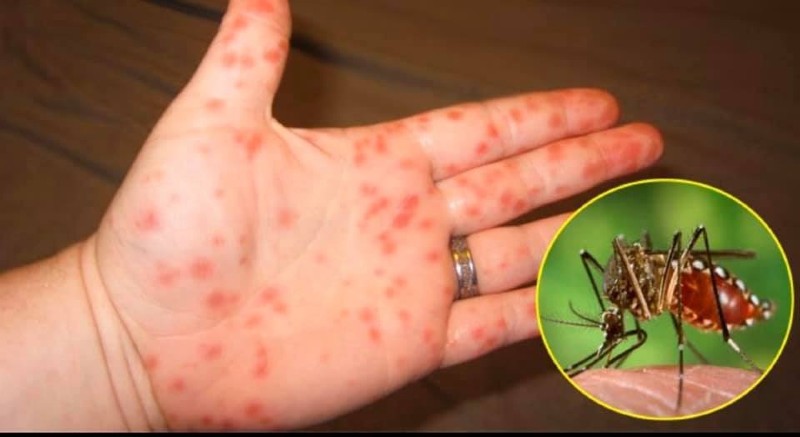 |
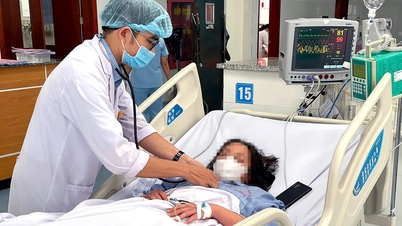
| There have been a series of deaths due to dengue fever. |
The Provincial People's Committee has instructed relevant units to urgently organize and implement an environmental sanitation campaign, thoroughly treat high-risk water containers, and eliminate mosquito larvae and pupae in all agencies, units, and households in the province.
Health centers are strengthening surveillance to detect patients early in the community, thoroughly handling detected dengue fever cases and outbreaks; organizing chemical spraying in 100% of households in outbreak areas, ensuring proper techniques and monitoring and evaluating vector indices before and after spraying…
According to statistics from the Provincial Center for Disease Control, from the beginning of 2024 to August 15th, the province recorded 1,453 cases of dengue fever.
In Hai Phong , according to information from the Hai Phong Department of Health, at approximately 4 PM on August 8, 2024, the Le Chan District Health Center received information from the Hai Phong CDC reporting a case of death at home in Thien Loi, Le Chan District, involving a patient named Bui THH, born in 1979, diagnosed with Dengue shock - severe pneumonia, secondary infection, and multiple organ failure.
Meanwhile, in Hanoi, during July, the Center for Tropical Diseases at Bach Mai Hospital continuously received severe cases of dengue fever with complex developments, numerous warning signs, dangerous complications, and a high risk of death.
According to Associate Professor Dr. Do Duy Cuong, Director of the Center for Tropical Diseases, in July alone, the Center received dozens of dengue fever cases with warning signs requiring hospitalization.
The difference this year is that in suburban areas like Hoai Duc, Dan Phuong, Phuc Tho, etc., and provinces like Hai Phong, Hai Duong, Thai Binh, etc., dengue fever cases seem to be occurring earlier and more severely than in previous years.
A typical case is a 25-year-old male patient from Hoang Mai, Hanoi, who had a fever for 5 days and was admitted to the hospital. He tested positive for Dengue fever. During treatment, the patient developed severe liver failure, a rapid drop in platelet count, and blood concentration.
According to Associate Professor Cuong, dengue fever is an infectious disease caused by the dengue virus. Dengue fever is characterized by fever, bleeding, and plasma leakage, which can lead to hypovolemic shock, coagulation disorders, and organ failure. If not diagnosed early and treated promptly, it can easily lead to death.
Dengue virus has four types: DEN-1, DEN-2, DEN-3, and DEN-4. The virus is transmitted from infected individuals to healthy individuals through mosquito bites. The Aedes aegypti mosquito is the primary vector. The disease affects both children and adults year-round, often increasing during the rainy season.
Dengue fever presents with diverse clinical manifestations and progresses rapidly from mild to severe. The disease usually starts suddenly and progresses through three stages: the febrile stage, the critical stage, and the recovery stage.
Early detection of the disease and a thorough understanding of the clinical issues at each stage of the illness enable early diagnosis, correct and timely treatment, and ultimately save patients' lives.
Fever phase: Clinical symptoms will include: Sudden, continuous high fever. Headache, loss of appetite, nausea. Skin congestion. Muscle pain, joint pain, pain in both eye sockets.
Common symptoms include petechiae (small hemorrhagic spots) under the skin, bleeding gums, or nosebleeds. Laboratory findings show a normal hematocrit (Hct) of red blood cells. Platelet counts are normal or gradually decreasing (but still above 100,000/mm³). White blood cell counts are usually decreased.
The critical phase: usually occurs on days 3-7 of the illness. The patient may still have a fever or the fever may have subsided. The following symptoms may occur: Severe and continuous abdominal pain or increased pain, especially in the liver area. Vomiting.
Plasma leakage is caused by increased vascular permeability (usually lasting 24-48 hours). This includes pleural effusion, interstitial edema (which can cause respiratory failure), peritoneal effusion, and eyelid edema. If plasma leakage is significant, it can lead to shock with symptoms such as restlessness, agitation or lethargy, cold extremities, rapid and weak pulse, narrow or hypotensive blood pressure, unmeasurable blood pressure, unpalpable pulse, cold skin, cyanosis (severe shock), and oliguria.
Subcutaneous hemorrhage: Scattered petechiae or purpura, usually on the front of both lower legs and the inner sides of both arms, abdomen, thighs, flanks, or as patches of bruising.
Mucosal bleeding such as bleeding gums, nosebleeds, vomiting blood, black or bloody stools, vaginal bleeding, or blood in the urine.
With severe bleeding: Severe nosebleeds (requiring packing or gauze to stop bleeding), severe vaginal bleeding, bleeding in muscles and soft tissues, gastrointestinal and visceral bleeding (lungs, brain, liver, spleen, kidneys), often accompanied by shock, thrombocytopenia, tissue hypoxia, and metabolic acidosis which can lead to multiple organ failure and severe intravascular coagulation.
Severe bleeding can also occur in patients taking anti-inflammatory drugs such as acetylsalicylic acid (aspirin), ibuprofen, or corticosteroids, or those with a history of peptic ulcers or chronic hepatitis.
Some severe cases may present with organ failure such as severe liver damage/hepatitis, kidney damage, heart damage, lung damage, brain damage, altered consciousness, and dysfunction of other organs. These severe manifestations can occur in patients with or without shock due to plasma leakage.
Recovery phase: Usually from day 7 to day 10: Fever subsides, platelet count gradually increases again, urination increases, and appetite returns. The recovery period can last for months afterward.
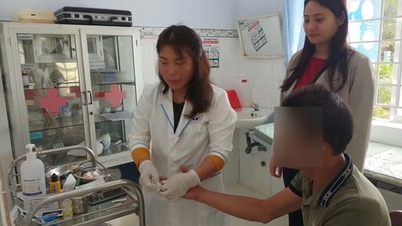
According to Associate Professor Dr. Do Duy Cuong, Director of the Center for Tropical Diseases, when experiencing sudden, persistent high fever, headache, and body aches, patients should go to medical facilities for examination, testing, and assessment of signs and symptoms. Dengue fever needs to be diagnosed and treated early; avoid self-medicating and administering intravenous fluids at home.
The Aedes egypti mosquito is the primary source of disease transmission. These mosquitoes typically live in areas close to human settlements and urban centers. It is important to address and eliminate dark, damp areas and stagnant water sources that provide breeding grounds for mosquitoes.
In addition, it is necessary to spray insecticides to kill mosquitoes, use mosquito repellent and traps, install mosquito nets on windows, and use mosquito nets when sleeping.
Currently, there is no vaccine or specific treatment for dengue fever in Vietnam. Therefore, if dengue fever is suspected or diagnosed, patients should seek medical help, rest, and drink plenty of fluids.
"Patients can take Paracetamol to reduce fever and relieve pain. Absolutely do not take Aspirin or Ibuprofen because these two drugs can increase the risk of bleeding," Associate Professor Dr. Do Duy Cuong emphasized.
Source: https://baodautu.vn/them-ca-tu-vong-do-sot-xuat-huyet-nguoi-dan-khong-chu-quan-voi-dich-d222560.html



![[Photo] Closing Ceremony of the 10th Session of the 15th National Assembly](/_next/image?url=https%3A%2F%2Fvphoto.vietnam.vn%2Fthumb%2F1200x675%2Fvietnam%2Fresource%2FIMAGE%2F2025%2F12%2F11%2F1765448959967_image-1437-jpg.webp&w=3840&q=75)












































![[OFFICIAL] MISA GROUP ANNOUNCES ITS PIONEERING BRAND POSITIONING IN BUILDING AGENTIC AI FOR BUSINESSES, HOUSEHOLDS, AND THE GOVERNMENT](https://vphoto.vietnam.vn/thumb/402x226/vietnam/resource/IMAGE/2025/12/11/1765444754256_agentic-ai_postfb-scaled.png)









































Comment (0)