

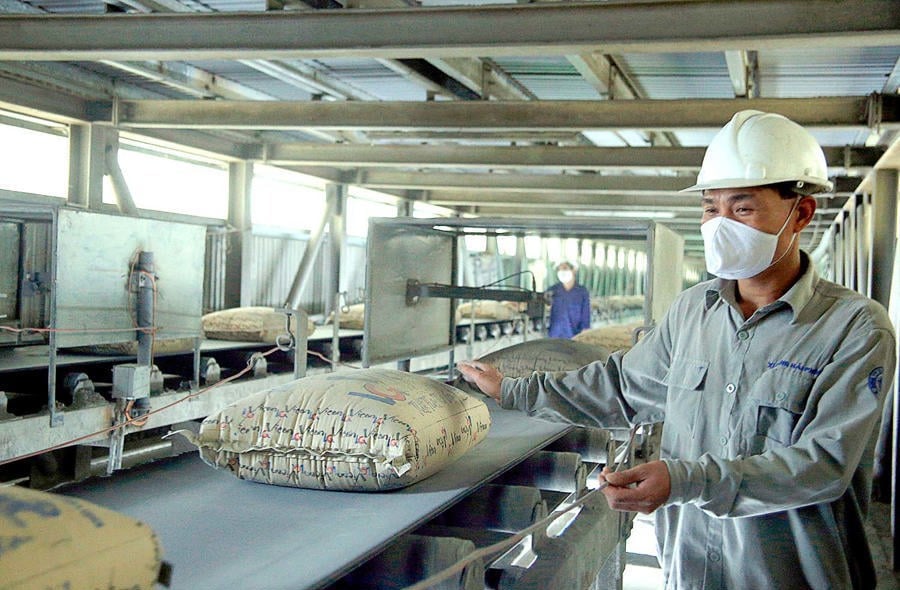
A positive sign.
Chairman of the Vietnam Cement Association, Nguyen Quang Cung, shared that the Prime Minister has just issued Directive 28/CT-TTg dated August 26, 2024, on a number of solutions to remove difficulties and obstacles and promote the production and consumption of cement, steel, and construction materials. This is a welcome sign for the cement industry in general and manufacturing enterprises in particular.
Association leaders believe that 2/4 of the tasks and solutions outlined in the recent Prime Minister's directive involve researching and adjusting tax policies on the export of cement clinker to ensure competitiveness with other exporting countries, in line with the Comprehensive and Progressive Trans- Pacific Partnership (CPTPP) agreement on not taxing exports to signatory countries.
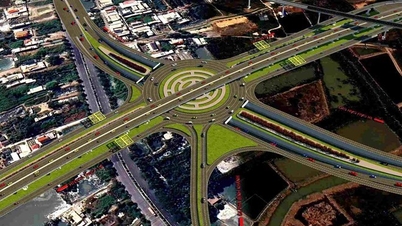
Simultaneously, research should be conducted to increase the proportion of reinforced concrete viaducts chosen for highway projects, especially in areas requiring flood drainage; areas with deep weak soil; and areas lacking embankment materials, such as the Mekong Delta. Research should also be conducted to maximize the use of cement-based soil stabilization in road construction at bridge and culvert approaches, locations with large embankment heights, and locations with significant depth of weak soil.
"The recommendations from the cement industry and the Association have been accepted regarding both export taxes on clinker and cement, as well as investment in soil reinforcement for bridge and road construction in Vietnam. This is very encouraging news," said Mr. Nguyen Quang Cung.
The Chairman of the Cement Association further shared that currently, the cement industry is under immense pressure from oversupply, low domestic consumption, extremely difficult exports, continuously declining export prices of cement and clinker, and heavy pressure on businesses to reduce greenhouse gas emissions. Many products have to be sold below cost, incurring variable costs, which means the industry is gradually becoming exhausted. Therefore, technological solutions need to be applied to reduce production costs and emissions, and investments in environmental protection are necessary to increase economic efficiency.
According to the Association's 2023 statistics, the cement market can be considered the most sluggish in history. However, as of now, total cement consumption is only 97% compared to the same period in 2023. It is highly likely that the market situation this year will not see much improvement compared to last year.
A series of solutions
Energy saving and emission reduction in cement production is a very challenging task. Currently, several countries around the world have applied advanced technologies to improve production, which domestic businesses can learn from.
Liu Jianhua, Executive Deputy General Manager of Nanjing-CHOPE International Engineering Co., Ltd., shared that the current state of long-operating cement plants is characterized by high heat and electricity consumption, unstable product quality, and pollution emission levels exceeding standards. The main goal of the improvement project is to reduce energy consumption.
Reducing energy consumption, decreasing pollutant emissions, promoting the development of low-carbon green industries, and continuously improving air quality are key measures. These include optimizing furnace and grinding systems to save energy and reduce emissions; reducing system power consumption to increase output; utilizing gas for power generation; and implementing intelligent systems.
Furthermore, to address the challenges faced by heat exchanger tower systems, the more extensive the renovation, the larger the scale of the renovation. Based on the scale of renovation, businesses typically categorize them into three types (optimization, resistance reduction, and volume expansion).
With this optimization approach, the goal is to identify gaps in equipment management, as well as minor defects in existing equipment, and promptly address urgent bottlenecks. The amount of on-site work is not large, the investment cost is low, and the construction time is short. However, after the adjustments, the system is also more stable, helping to increase production by a small amount.
Next, by adding measures to reduce system resistance, the airflow from the ID fan is further released. If other bottlenecks such as the calciner furnace volume do not exist, the feed rate can be increased according to productivity to achieve a slight increase in output. Finally, expanding the calciner furnace volume to increase the diameter and length of the calciner furnace pipes by 20-50% can meet the demand for lower-quality coal or alternative fuels, significantly increasing output (over 30%).
Professor Xiao Guotian, an expert in alternative fuel technology from Nanjing International Engineering Company (CHOPE), presented the issue of auxiliary combustion chambers – an advanced technological solution for using waste as alternative fuel. This approach will help cement manufacturers reduce the cost of producing cement clinker.
The advantages of using alternative fuels in cement kilns include increased efficiency in alternative fuel processing and a lower fuel replacement rate at the end of the tower. This reduces the impact on the quality and product of the cement kiln, and the alternative fuel improves combustion efficiency while reducing CO, SO2, and other emissions from the kiln.
Source: https://kinhtedothi.vn/them-giai-phap-giup-doanh-nghiep-xi-mang-tiet-kiem-hoat-dong-hieu-qua.html














































































Comment (0)