

The most common score (median score) achieved by candidates in Literature this year is 7.25; lower than in 2014 (8 points) and higher than in 2023 (7 points).
There are many reasons why there were no perfect scores (10/10) in Literature in this year's high school graduation exam.
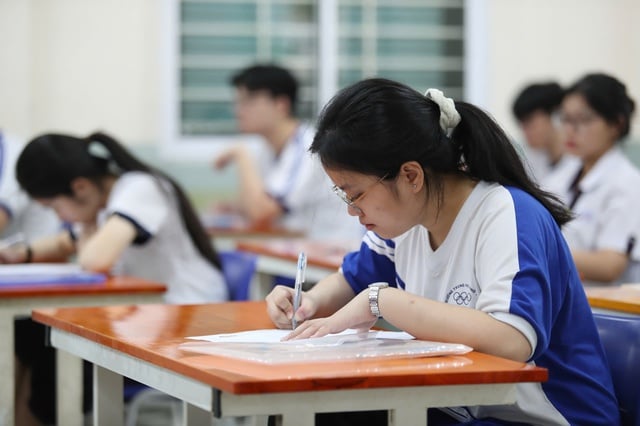
Candidates before officially taking the Literature exam in the 2025 high school graduation exam.
Photo: Nhat Thinh
Firstly, because this year's literature exam follows the new curriculum, the structure and requirements of the exam are innovative. The reading comprehension text, integrated with the requirement to write a paragraph and a social commentary essay, is text outside the curriculum and not found in the textbook. This may make it more difficult for candidates. Candidates have to spend more time reading and understanding the text, while the time limit remains unchanged (120 minutes), making it difficult to fully develop their ideas and write at length. In fact, essays that previously achieved a perfect 10 score were those that fully developed their ideas and were well-written. Candidates who want to score creatively also find it difficult because they dare not include too much in their essays due to the length limit and insufficient writing time.
Secondly, the exam questions relate to new literary concepts from the curriculum that students may forget or answer incorrectly if they don't have a firm grasp of them. These include "narrative perspective," "the role of details in expressing the content of a text," comparison skills (in the reading comprehension section); and writing an analytical paragraph about an aspect of a literary work (in the essay writing section)... The disadvantage for students taking the high school graduation exam in literature this year (and for the next two years) is that they have only studied the new curriculum for three years in high school, while many new literary concepts have been taught thoroughly in junior high school.
Thirdly, the grading rubric contains several unexpected requirements, such as questions 3, 4, and 5 in the reading comprehension section; and question 2 in the essay section (which is too detailed and contains too many points, making it difficult for candidates to answer them all). Although the grading rubric is open-ended, examiners must be cautious and dare not risk giving perfect scores.
Finally, the psychological factor of the examiners must be considered. Examiners of papers under the new curriculum face significantly more difficulties than those under the old curriculum. The Ministry of Education and Training and the grading committees have requested and encouraged teachers to grade fairly, adhering strictly to the spirit of the answer key, including requirements for flexibility and open grading... But determining how to be flexible and to what extent to award a perfect score remains truly challenging. In the old curriculum, the character of Mị (in Tô Hoài's *The Couple A Phủ *) might have appeared similarly in students' papers, but in the new curriculum, there are countless variations in the actual work. This could hinder examiners from confidently recommending a paper for a perfect 10. These could be the reasons why this year's exam lacked perfect 10 papers in the Literature subject.
Source: https://thanhnien.vn/thi-tot-nghiep-thpt-2025-vi-sao-mon-ngu-van-khong-co-diem-10-185250717095153223.htm


![[Photo] Prime Minister Pham Minh Chinh holds a phone call with the CEO of Russia's Rosatom Corporation.](/_next/image?url=https%3A%2F%2Fvphoto.vietnam.vn%2Fthumb%2F1200x675%2Fvietnam%2Fresource%2FIMAGE%2F2025%2F12%2F11%2F1765464552365_dsc-5295-jpg.webp&w=3840&q=75)













































































Comment (0)