

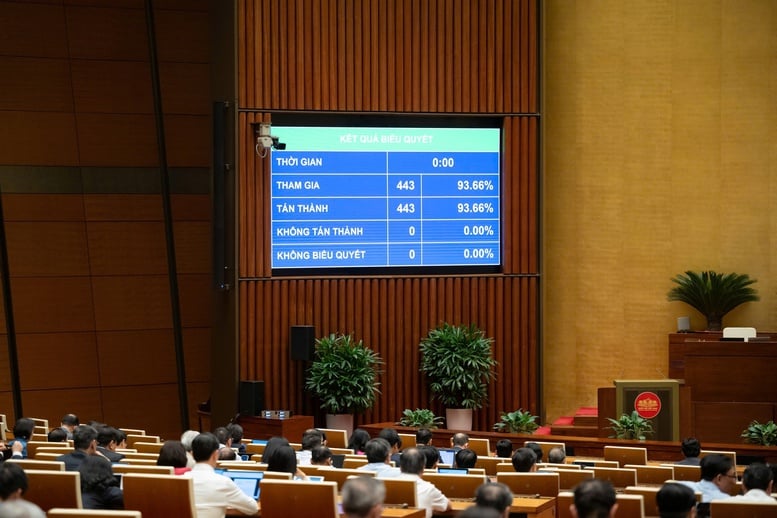
The National Assembly voted to approve the Resolution on adjusting the National Master Plan for the period 2021-2030, with a vision to 2050.
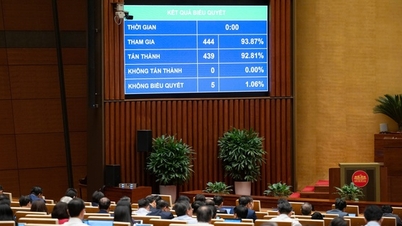
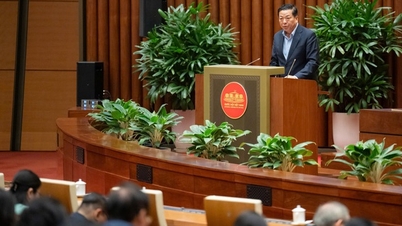
On the afternoon of December 10th, the National Assembly voted to approve the Resolution on adjusting the National Master Plan for the period 2021-2030, with a vision to 2050, with an absolute majority of 100% of the attending delegates voting in favor (443/443).
Finalize development targets and supplement strategic directions in accordance with the spirit of the Politburo Resolution.
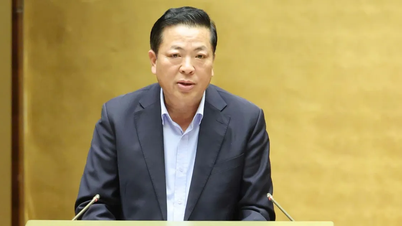
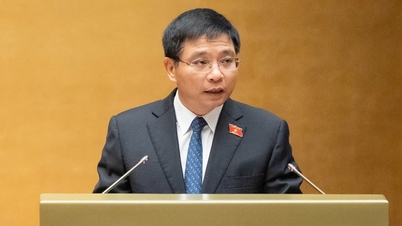
Before the vote, the National Assembly heard Minister of Finance Nguyen Van Thang present a report on the revisions and amendments to the draft resolution. According to the Minister, the Government had reviewed all targets in the plan, ensuring consistency with the strategic objectives outlined in the draft Political Report submitted to the 14th National Congress and the resolutions of the Politburo.
Several important indicators have been added, most notably the proportion of the processing and manufacturing industry reaching approximately 28% of GDP, accurately reflecting the goal of developing a modern, high-value-added production sector.
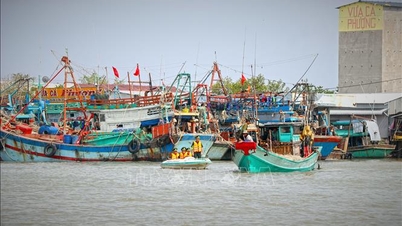
In the section on regional development orientations, the resolution adds a series of strategic directions such as developing cultural industries and preserving heritage in the Red River Delta; clarifying the regional center role of Da Nang and Can Tho; emphasizing the goal of forming free trade zones in the Southeast region and developing coastal economic zones in the South Central Coast and Central Highlands.
The four national economic growth zones outlined in Resolution 81 have been expanded to encompass areas with rapid industrial and urban development and convenient infrastructure connections. Simultaneously, the resolution adds the North Central economic growth zone, comprising Thanh Hoa, Nghe An, and Ha Tinh provinces, to exploit the potential of the North-South economic corridor.
Promoting the development of transportation infrastructure, university cities, and heritage economy.
The resolution adjusting the planning also adds important content related to social infrastructure. The government is directing the relocation and expansion of higher education institutions, linked to the formation of modern university cities; and developing the heritage economy through investment in restoration, preservation, and exploitation of cultural values.
Regarding the field of medical education, suggestions related to the layout of training facilities and social policies have been noted for further study and implementation in accordance with practical realities.
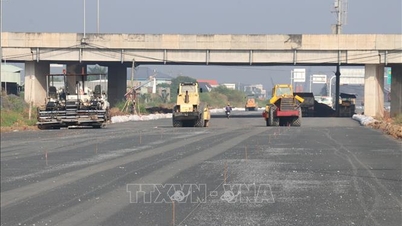
In the field of technical infrastructure, the resolution emphasizes the need to accelerate investment in strategic transportation infrastructure, expand inter-regional connectivity, and develop new economic corridors.
The government has added a research orientation to extend the urban railway lines in Hanoi and Ho Chi Minh City, investing in key railway lines to enhance transport capacity and reduce road traffic congestion.
The resolution specifically emphasizes the task of strengthening disaster prevention and response capabilities in the context of increasingly complex climate change.
Additional content includes building and upgrading infrastructure systems for flood and landslide prevention, urban drainage, resource and environmental protection, and proactively adapting to climate change.
The resolution expands the implementation of the flood and landslide prevention program in the midland and mountainous regions, enhances the capacity for forecasting and warning of natural disasters, builds an early flood warning system, and organizes the relocation of residents from high-risk areas.
Phuong Lien
Source: https://baochinhphu.vn/thong-qua-mot-trong-nhung-nghi-quyet-quan-trong-nhat-cua-ky-hop-hoan-thien-tam-nhin-phat-trien-den-nam-2050-10225121018055947.htm













![[Infographic] Cross-exchange rates for determining taxable value from December 11-17](https://vphoto.vietnam.vn/thumb/402x226/vietnam/resource/IMAGE/2025/12/11/1765413245543_infographic-ty-gia-tinh-cheo-de-xac-dinh-tri-gia-tinh-thue-tu-11-1712-20251211021920.jpeg)










![[Video] The craft of making Dong Ho folk paintings has been inscribed by UNESCO on the List of Crafts in Need of Urgent Safeguarding.](https://vphoto.vietnam.vn/thumb/402x226/vietnam/resource/IMAGE/2025/12/10/1765350246533_tranh-dong-ho-734-jpg.webp)























































Comment (0)