

The Ministry of Finance stated that the Vietnam-Japan relationship is a prime example of successful bilateral cooperation between Vietnam and its partners. By the end of July this year, Japan had over 5,000 active projects with a total registered investment capital of US$79 billion.
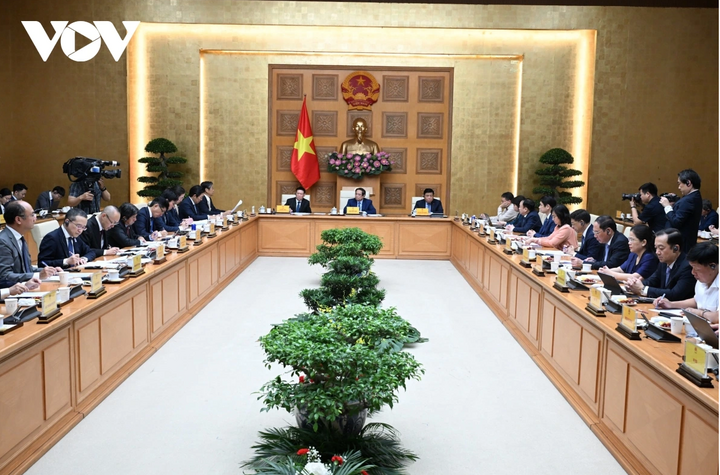
Overview of the seminar.
Over the past seven months, Japan's total registered investment capital reached US$2.3 billion, a 7.4% increase year-on-year, with 158 newly registered projects, ranking 4th out of 97 countries and territories investing in Vietnam. Some notable Japanese projects in Vietnam include the Nghi Son Refinery and Petrochemical Project in Thanh Hoa; the smart city project in Dong Anh, Hanoi ; and the Nghi Son 2 BOT Thermal Power Plant Project in Thanh Hoa province.
Vietnamese investors have invested in 126 projects in Japan with a total registered investment capital of US$20 million. These projects are concentrated in the science and technology, wholesale, and retail sectors. Several prominent Vietnamese businesses have implemented and expanded their investment cooperation activities in Japan, thereby contributing to the overall socio -economic development of both countries.
Japanese Ambassador to Vietnam Ito Naoki expressed that the seminar reflects Japan's desire to work with Vietnam to achieve high economic growth rates and to be a supportive partner in this process. He hoped that both sides would engage in constructive discussions, definitively resolve obstacles, review the progress of work implemented so far, and set directions for future solutions, especially regarding investment sharing for the future and reform orientations, thereby contributing to Vietnam's reform process.
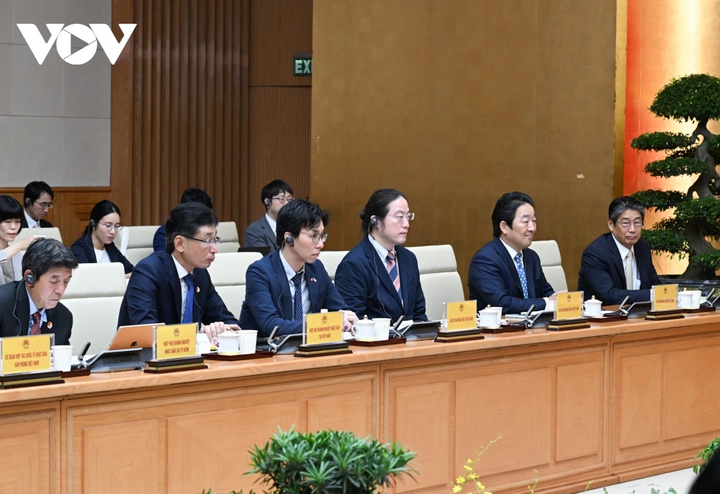
Representatives of Japanese businesses.
The ambassador also stated that Japan would propose a new Japanese project, as well as new loan packages within the framework of the Asian Community of Net Zero Emissions, and emphasized that the seminar was an opportunity to strengthen cooperation between businesses and people of the two countries.
At the seminar, Japanese corporations and businesses raised difficulties and obstacles in their investment and business projects in Vietnam; they proposed solutions to the Vietnamese Government, the Prime Minister, ministries, and localities, thereby creating favorable conditions to further promote Japanese investment in Vietnam.
Suggestions were made to strengthen comprehensive cooperation in areas with potential strengths such as industrialization, high-quality human resource training, innovation, and digital transformation to support the enhancement of the competitiveness of Vietnamese businesses; and to promote cooperation in developing supply chains and trade, while maintaining Vietnam's role as a crucial link in the global value chain.
We propose that Japan continue to pay attention to and increase ODA support to help Vietnam implement important and synchronized infrastructure investment projects, which will serve as a driving force for economic development in the new era; accelerate the research and expansion of investment projects in Vietnam; strengthen cooperation in human resource training, research and technology transfer; and enhance cooperation in the financial sector, especially green finance...
Speaking at the seminar, Prime Minister Pham Minh Chinh thanked Japan for its continued support and sincere affection, trust, and trust in Vietnam and its people. He affirmed that the two countries are moving in the right direction, bringing benefits to both countries, agencies, units, and businesses, and contributing to maintaining a peaceful, cooperative, and developing environment in the world.
Looking ahead, the global situation remains extremely complex. The Prime Minister emphasized that both sides must further strengthen their unity, support, and assistance to the highest degree, fostering a sincere, trustworthy, and effective relationship that brings common benefits to both countries, their people, and businesses.
The obstacles faced by investment and business projects in Vietnam, discussed at the seminar, were addressed. According to the Prime Minister, the key takeaway is the need for working groups to discuss and agree on deadlines for resolution; issues exceeding authority should be reported to higher levels of authority. The resolution process should be conducted with a proactive, receptive, and trusting spirit.
" We welcome Japan's proactive approach in proposing practical work groups for Vietnam. These include the group on energy infrastructure development and the group related to policies such as taxes and incentives... I request the Ministry of Finance to carefully study these proposals and listen to feedback from businesses before implementing them ," the Prime Minister stated.
Prime Minister Pham Minh Chinh stated that Vietnam is actively amending the Land Law, including addressing the issues raised by Japan. Other issues such as tax refunds and food safety are also being actively resolved in Vietnam.
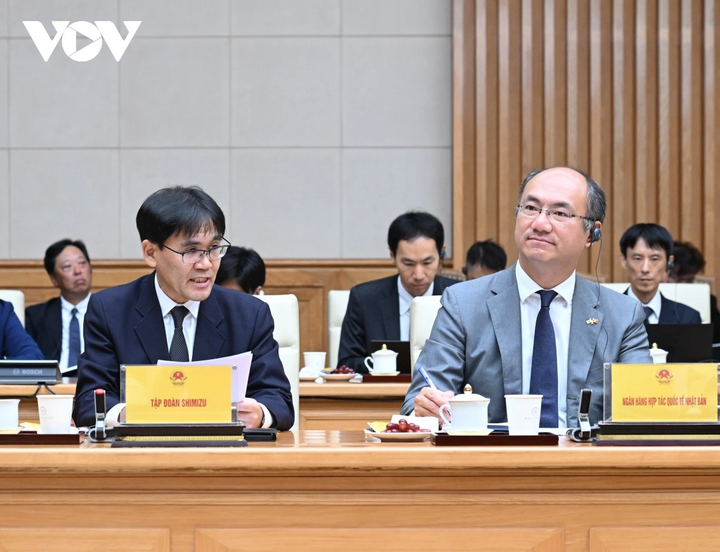
Representatives of Japanese businesses.
The Prime Minister emphasized that Vietnam is ready to listen to the opinions of Japanese businesses in the spirit of "harmonious interests and shared risks"; conducting research, consulting, and developing a roadmap. "Nothing is impossible to solve," he said, adding, "together we can discuss and resolve issues, meeting the requirements of all parties."
Regarding energy issues, the Prime Minister stated that Vietnam has energy corporations that will discuss with Japanese partners to create a competitive electricity market and clean energy for rapid and sustainable development.
The Prime Minister affirmed that Vietnam is striving to build an active, honest, constructive, open-minded, and attentive government.
" I propose that Japan continue to cooperate with Vietnam in resolving issues related to FDI investment projects, loans, and the implementation of new-generation ODA projects; and in indirect investment in international financial centers in Ho Chi Minh City and Da Nang. Secondly, focus on developing a green economy and a digital economy. Thirdly, transfer technology to Vietnam, contributing to the training of high-quality human resources, especially in emerging fields such as artificial intelligence (AI) and semiconductors, and contributing to building smart governance ," Prime Minister Pham Minh Chinh proposed.
Source: https://vtcnews.vn/thu-tuong-pham-minh-chinh-chu-tri-toa-dam-voi-doanh-nghiep-nhat-ban-ar959386.html


![[Photo] Closing Ceremony of the 10th Session of the 15th National Assembly](/_next/image?url=https%3A%2F%2Fvphoto.vietnam.vn%2Fthumb%2F1200x675%2Fvietnam%2Fresource%2FIMAGE%2F2025%2F12%2F11%2F1765448959967_image-1437-jpg.webp&w=3840&q=75)


![[Photo] Prime Minister Pham Minh Chinh holds a phone call with the CEO of Russia's Rosatom Corporation.](/_next/image?url=https%3A%2F%2Fvphoto.vietnam.vn%2Fthumb%2F1200x675%2Fvietnam%2Fresource%2FIMAGE%2F2025%2F12%2F11%2F1765464552365_dsc-5295-jpg.webp&w=3840&q=75)


































![[OFFICIAL] MISA GROUP ANNOUNCES ITS PIONEERING BRAND POSITIONING IN BUILDING AGENTIC AI FOR BUSINESSES, HOUSEHOLDS, AND THE GOVERNMENT](https://vphoto.vietnam.vn/thumb/402x226/vietnam/resource/IMAGE/2025/12/11/1765444754256_agentic-ai_postfb-scaled.png)











































Comment (0)