

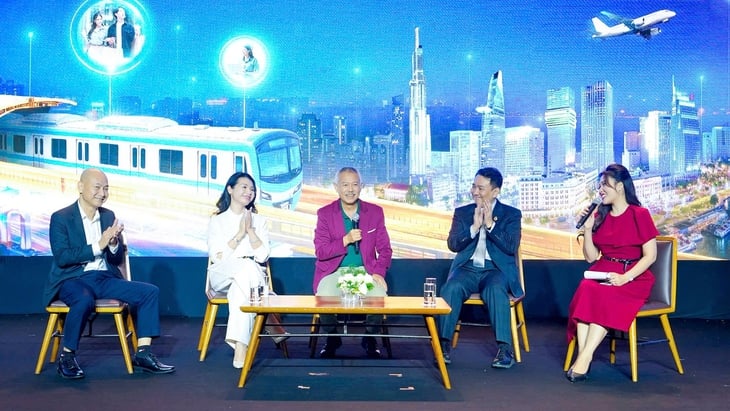
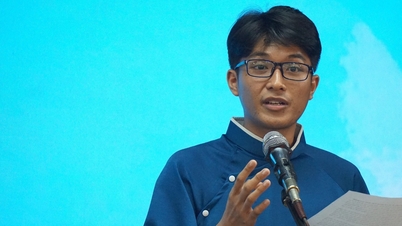
Experts, representatives of state agencies and businesses discussed lifestyle economy as a new growth driver - Photo: HUU HANH
At the workshop "Lifestyle Economy - New Growth Driver of Ho Chi Minh City" organized by Tuoi Tre newspaper in collaboration with the Ho Chi Minh City Department of Industry and Trade, with the support of Phu Nhuan Jewelry Joint Stock Company (PNJ) and Masterise Homes Real Estate Development Company Limited, held on the afternoon of December 5, experts and businesses pointed out the current situation and offered advice for Ho Chi Minh City's lifestyle economy to develop strongly in the coming time.
When consumers pay for experiences
Journalist Tran Xuan Toan, Deputy Editor-in-Chief of Tuoi Tre newspaper, believes that the lifestyle economy will be an economy of "personalized" products. However, compared to other developed countries, this economy has only been recognized in Vietnam and Ho Chi Minh City in the past decade.
According to Mr. Toan, the city with a new scale, new space and new supply and demand will need to identify this economy as one of the important development drivers.
A survey by Tuoi Tre newspaper at the conference showed that 76.2% of participants responded that efforts from businesses and consumers, combined with policy support, are needed to create momentum for Ho Chi Minh City's lifestyle economy.
"HCMC has a large demand as one of the largest cities in Vietnam, and the supply is from domestic and foreign businesses available in the city," said Mr. Toan.
Taking the example of drinking coffee, Associate Professor Dr. Dinh Tien Minh, Head of the Marketing Department, Faculty of International Business & Marketing, UEH Business School, Ho Chi Minh City University of Economics, said that nowadays, users pay not only to buy products and services but also to buy experiences and affirm their "identity".
In the past, drinking coffee only helped people stay awake to work, so they only cared about whether the cup of coffee tasted good or not, or was cheap. But now, in addition to helping them stay awake, drinking coffee is also considered a way to start a new professional day, creating a good mood. A cup of coffee is not only used for drinking but also for taking pictures, showing taste, spending ability, and modern lifestyle.
Lifestyle economics is contributing to the diversification of the economy. The report Future of Asia - The new face of Vietnamese consumers (McKinsey), cited by Mr. Minh, shows that by 2035, over half of Vietnam's population will be middle class. At that time, this group will strongly shift from consuming "to make ends meet" to consuming to affirm "lifestyle".
In the context of Ho Chi Minh City aiming to become a creative and livable city by 2030, lifestyle economy is considered a new approach to help improve the quality of life, promote creative consumption and create urban identity. Along with a young population, improved income and the ability to quickly embrace trends, Ho Chi Minh City has all the conditions to become the lifestyle economic center of the region.
Ms. Luu Bao Huong, Chairman of GG Corporation, believes that lifestyle is not an economy that serves a luxury style, but an economy of choosing healthy living, choosing space for the mind, and choosing values that support a quality life.
"From my own work experience, I see that the need to find solutions to help people become healthier and younger is increasing rapidly, and this will also be a potential economic sector in the near future," Ms. Huong said.
Businesses must also transform themselves.
Lifestyle economics has emerged as a potential approach - where the need for self-expression and personalization in each product and service is put first - Video : TRUONG KIEN - THANH TRUC - CONG TUAN
Mr. Le Tri Thong, Chairman of the Ho Chi Minh City Young Entrepreneurs Association, Vice Chairman of the Board of Directors and General Director of Phu Nhuan Jewelry Joint Stock Company (PNJ), said that whether at present or in the 1980s - 1990s, the lifestyle economy has always been there, despite different levels of evolution.
Regarding the potential for lifestyle economic development, from a demand perspective, Mr. Thong said that Vietnam is at a time of generational transition, with the number of middle-class customers and young customers having very different purchasing behavior compared to the previous generation.
The generation born in the 1980s still has the imprint of years of poverty, so the consciousness of saving is always in the subconscious, while the generation born from 2000 grew up in years of economic development, so they are willing to pay for experiences and intangible values.
According to Mr. Thong, nowadays young people have too many "stages" to "perform" and express themselves such as office, social networks, going out, going to coffee shops... completely different from the past when they had to wait for special occasions, or wait until weddings... so their consumption needs are also different, they have the need to express themselves to society.
Besides, because the world is flat, the consumption level of Vietnamese people is approaching the world very quickly, even almost no longer having the gap.
According to Mr. Thong, consumers today pay not only for the basic features of the product but also for the space and quality of the product.
At the supply end, businesses also move up the ladder along with the maturity of consumers. Take Techcombank for example, they not only promote the bank's products but also coordinate to organize a very large and resounding music program.
"Previously, consumers imagined banks as something very closed off, high-end services, only for the rich, but with the lifestyle economy, we can see the convergence of artists, KOLs... combined with financial and media stories," said Mr. Thong.
Without pursuing lifestyle economy, Ho Chi Minh City will find it difficult to achieve growth breakthrough.
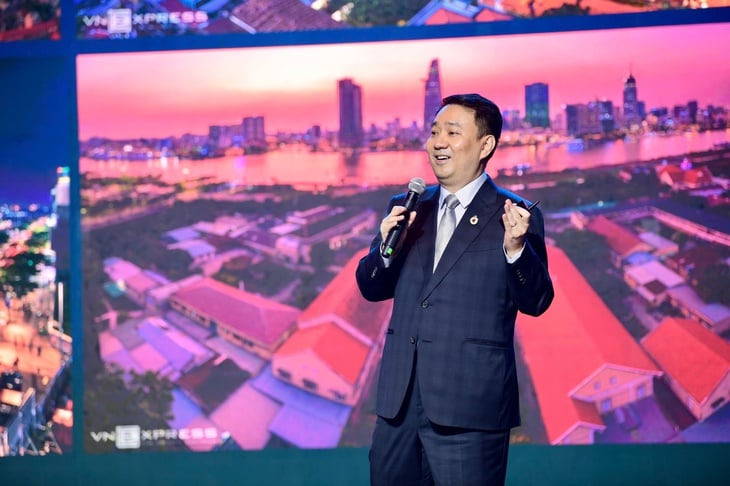
Mr. Le Tri Thong - Chairman of Ho Chi Minh City Young Entrepreneurs Association, Vice Chairman of Board of Directors and General Director of PNJ, said that Ho Chi Minh City possesses rare advantages to develop service and creative industries - Photo: QUANG DINH
South Korea has developed the K-pop - cinema - cosmetics - technology ecosystem, creating a synergistic effect and increasing the value of cultural exports. Meanwhile, Singapore combines education, finance and creative technology to become Asia's high-end service center. Even Thailand has promoted the experience economy, from tourism, hospitality to cuisine and wellness.
The common point of these countries, according to Mr. Le Tri Thong, is the ecosystem mindset, in reality no business or industry can develop independently. Success comes from connection - when fashion meets tourism, cuisine meets media, art meets technology.
In that flow, Vietnam, especially Ho Chi Minh City, has a great advantage in attracting knowledge, capital and new creative standards. Ho Chi Minh City is facing a rare opportunity to transform itself from a manufacturing center to a regional creative center. Changes in consumer behavior, a young and talented workforce and the shift of the global value chain are favorable factors.
"However, only when Ho Chi Minh City has a clear strategy, the support of businesses and the leading role of the government, will the creative economy truly become a new growth driver for Ho Chi Minh City," said Mr. Thong.
Mr. Pham Duc Hai, former Vice Chairman of the Ho Chi Minh City People's Council, said that to promote the lifestyle economy, we need to focus on three effects. First is the butterfly effect, which means the State must create a spread and trend. Next is the anchor effect, which means creating a comparison. Third is the ownership effect. Everyone must see what benefits they have, thereby creating a lifestyle economy.
"There are many solutions, I suggest focusing more on the issue of linkage and connection, which is currently not done well in Ho Chi Minh City, lacking chain connection. We have to think about how the State creates it. In addition, we have to innovate advertising, we have to make sure that advertising reaches every person, showing them the benefits in it. At the same time, we have to create events. The State must create events and make the most of events to create a lifestyle economy," Mr. Hai commented.
* Associate Professor, Dr. DO PHU TRAN TINH (Director of the Institute for Policy Development, National University):
Policy mechanisms must be open.
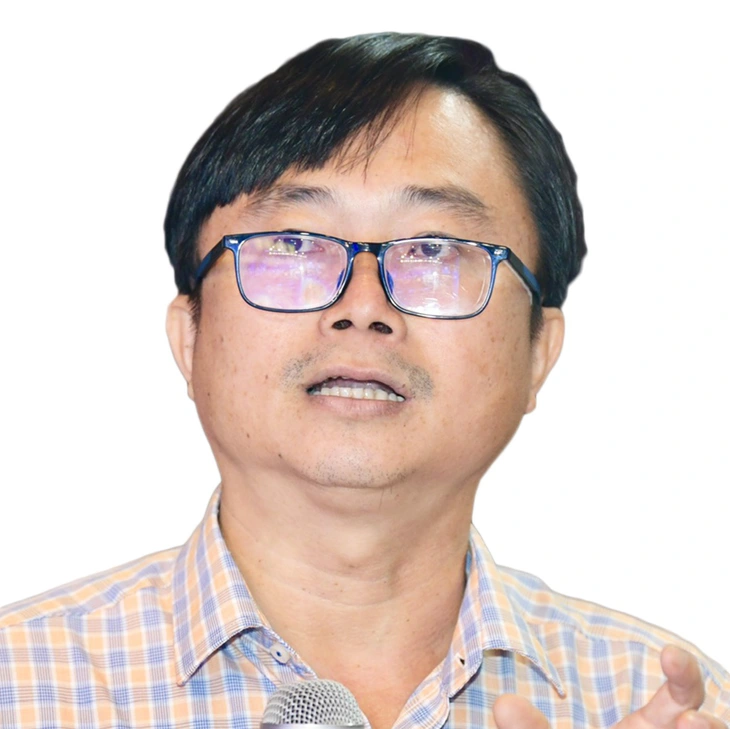
The workshop "Lifestyle Economy - New growth driver of Ho Chi Minh City" is contributing to finding solutions for the Government's goal of becoming a developed country by 2045, the problem of double-digit GRDP growth.
For the lifestyle economy to develop similarly, planning work needs to be synchronized. Synchronized from infrastructure space, culture, green and convenient transportation, convenient and civilized living space...
Along with that, the policy mechanism must be open, must support and promote businesses, especially in research, scientific development and innovation.
* Mr. NGUYEN NGUYEN PHUONG (Deputy Director of Ho Chi Minh City Department of Industry and Trade):
Will seek ways to bring lifestyle economy to help Ho Chi Minh City achieve higher growth
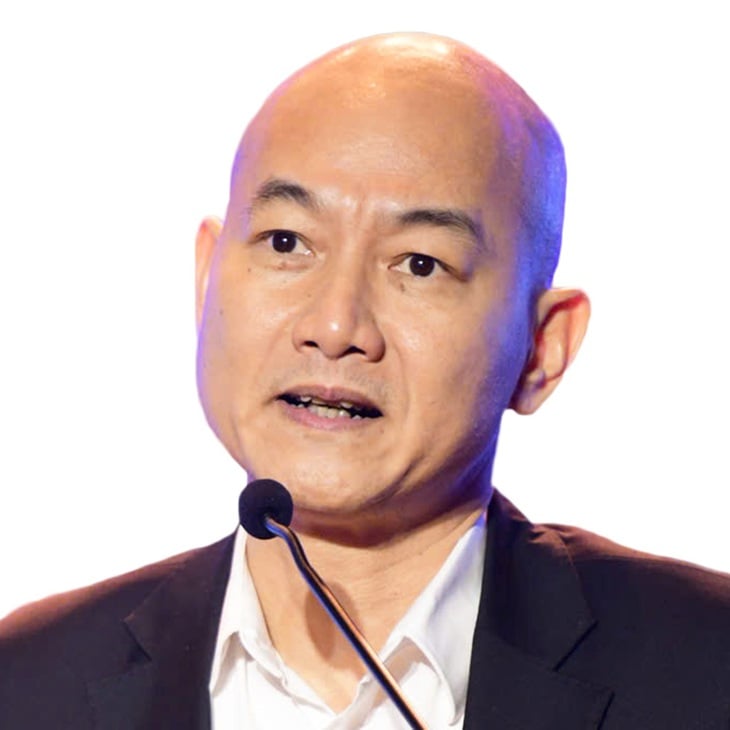
The workshop and lifestyle economic initiative of Tuoi Tre newspaper has helped us to better understand the issues related to production, trade and lifestyle economics.
From the issues raised by the workshop, many opinions and perspectives from experts helped us see many problems.
I pledge to sit down with departments, branches and associations to advise the city leaders on the best solutions, turning these proposals and ideas into reality so that the city can achieve higher growth.
* Ms. THI ANH DAO (Marketing Director of Masterise Group):
Buy a home based on lifestyle
The lifestyle economy is not just for young people, with real estate targeting the middle class and above. When they have a good income, when buying a house, they not only care about the hardware but also many other factors, not just a place to "come in and out".
In the past, when buying a house, people cared about the location because they considered the house as a long-term asset. A few years ago, they needed a luxury house: how many square meters, how complete, then it changed when they defined a luxury house as being in a luxury residential area.
Nowadays, home buyers care about who the community is. When society develops too fast, life experiences are more dense, they care about whether the project gives me daily life experiences, whether it meets my lifestyle.

Investors have also shifted. In the past, they talked a lot about "hardware", but now they talk more about lifestyle, with many projects talking about green living.
The first stage to create high value will be in the design story, but then it must be to create a living ecosystem, including the daily living needs to be in the right style, the community living with them is of the same color and quality or not. That will truly create a space, a real living community for them.
The experience economy is not a new story, it has been around for a long time, but we have never really pondered it, made it into a business strategy and developed that strategy.
South Korea offers advice for Ho Chi Minh City's lifestyle economy
Mr. Park Sang Mo, Head of Planning - Events Department (Korean Cultural Center in Vietnam), since 1990, Korea has viewed "cultural content" as a new growth driver and started to industrialize strongly.
Since then, movies, television, music, and games have been seen as strategic industries, and “this can be considered the foundation for what we call today the ‘lifestyle economy,’” said Mr. Park.
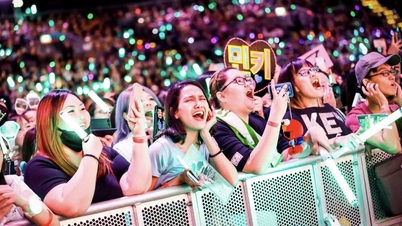
Also since the 1990s, the term "hallyu" - the Korean cultural wave was born, with its peak in the years 2000 - 2010, and continues to grow strongly until now with icons such as BTS, BlackPink or the movie Squid Game.
The Korean government is well aware that as hallyu content becomes popular overseas, interest in the entire Korean lifestyle, from beauty, fashion, food to travel, will also naturally increase.
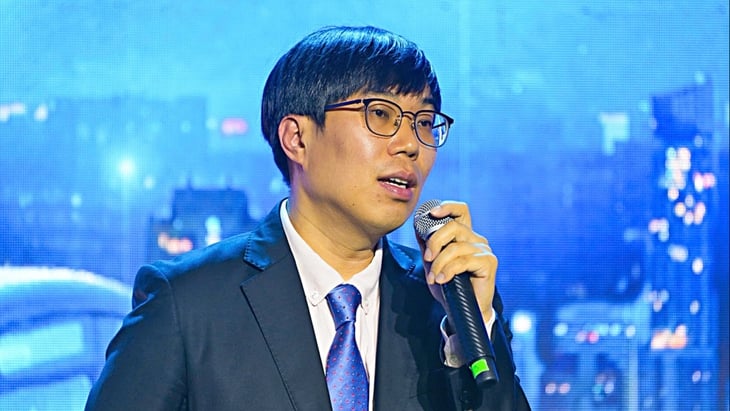
Mr. Park Sang Mo, Head of Planning and Events Department of Korean Cultural Center in Vietnam, presented a paper on International experience in urban development according to the lifestyle economic model - Photo: HUU HANH
Korean content exports now total $16 billion a year. Korean culture has evolved beyond a trend into a futuristic industry that combines intellectual property, fandom, and platforms.
South Korea has developed a strategy to sustain and promote the sector's growth. The fact that YP Entertainment Chairman Park Jin Young is currently co-chair of the Korean Popular Culture Exchange Committee shows the government's commitment to developing cultural content, including K-pop.
"The government has provided strategic support to transform this demand into actual exports. This has proven to be effective: cosmetic or food products featured in TV dramas have seen significant export growth and have produced very clear results," said Mr. Park.
In addition, the Korean government has built a system to connect the sectors together instead of operating separately. A typical example is the Korea Content Agency (KOCCA) under the Ministry of Culture, Sports and Tourism, supporting the entire process from planning, production, distribution to exporting content.
In addition, every year the government allocates budget to create a stable creative environment for content producers, while maintaining an industrial linkage strategy so that the content created can connect naturally with consumer goods and tourism.
"I believe that Vietnam is completely capable of building this model. Vietnamese people are creative and sensitive to trends, and there are already many potential creators in the fields of film and V-pop.
If there is systematic support from the Government for content production, along with orientation so that content can be connected with products, tourism and lifestyle, I think Vietnam can completely introduce its culture to the world and export a Vietnamese lifestyle," Mr. Park suggested.
Following the story of South Korea's pop culture exports, Stefano Canali, Chairman and CEO of Canali (Italian handmade suit brand), shares his perspective on the economic need for lifestyle through reflecting personal identity through fashion.
Customers will demand clothes that are not just “decorative”, but are an identity, an emotion and an expression of the consumer’s inner world or “Inner Beauty”. These factors create demand for fashion brands like Canali, whose products are high-end, completely handmade clothes. Canali focuses on personalized experiences, dialogue and co-creation with customers.
"We create an outfit that tells the customer's story, not ours. Luxury today is not just about owning. It is about caring, understanding and personalization," Mr. Canali shared his views on the economy of style through fashion.
To meet this demand, Mr. Canali said that this is also a very stressful request. Making handmade costumes is not just a promotional message, but a story of precision, of meticulous, patient craftsmen, putting their pride into the product.
In a vision of the lifestyle economy in Vietnam, Mr. Canali said that Vietnamese culture emphasizes respect, attention to detail and the art of living beautifully, and in the coming time there will be an increasing demand for suits for gentlemen.
“We see in Vietnam a new generation of men who want elegance with personality, tradition combined with modernity, and luxury in a sincere and meaningful way,” said Mr. Canali.
Source: https://tuoitre.vn/tp-hcm-can-co-nhac-truong-cho-kinh-te-lifestyle-20251205234840315.htm


![[Photo] National Assembly Chairman Tran Thanh Man attends the VinFuture 2025 Award Ceremony](/_next/image?url=https%3A%2F%2Fvphoto.vietnam.vn%2Fthumb%2F1200x675%2Fvietnam%2Fresource%2FIMAGE%2F2025%2F12%2F05%2F1764951162416_2628509768338816493-6995-jpg.webp&w=3840&q=75)
![[Photo] 60th Anniversary of the Founding of the Vietnam Association of Photographic Artists](/_next/image?url=https%3A%2F%2Fvphoto.vietnam.vn%2Fthumb%2F1200x675%2Fvietnam%2Fresource%2FIMAGE%2F2025%2F12%2F05%2F1764935864512_a1-bnd-0841-9740-jpg.webp&w=3840&q=75)





















































Comment (0)