

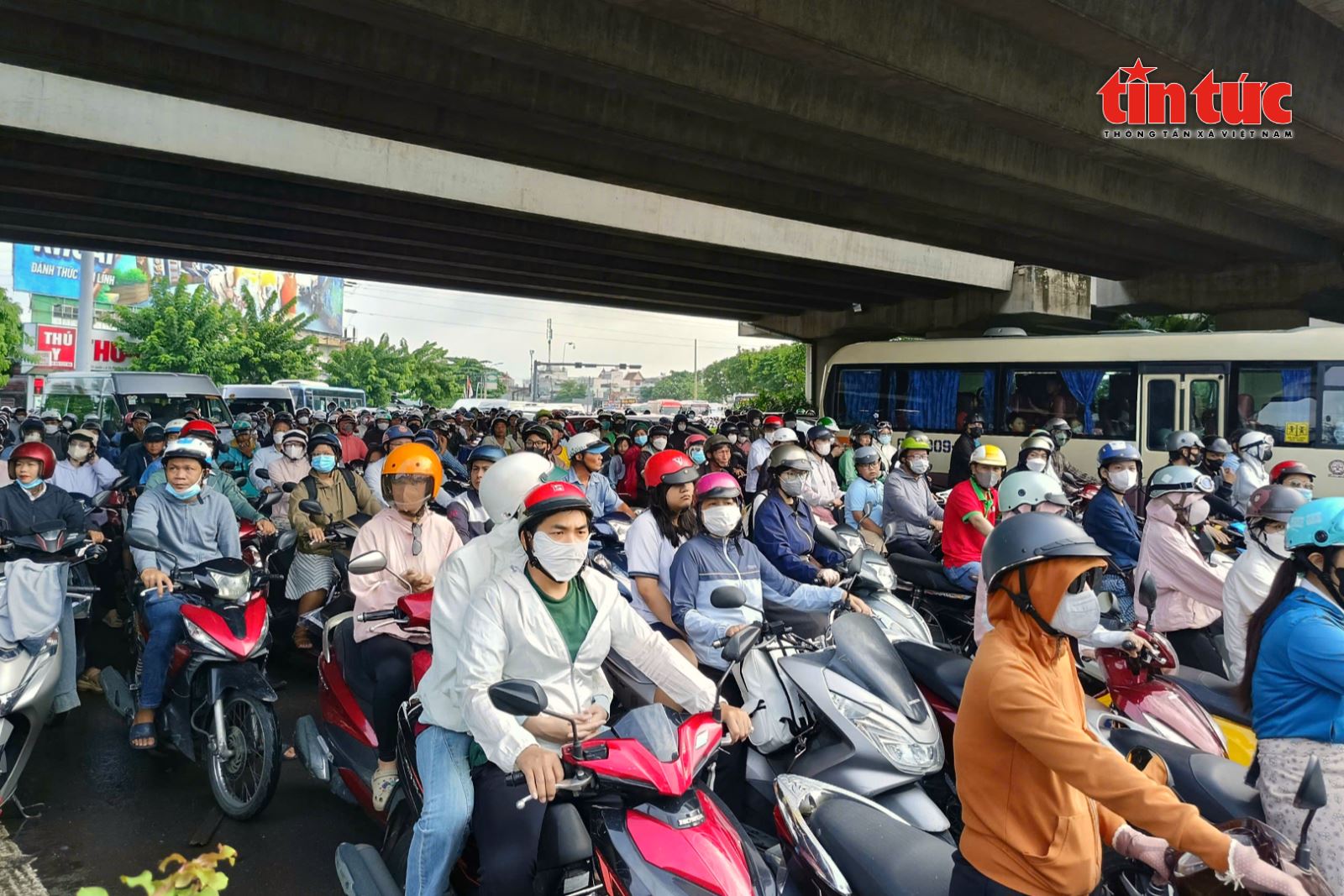
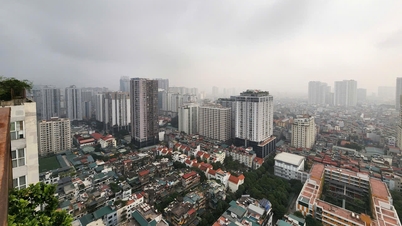
Ho Chi Minh City Department of Construction has just sent the Ministry of Construction a report on the implementation results of Prime Minister's Directive 20/2025 related to urgent tasks on preventing and handling environmental pollution in the area.
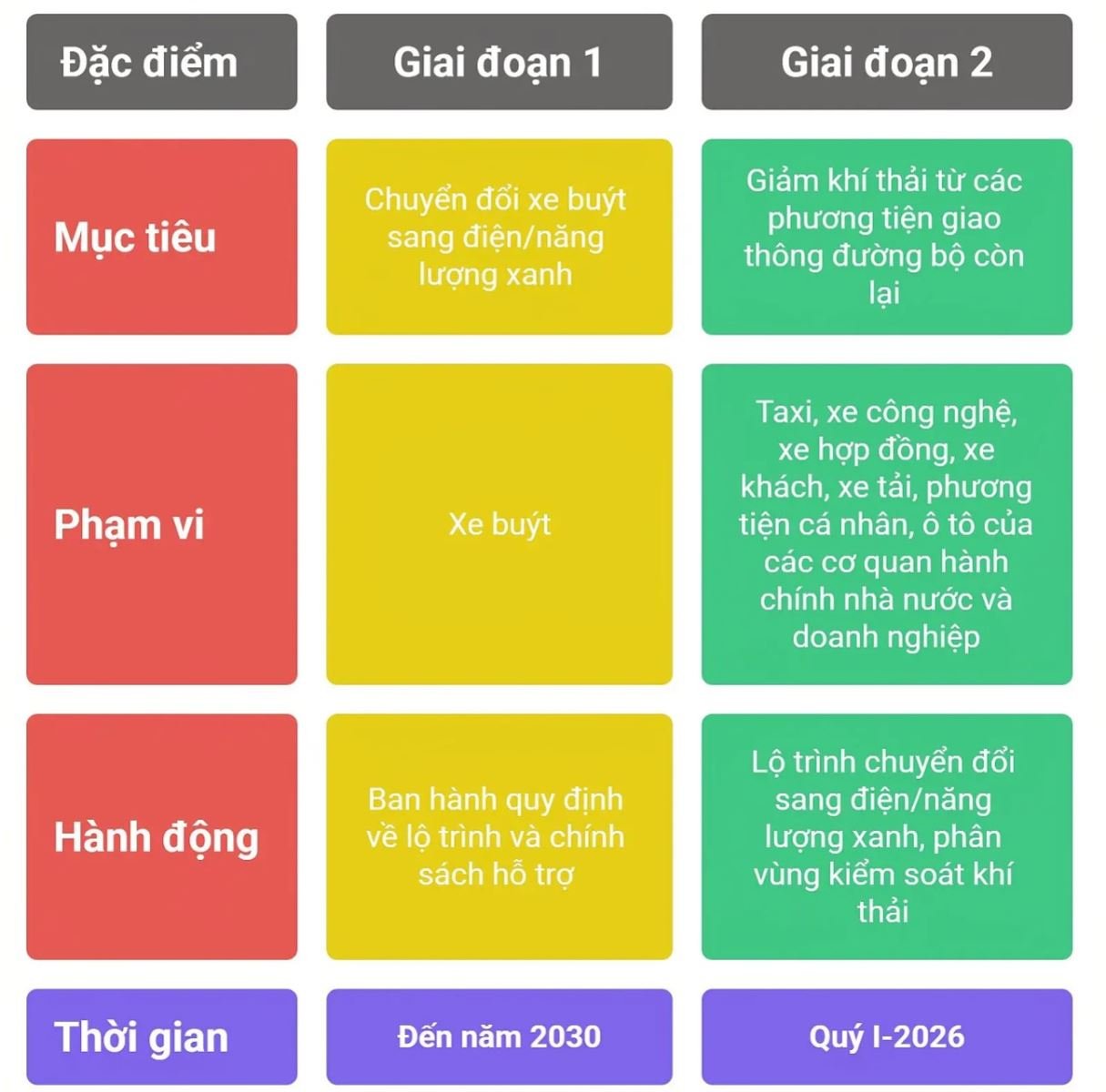
According to the Department of Construction, the draft plan for green transformation in transport activities for the period 2025 - 2050 has been built on the basis of assessing the current situation and development requirements of the city. Along with that, the Department is implementing the Project to control vehicle emissions in two phases.
Phase 1 focuses on developing and advising the Ho Chi Minh City People's Committee to submit to the Ho Chi Minh City People's Council to issue regulations on the roadmap and policies to support the conversion of public passenger transport vehicles. The goal is that by 2030, all buses in Ho Chi Minh City will switch to using electricity or green energy.
Phase 2 aims to reduce emissions from the remaining road vehicles. The content includes a roadmap for switching to electricity and green energy for taxis, technology cars, contract cars, passenger cars, trucks, personal vehicles along with cars of state administrative agencies and enterprises. The city is also studying a plan to control emissions in the central area, Can Gio and Con Dao. The project is expected to be completed and submitted to the Ho Chi Minh City People's Council in the first quarter of 2026.
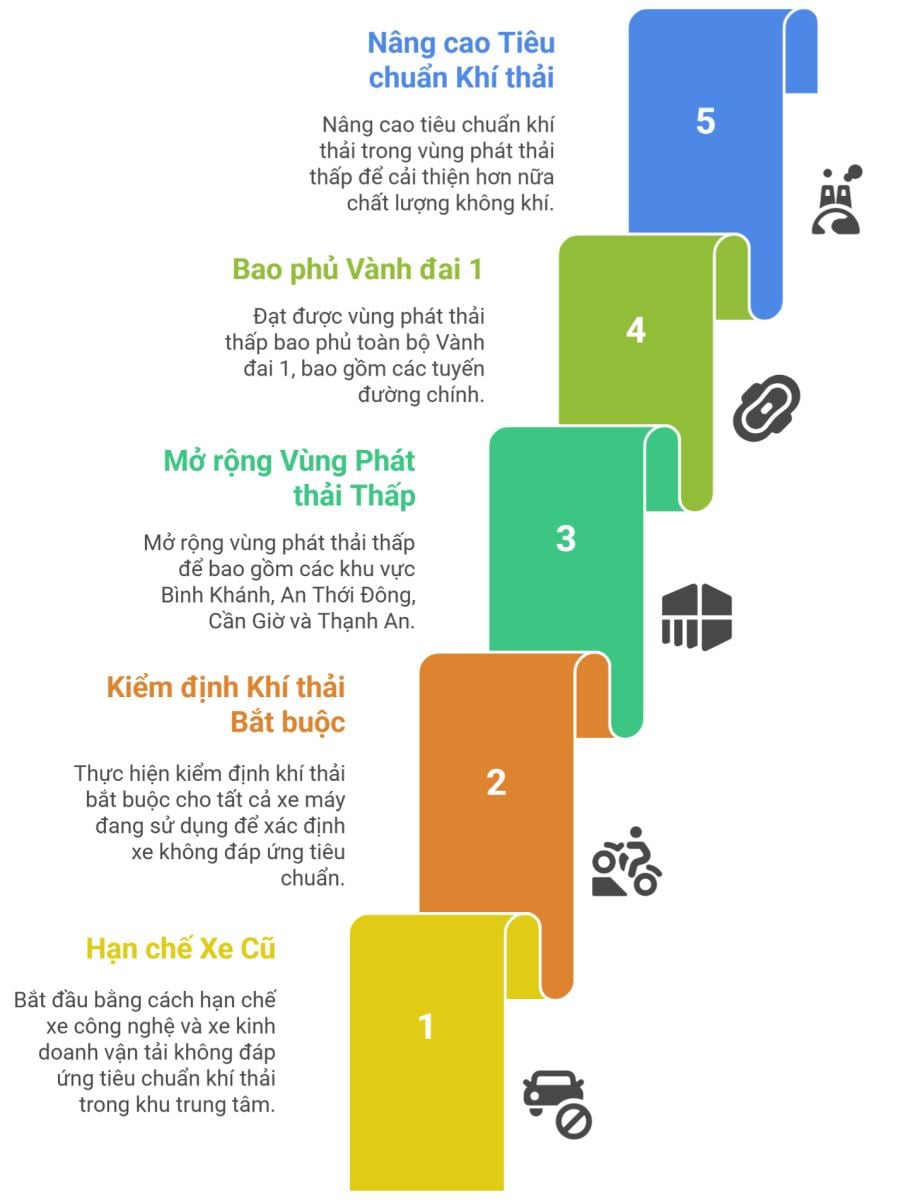
According to the plan, from 2026, Ho Chi Minh City will restrict the operation of technology vehicles and transport business vehicles using gasoline and oil but not meeting emission standards when circulating in the low emission zone (LEZ) in the central area. The three groups of controlled vehicles include: Heavy trucks running on diesel (completely banned), commercial cars below Euro 4 standards and service business motorbikes below Euro 2 standards.
During the 2027-2030 period, the city will conduct mandatory emissions testing for all motorbikes in use. Based on the results of the testing, Ho Chi Minh City will restrict the circulation of cars below Level 4 emission standards and motorbikes below Level 2 in the central area. The restricted area will then be expanded to Binh Khanh, An Thoi Dong, Can Gio and Thanh An.
By 2031, the low emission zone is expected to cover the area of Ring Road 1, including the routes Pham Van Dong - Nguyen Thai Son roundabout - Bay Hien intersection - Huong Lo 2 - Nguyen Van Linh. From 2032, emission standards in this area will be raised to a higher level.
At the same time, the Department of Construction will coordinate with relevant units to research and develop a network of public charging stations, complete technical standards for charging stations and battery swapping infrastructure; prepare for bidding to exploit traffic land funds to install charging stations; build a fare mechanism connecting buses and metro; complete the electronic ticket system; and tighten environmental standards at inspection facilities for commercial transport vehicles.
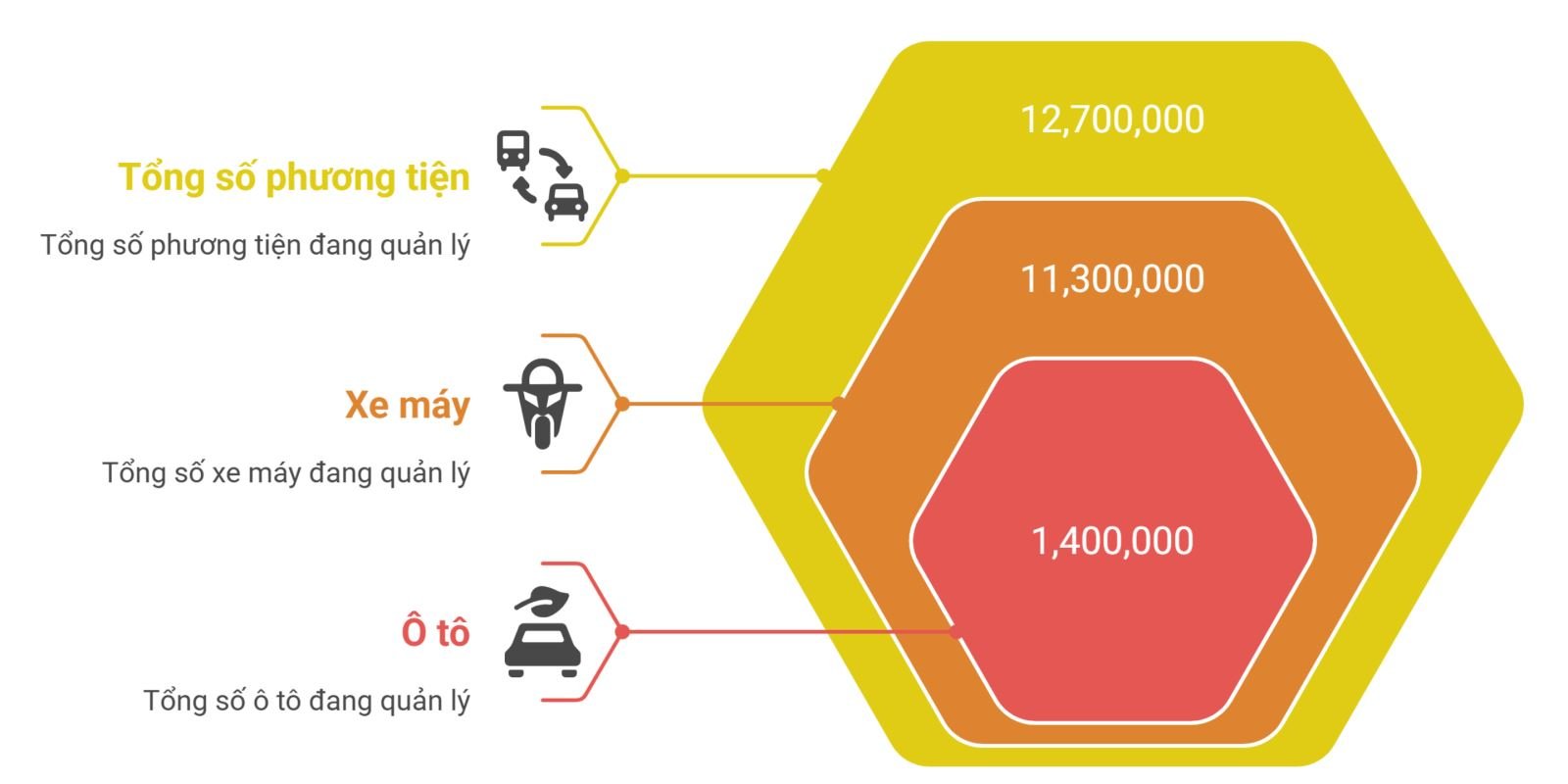
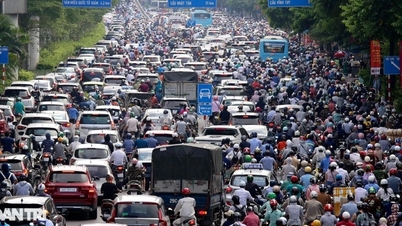
According to the Ho Chi Minh City Department of Construction, after the merger, the city is managing more than 12.7 million vehicles, including more than 1.4 million cars and 11.3 million motorbikes.
The bus network has 176 routes with 2,386 vehicles, of which 627 are electric buses (26.3%) and 451 use CNG (17.9%).
The city has 18,613 taxis, of which 13,124 are electric taxis, accounting for 71%. The number of motorbikes serving passenger transport via electronic applications is 88,742, of which about 25,000 are electric motorbikes, equivalent to 28.1%.
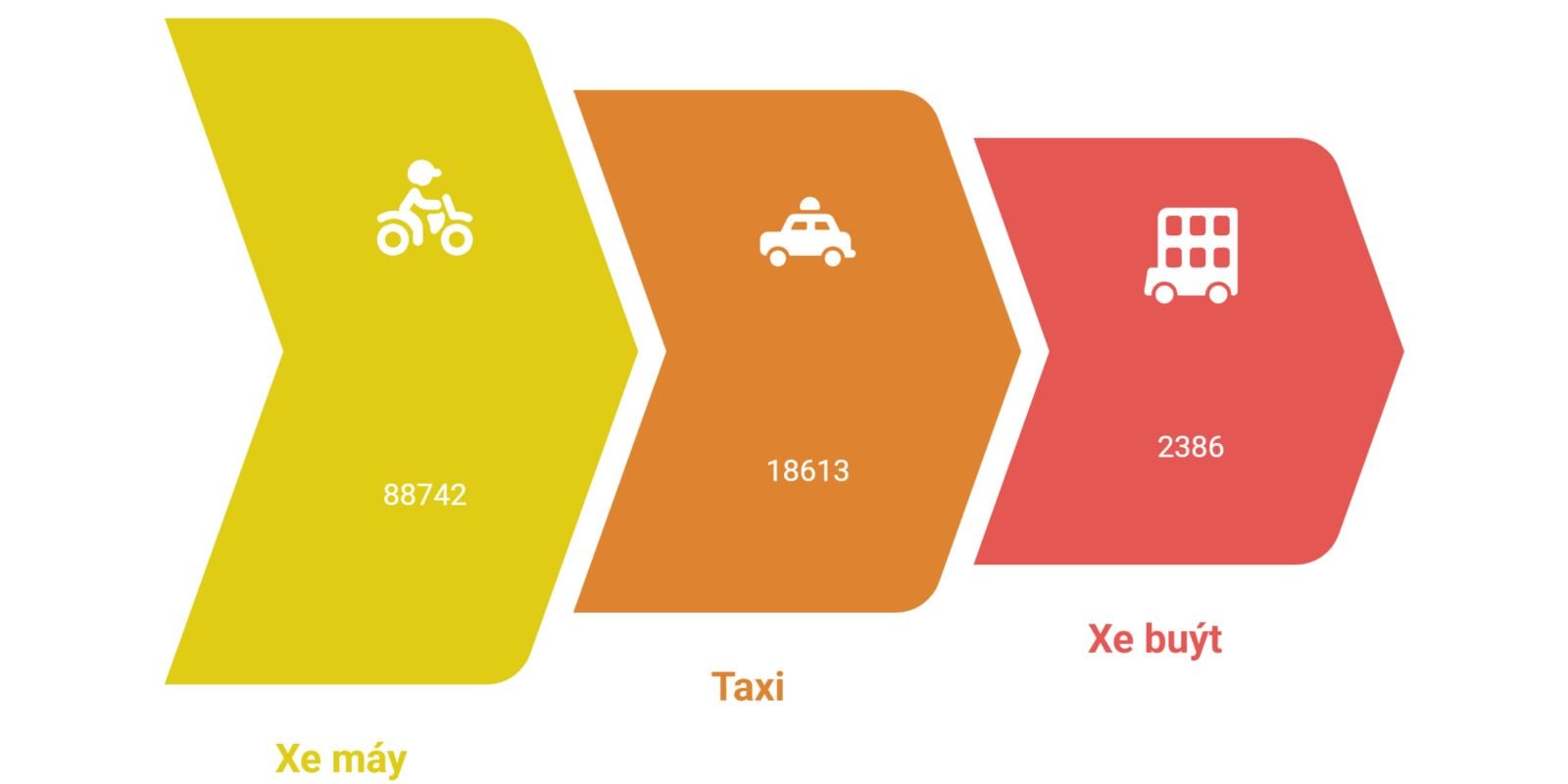
These figures show that the trend of switching to green vehicles in Ho Chi Minh City is taking place positively. Many transport companies have proactively invested in vehicles using clean energy, contributing to reducing emissions and noise in urban areas.
Source: https://baotintuc.vn/van-de-quan-tam/tp-ho-chi-minh-xe-ca-nhan-va-xe-cong-se-thuoc-dien-chuyen-doi-xanh-20251202064953546.htm


![[Photo] Parade to celebrate the 50th anniversary of Laos' National Day](/_next/image?url=https%3A%2F%2Fvphoto.vietnam.vn%2Fthumb%2F1200x675%2Fvietnam%2Fresource%2FIMAGE%2F2025%2F12%2F02%2F1764691918289_ndo_br_0-jpg.webp&w=3840&q=75)


![[Photo] Worshiping the Tuyet Son statue - a nearly 400-year-old treasure at Keo Pagoda](/_next/image?url=https%3A%2F%2Fvphoto.vietnam.vn%2Fthumb%2F1200x675%2Fvietnam%2Fresource%2FIMAGE%2F2025%2F12%2F02%2F1764679323086_ndo_br_tempimageomw0hi-4884-jpg.webp&w=3840&q=75)



















![[Video] Protecting World Heritage from Extreme Climate Change](https://vphoto.vietnam.vn/thumb/402x226/vietnam/resource/IMAGE/2025/12/03/1764721929017_dung00-57-35-42982still012-jpg.webp)









































Comment (0)