

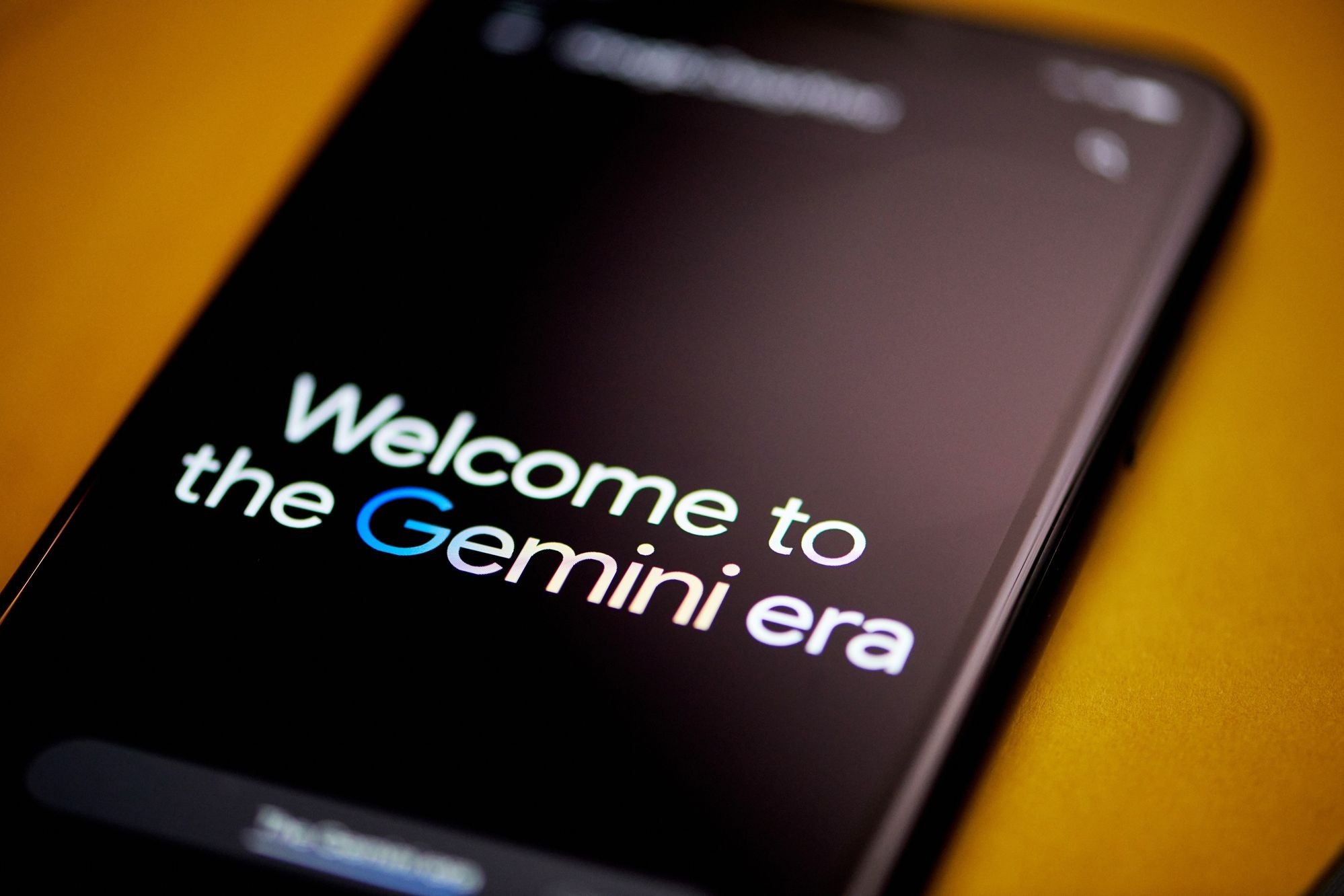
2025 is the year of the AI boom as large-scale language models become increasingly powerful. However, the "honeymoon period" may soon end as the growing demand for AI raises many issues surrounding costs and hardware scarcity.
Despite some positive signs, experts believe the shortage of memory chips could impact the automotive and consumer electronics markets. The trend of AI integration continues, but will move towards a more computationally intensive and cautious approach.
Severe memory shortage
One of the worrying predictions for 2026 revolves around infrastructure. According to CNBC , the surge in AI demand is pushing the semiconductor supply chain into a new crisis, leading to a global shortage of memory chips.
In mid-November, the CEO of Semiconductor Manufacturing International Corp (SMIC), China's largest contract chip manufacturer, said concerns about memory chip shortages were causing many customers to hesitate in finalizing orders for other types of chips.
"Everyone is hesitant to place too many orders or ship too much in Q1 2026, because they don't know how much the memory chip industry can supply for the production of phones, cars, and other products," said SMIC co-CEO Zhao Haijun.
Analysts believe this situation arises when companies focus too much on producing high-bandwidth memory chips (for AI systems), while focusing less on chips for consumer electronics.
"AI development is consuming a lot of existing chip supply, and overall demand in 2026 could be much greater than it is this year," said Dan Nystedt, vice president of research at TriOrient .
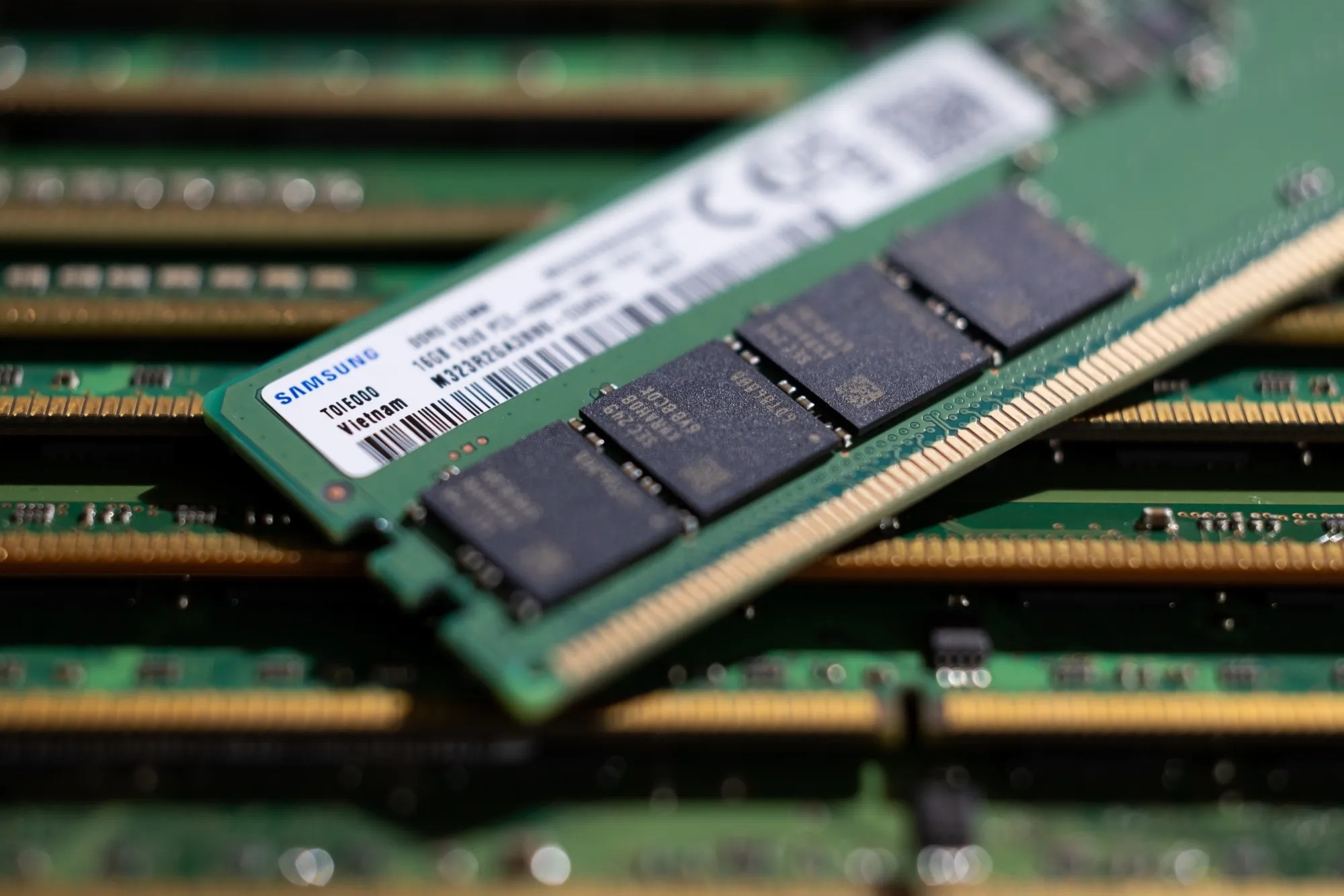 |
A memory chip manufactured by Samsung. Photo: Bloomberg . |
AI servers primarily use processing chips from design companies like Nvidia. These processors rely on HBM (High-Bandwidth Memory), a type of memory with high bandwidth and speed, which generates huge profits for companies like SK Hynix and Micron.
According to Nystedt, memory vendors are focusing on meeting AI demand due to high profit margins. Customers in the AI server market are willing to pay more for high-end chips.
"This could have dire consequences for personal computers, laptops, consumer electronics, and automobiles, all of which rely on inexpensive memory chips," Nystedt said.
Faced with supply constraints, memory chip companies are believed to have increased component prices. In mid-November, Reuters reported that Samsung Electronics had quietly raised the prices of some memory chips by up to 60% compared to September. The company has not yet issued an official response.
Get ready for smartphones and computers to become more expensive.
MS Hwang, a researcher at Counterpoint Research , believes that the production line will face problems as memory chip prices rise and supply becomes scarce.
"The supply shortage has affected the market for affordable smartphones and set-top boxes, but we anticipate the risks could spread," Hwang emphasized.
Several companies have warned consumers about potential price increases due to supply constraints. On November 18th, Xiaomi Chairman Lu Weibing stated that the company had secured memory chip supplies for 2026, but smartphones could still be more expensive due to rising component import costs.
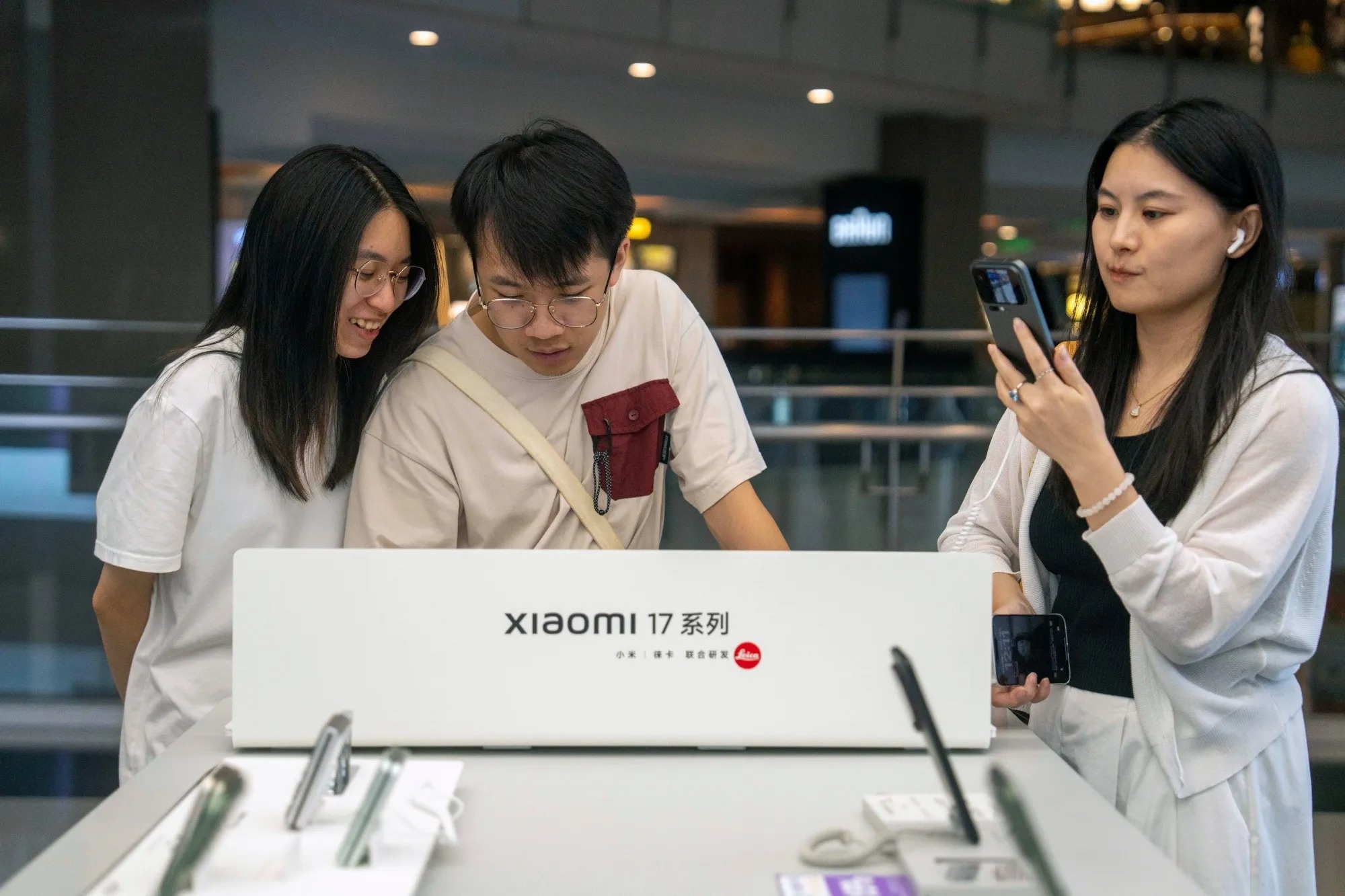 |
Users experience the Xiaomi 17 in China. Photo: Bloomberg . |
To address this situation, Xiaomi focused on boosting its high-end lines, such as the Xiaomi 17, to increase profits and compete with the iPhone 17. In October, the company also increased the price of the Redmi K90 series, partly due to rising memory costs.
Similarly, the Maeil Business Newspaper reported that, with the Galaxy S26 about to launch, rising memory and processor costs may force Samsung to raise prices after years of keeping them stable.
The South Korean company is reportedly reviewing its pricing strategy for the Galaxy S26 series ahead of its February 2026 launch. It's worth noting that not only memory, but also Qualcomm chip costs have increased by 25.5% compared to the same period last year.
Not only smartphone manufacturers, but computer companies are also feeling the pressure as DRAM memory prices rise sharply. According to supply chain analytics firm TrendForce , Lenovo has informed customers of its planned price increases.
Specifically, the current price list will expire on January 1, 2026. The Chinese company cited two main reasons: a growing memory shortage and businesses racing to deploy AI solutions, leading to a surge in demand.
Another well-known computer manufacturer, Dell, has also sent out a price increase plan to its customers. Industry sources predict the company plans to raise product prices by at least 15-20%, possibly as early as mid-December.
Earlier, Bloomberg reported that Dell's Chief Operating Officer, Jeff Clarke, admitted he had "never seen memory chip costs rise so rapidly," noting that all product lines were affected.
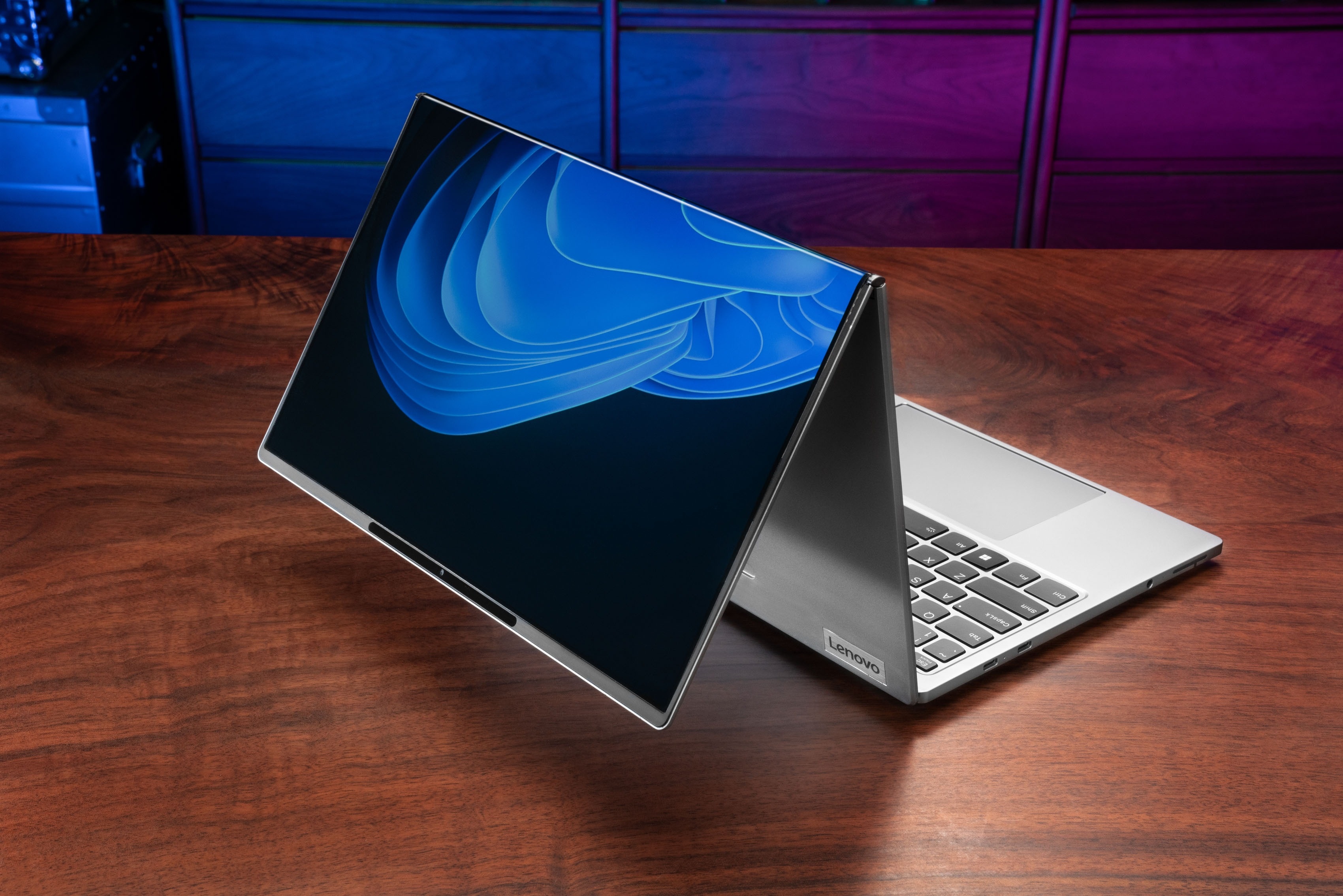 |
A Lenovo flip-screen laptop model. Photo: TrendForce . |
According to Chosun Biz , PC manufacturers are under significant pressure to maintain profitability as DRAM (including DDR5) components have increased in price by 70% year-on-year, with some components even rising by as much as 170%. PC companies such as Lenovo, HP, Dell, Samsung, and LG are all reportedly reviewing their 2026 product roadmaps.
HP CEO Enrique Lores warned that the situation could worsen in the second half of 2026, and that product prices could be raised if necessary. He noted that memory chips account for approximately 15-18% of the cost of manufacturing a typical PC.
Scarcity can lead to widespread polarization. According to TrendForce , large tech corporations like Amazon, Google, and Meta are increasing their purchases of HBM memory chips thanks to their ample financial resources. This poses a significant risk to startups and small businesses that lack strong financial capabilities.
Instead of racing to develop massive AI models (over 100 billion parameters), the market could revert to optimizing smaller models running on more modest hardware, or shift towards specialized chips (ASICs) instead of relying entirely on general-purpose GPUs.
Notable AI trends
With its roadmap for AI applications in daily life, Microsoft predicts that AI agents will become more common in 2026, becoming the new trend replacing traditional chatbots.
Compared to chatbots, AI agents not only understand but also have the ability to act. These tools can independently perform complex task sequences, such as planning trips , booking flights, checking emails, etc.
Aparna Chennapragada, Microsoft's AI Experience Product Director, emphasized that AI agents will become "partners" for users. These tools can assist in data processing, content creation, and personalization, while humans can remain focused on creativity and strategic direction.
Privacy remains a major question mark for AI agents. For the agent to function effectively, users may have to hand over sensitive data such as emails, personal schedules, and even payment information.
 |
A software program for creating vibe coding on a computer. Photo: Bloomberg . |
Microsoft's article highlights several other AI trends in 2026, including healthcare, scientific research, software programming, and even quantum computing, driving breakthroughs in materials science, medicine, and many other fields.
TechDigest highlights that 2026 will be the year AI "faces the truth." Users now view AI not just as a simple tool, but instead place higher expectations on its ability to work seamlessly together, including speed and efficiency in assisting with tasks.
A report from IBM reinforces this view by emphasizing that human expectations for the value created by AI will be higher. According to IBM's survey of businesses, 61% of employees said that AI makes their work less boring. Whether they are new to it or have used it extensively, AI helps them escape monotony and free up time for higher-value tasks.
Voted the word of the year 2025 by the Collins Dictionary, the coding vibe (a form of software programming in AI, converting human natural language into computer code) will explode even more in 2026.
While potentially more widespread, the adoption of the technology will depend on the organization's rigor in tracing, controlling origin, and ensuring long-term maintainability and security for code segments.
Source: https://znews.vn/trat-tu-cong-nghe-moi-cua-nam-2026-post1610020.html


![[Image] Close-up of the newly discovered "sacred road" at My Son Sanctuary](/_next/image?url=https%3A%2F%2Fvphoto.vietnam.vn%2Fthumb%2F1200x675%2Fvietnam%2Fresource%2FIMAGE%2F2025%2F12%2F13%2F1765587881240_ndo_br_ms5-jpg.webp&w=3840&q=75)






















































































Comment (0)