

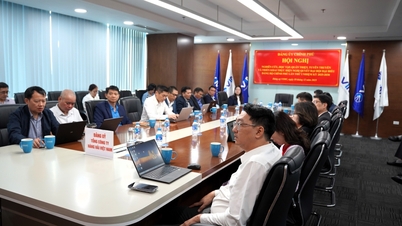
On the afternoon of October 24th, the Department of Agriculture and Environment of Ha Tinh province, in coordination with the North Central Agricultural Science and Technology Institute, organized a workshop to evaluate the results of the project "Alternating Wet-Dry Irrigation Technology in Rice Cultivation Adapting to Climate Change in Ha Tinh Province" and to develop an action plan for implementing the project "Reduced Emission Production in Crop Production in the period 2025-2035, with a vision to 2050".

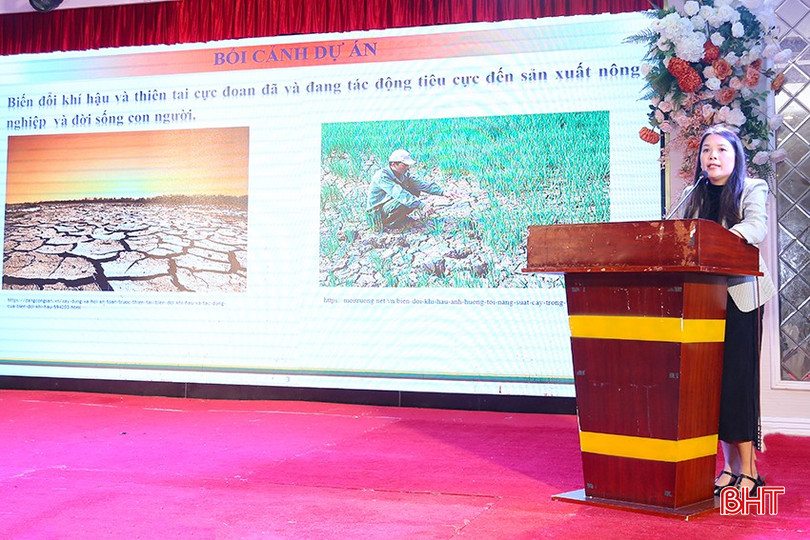
At the workshop, a representative of the North Central Institute of Agricultural Science and Technology presented a report evaluating the implementation results of the project "Alternate flooding and drying technology in rice cultivation adapting to climate change in Ha Tinh province".
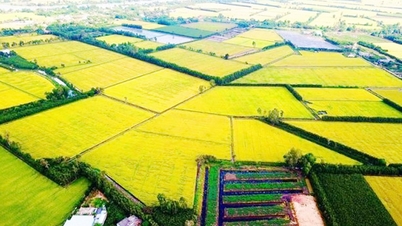
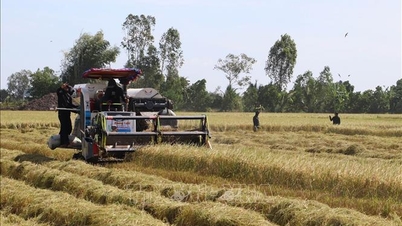
Ha Tinh is a locality with great potential for agricultural development, cultivating over 103,000 hectares of rice/2 crops each year. However, according to scientific research, rice cultivation currently consumes the majority of irrigation water in agriculture (accounting for about 34 - 43%) and is a significant source of greenhouse gas emissions, especially methane (CH₄). This becomes a disadvantage in the context of complex climate change and increasingly scarce water resources. In that context, water management measures using the alternate wetting and drying (AWD) method are considered an effective solution, helping to limit the formation and emission of CH₄, while saving water while maintaining stable productivity.
In 2025, the North Central Agricultural Science and Technology Institute, in collaboration with Green Carbon Inc. (Japan), piloted a project in Thien Cam commune on a scale of 250 hectares. Evaluations showed that the model reduced irrigation by two times per crop without affecting rice growth and development. Average yields in the spring crop reached 72.5 quintals/hectare, a 6.15% increase compared to regularly flooded rice fields (CF); and in the summer-autumn crop, yields reached 37.6 quintals/hectare, a 3.74% increase compared to CF fields.
In particular, alternate wetting and drying rice cultivation has significantly reduced emissions compared to conventional wetting rice cultivation, especially during the tillering stage. The emission reduction of alternate wetting and drying rice cultivation compared to continuous wetting rice cultivation is 70.48% in the spring crop and 49.1% in the summer-autumn crop.

Currently, the Department of Agriculture and Environment is developing a plan to implement the "Emission Reduction in Crop Production Project for the period 2025-2035, with a vision to 2050" to submit to the People's Committee for consideration and promulgation. According to the plan, the alternating wet-dry irrigation technology is expected to be implemented in the spring crop of 2026 on a scale of approximately 5,000 hectares, and expanded to 40,000 hectares in the period 2028-2030.
The province continues to prioritize the development of low-emission commercial rice production models in key communes such as Cam Xuyen, Thien Cam, Cam Hung, Can Loc, Duc Tho, Ky Xuan, etc.; to develop and replicate models applying tray seedling cultivation and transplanting machines combined with irrigation water management; and to strive for over 80% of straw and rice husks to be collected and processed into organic fertilizer and filler materials.
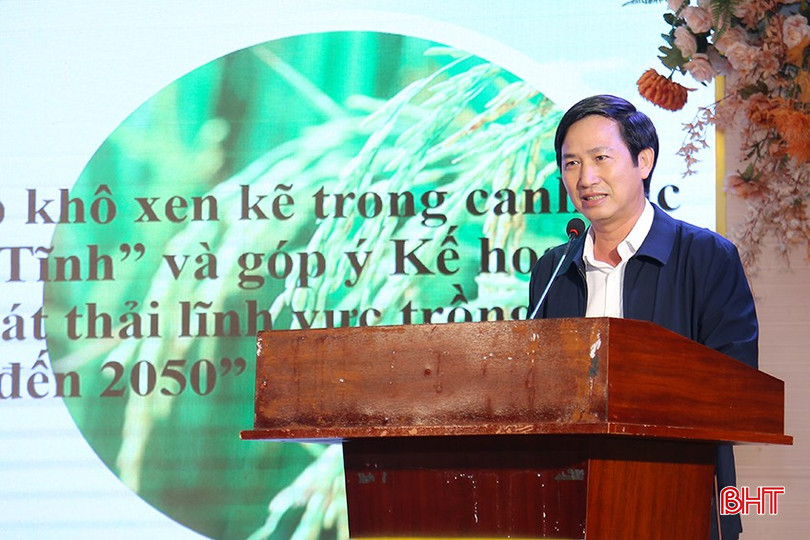
At the workshop, delegates evaluated the initial effectiveness of the model; exchanged practical experiences during the implementation process; analyzed difficulties and advantages; and discussed directions for expanding the model in the following crop seasons.
Opinions are unanimous that replicating the alternating flooding and drying model not only contributes to the development of sustainable rice agriculture, but also helps reduce production costs, save water resources and improve the resilience of crops to the impacts of climate change.
However, many delegates also noted that expanding the model needs to be implemented synchronously in conjunction with large-scale production area planning; balancing and regulating the irrigation system; investing in greenhouse gas emission monitoring and surveillance systems; orienting the development of standardized carbon credit profiles; and mobilizing diverse resources for effective implementation. In addition, it is necessary to strengthen training and skills development for farmers and grassroots technical staff, helping to raise awareness and improve the capacity to practice green, circular, and sustainable agricultural production.
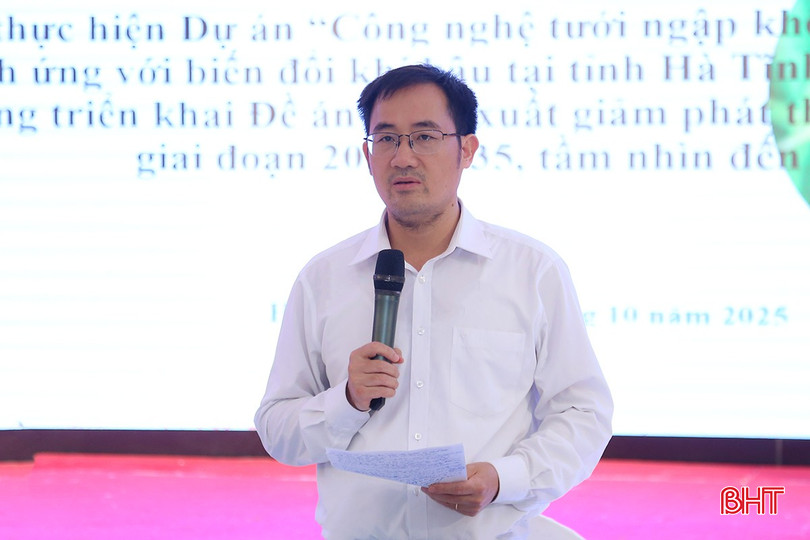
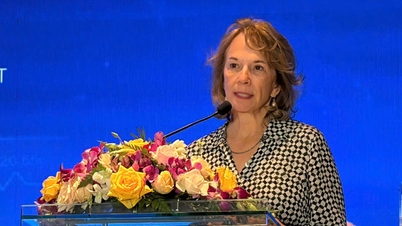
Speaking at the workshop, Deputy Director of the Department of Agriculture and Environment of Ha Tinh province, Nguyen Thanh Hai, stated that reduced-emission farming is an essential requirement in the current context, as climate change and the demand for green agricultural development are becoming increasingly urgent. The initial success of the pilot model in Thien Cam commune is an important prerequisite for the province to orient its implementation on a large scale, and to apply technical advancements such as cluster sowing, row sowing, or machine transplanting combined with alternating wet and dry irrigation in rice production in the coming years.
It is recommended that localities with strengths in rice production proactively register to participate and develop specific plans to implement alternating wet-dry irrigation technology in the spring crop of 2026; continue to prepare the necessary conditions regarding infrastructure, irrigation, seeds, and technical and professional training to apply advanced techniques associated with emission-reduction farming practices, contributing to... To achieve the goal of sustainable agricultural development.
Among the key solutions, the models must ensure an integrated, multi-value approach; organize production in a chain with linked product procurement; mobilize the participation and support of the North Central Agricultural Science and Technology Institute, international organizations, carbon project development units, etc., in providing technical support, monitoring, certification, and product consumption;...
Source: https://baohatinh.vn/trien-khai-mo-hinh-tuoi-ngap-kho-xen-ke-5000-ha-trong-vu-xuan-2026-post298075.html























![[Video] The craft of making Dong Ho folk paintings has been inscribed by UNESCO on the List of Crafts in Need of Urgent Safeguarding.](https://vphoto.vietnam.vn/thumb/402x226/vietnam/resource/IMAGE/2025/12/10/1765350246533_tranh-dong-ho-734-jpg.webp)
















































Comment (0)