

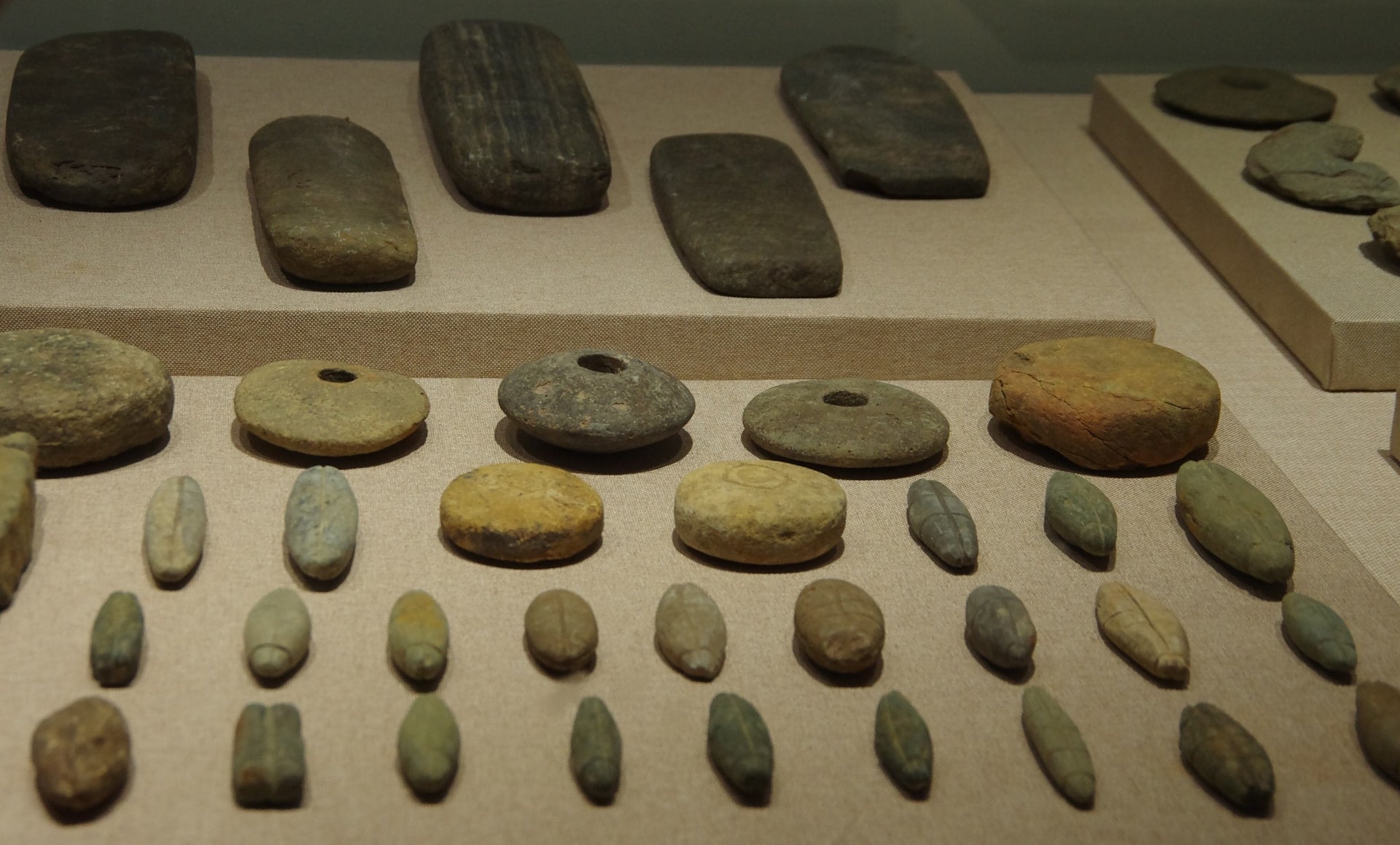
Taking place at the Ho Guom Cultural Information Center (Hoan Kiem Ward, Hanoi ) from December 7 to 14, the event introduces a massive collection of prehistoric stone objects, associated with the Doan village site (Doan Thuong and Doan Ha) in Phu Tho, which archaeologists identified in the 1960s and excavated in the 1990s.
A comprehensive picture of life over 4,000 years ago.
Nearly 2,000 artifacts on display this time showcase the rare richness of the prehistoric artifact collection at the Doan village archaeological site – which is estimated to be between 4,000 and 4,500 years old, meaning it is even older than the Vuon Chuoi archaeological site (Hanoi) that has been attracting public attention recently. The owner of these artifacts is collector Le Van Anh, who has been closely associated with the people of Doan village for many years to collect these items.
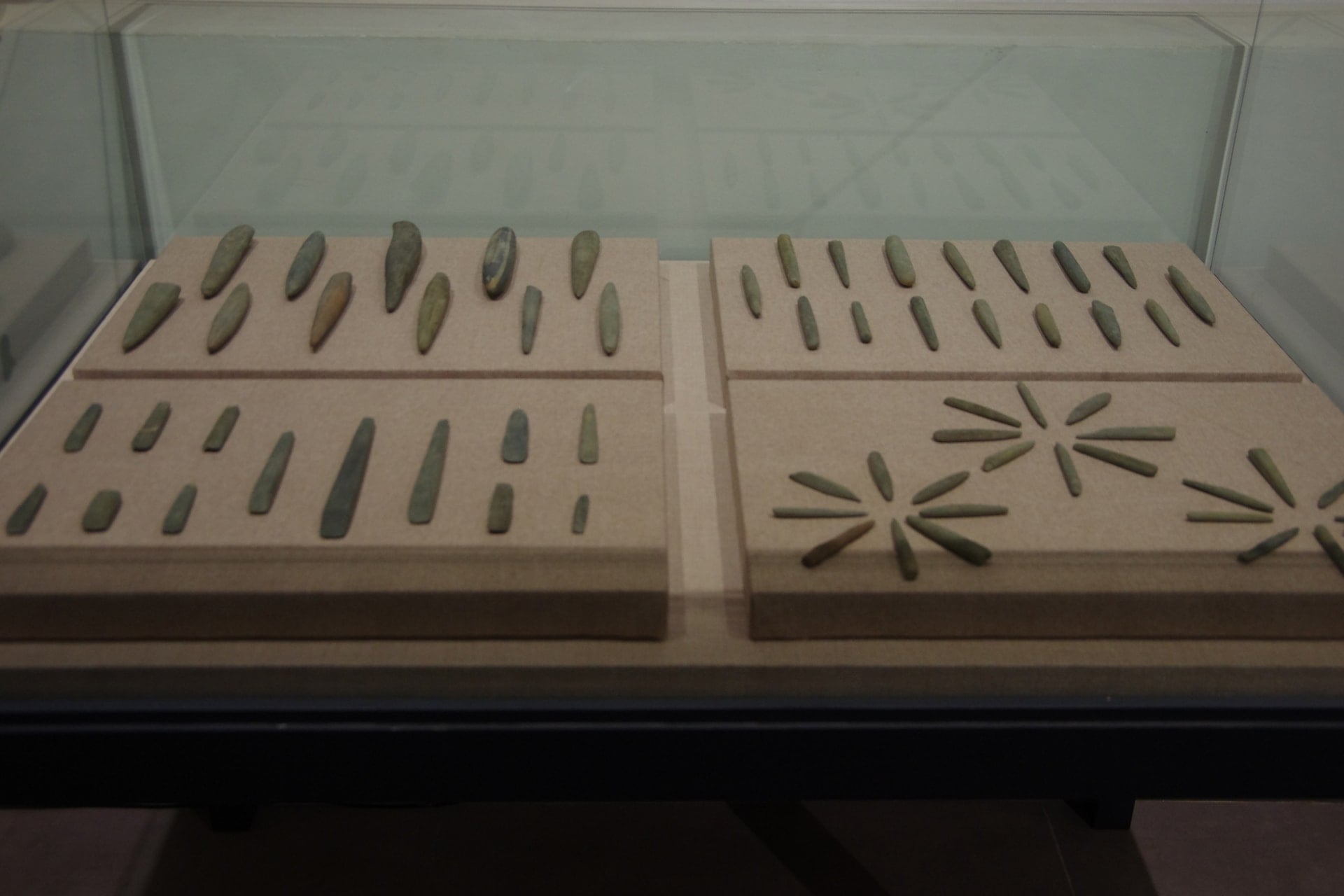
At the exhibition, the groups of artifacts displayed range from labor tools to household utensils and even worship items, reflecting the material and spiritual life of ancient residents. Specifically, the group of stone grinding tables and grinding tables come in many sizes, with flat, smooth surfaces or still retaining primitive grinding marks. The traces of use are still clearly visible, showing that these are tools for sharpening, grinding food, processing seeds or polishing jewelry. Meanwhile, the set of stone net sinkers includes many shapes such as oval, long diamond, round cylinder, all with grooves for tying ropes, reflecting the significant role in the ancient economic life of the fishing profession.
From a craftsmanship perspective, the set of tools such as chisels, awls, chisels, and wood and bone tools shows that the inhabitants of this period had sophisticated crafting techniques suited to their daily needs. Many artifacts clearly show the positions where handles were attached, suggesting the practicality and widespread use of these tools.
As for stone axes, the rich variety of types from spade-shaped axes to shoulder axes, long-shafted axes, slightly curved-blade axes... reflects the development of agriculture and wood processing techniques in the late Neolithic period, early Metal Age, as well as the fact that ancient residents maintained a stable life and had a significant technical level.
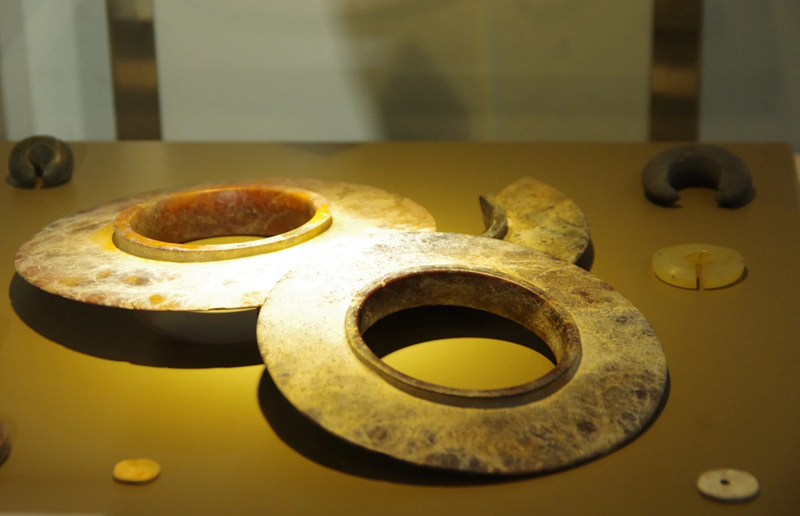
In addition, some stone jewelry at the exhibition (especially the rings dating back 4,000 - 5,000 years) are also evidence of the high level of aesthetic and stone crafting techniques during this period.
At the same time, in the collection there is also a four-legged stone table identified as a ritual altar, similar in form to prehistoric altars in Southeast Asia, the table top still has traces suitable for lighting fires or displaying offerings. Then, a set of spade-shaped hoes made from precious stones is also identified as a specialized artifact used only in sacrificial rituals.
This richness partly explains why the collection has attracted special attention from researchers. According to Dr. Nguyen Viet (Director of the Southeast Asian Prehistory Center), there are few relics from the late Neolithic period that have revealed such a rich quantity and variety as the Doan village site.
Dr. Nguyen Viet affirmed: "The most important thing is that this collection allows us to see the art and life of the past as a whole from thousands of artifacts. They show a fairly comprehensive picture of life in the ancient villages of Doan Thuong and Doan Ha 4,000 years ago. They are our ancestors - the people who laid the foundation for Vietnamese culture from the very beginning."
An elaborate journey
Sharing at the opening ceremony, collector Le Van Anh said: This is a meaningful event for him, when the collection is introduced for the first time right in the center of Hanoi.
"Although the event is small, it is connected to my love for Vietnamese culture, stemming from many years of dedicated research. Each of these artifacts is a treasure left behind by our ancestors. They are simple yet profound, helping us understand the skillful hands and intellect of the Vietnamese people from the dawn of history," he said. "Therefore, the exhibition not only helps us rediscover traces of our forefathers but also serves as a journey back to the soul and fundamental beauty of Vietnamese culture."
In fact, the artifacts appearing in this exhibition are only a representative part of Le Van Anh's prehistoric stone collection. According to shared information, his entire treasure trove is about 7,000 artifacts - a rare number for a private collector.
As Dr. Nguyen Viet said, Le Van Anh is a person who is especially passionate about stone artifacts. In recent years, the Doan village relic site has often encountered erosion during the rainy season, causing many artifacts to be exposed or swept away with the flowing soil.
To acquire such a vast collection, this collector frequently visits local areas, connecting with residents and gathering whatever they discover – from items that retain their basic structure to fragments of artifacts that are no longer intact. This persistence makes his collecting story resemble a meticulous journey rather than a simple hobby.
From that special collection journey, Dr. Nguyen Viet believes that the exhibition can be seen as a necessary bridge to restore the relationship between archaeology, museology and private collectors.
He reiterated a fact: There was a time when this connection was disrupted, leading to many collectors being misjudged, despite their significant contributions to preserving the cultural values of the past. Therefore, events like "Returning to the Roots" can pave the way for a more natural coordination mechanism: Collectors have the opportunity to contribute to research and conservation, while professionals and management agencies are also more interested in supporting the development and operation of private collections and museums.
This expert also frankly acknowledged that the public today does not fully understand the value of prehistoric artifacts. He said: "Many people do not appreciate the significance of these artifacts. From the perspective of a researcher and former collector, I can affirm that these are all treasures, but very few people have the knowledge and dedication to appreciate them."
"What I want to say today is my appreciation for Le Van Anh. He dedicated many years, without hesitation, and invested both financially and in time to saving what his ancestors left behind. That contribution is truly valuable to Stone Age research," Dr. Nguyen Viet affirmed. "And frankly, that passion alone is not enough without the understanding and support from his family. We can't always explain why we should spend money and time on items that cannot be quantified in terms of concrete value. Without that support, a collection like the one we have today would hardly have been formed."
According to VNASource: https://baohaiphong.vn/tro-ve-nguon-coi-voi-2-000-do-da-thoi-tien-su-529135.html














































































Comment (0)