

China has begun testing a new hybrid tank platform, integrating diesel and electric engines to support advanced battlefield systems.
This new combat vehicle combines a traditional diesel engine with an electric motor and integrated battery. This dual-power configuration reduces noise, provides instant torque, and supports energy-intensive systems such as laser defense and electronic warfare modules.
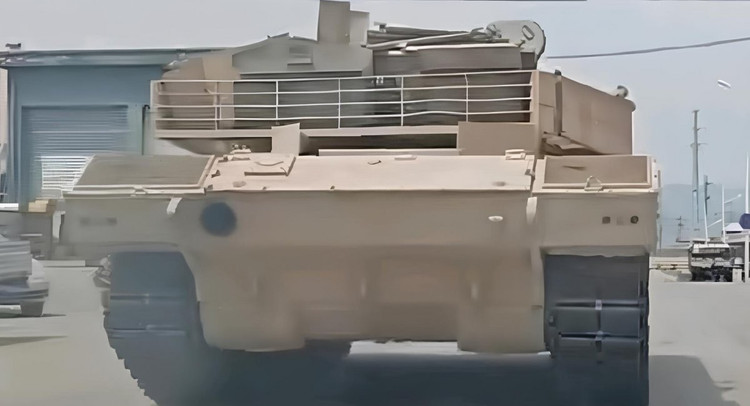
Actual images of a tank with a hybrid engine have appeared on Chinese social media. Photo: Weibo.
Chinese defense observers on Weibo suggest that this vehicle could be a test platform for a Type 99A main battle tank variant that utilizes an electric extended-range engine (EREV).
Other opinions suggest that the new platform may be specifically optimized for high-altitude warfare, where internal combustion engines often lose efficiency due to thin air.
By utilizing hybrid engines, this system is expected to operate more effectively in areas such as the Himalayas, where China is facing increasing strategic competition.
The reduced noise during movement and the instantaneous acceleration from the electric motor also offer a tactical advantage in short engagements or ambushes.
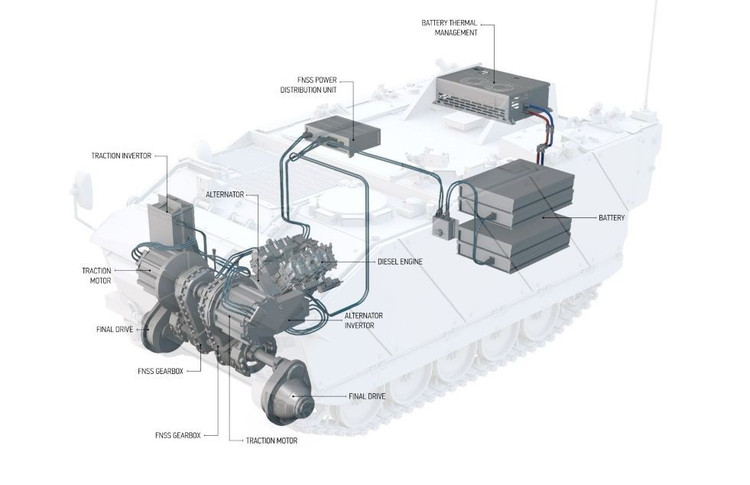
Details of the hybrid drivetrain mechanism were previously exhibited by China in Türkiye.
This vehicle is said to support modular upgrades and future system integration. Additional power sources could supply energy to active protection systems, advanced sensors, and directed energy weapons—capabilities that could put it far beyond current generation armor configurations.
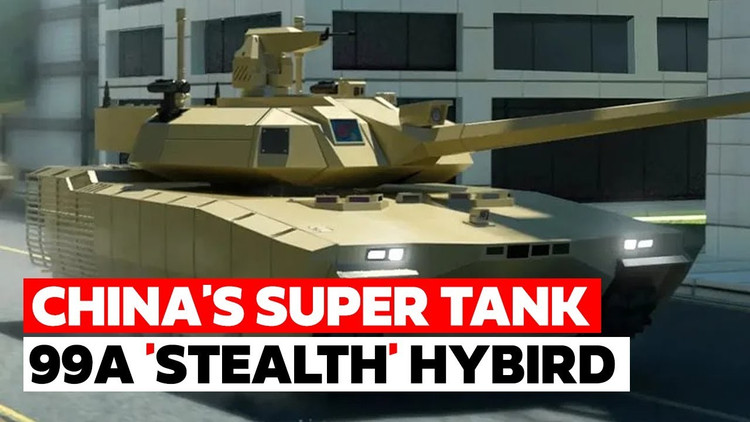
Computer rendering of the 99A main battle tank with a diesel-electric engine.
In an unofficial statement circulating on Chinese social media accounts specializing in military affairs, a defense commentator remarked: “From the Himalayas to the Pacific , our tanks will pave the way to victory.” While this statement remains unverified, it reflects Beijing’s ambition to integrate advances in the civilian automotive industry—particularly in electric powertrains and battery performance—into frontline combat platforms.
The Chinese automotive industry, already a global leader in electric vehicles, is seen as a key driver in the development of next-generation military mobility capabilities.
Applying high-energy storage and thermal management technologies from the commercial sector to tracked combat vehicles could provide the People's Liberation Army of China with new operational flexibility in areas where logistics and engine performance were previously limited.
Source: https://khoahocdoisong.vn/trung-quoc-phat-trien-xe-tang-su-dung-dong-co-hybrid-post2149075161.html












![[INFOGRAPHIC] Who is the former President of Bolivia who was recently arrested?](https://vphoto.vietnam.vn/thumb/402x226/vietnam/resource/IMAGE/2025/12/12/1765543468412_thumb-cuu-tong-thong-bolivia-jpg.webp)





















































Comment (0)