

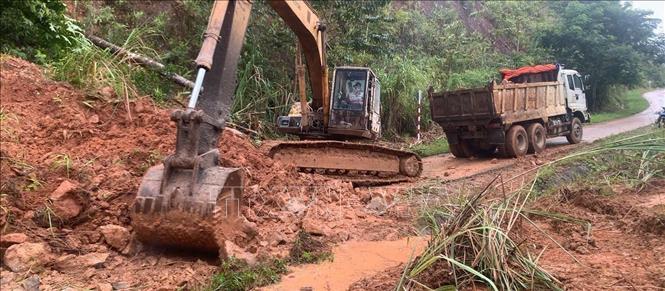
Road management areas, construction departments, investors, and BOT project enterprises are closely monitoring the developments of Typhoon No. 9; proactively implementing plans to ensure traffic flow and taking measures to protect roads, bridges, culverts, warehouses, vehicles, and construction machinery to minimize damage caused by the typhoon.
Agencies and units are preparing bridge girders, pontoons, machinery, equipment, vehicles, and personnel to ensure traffic flow in case of incidents; maintaining forces and equipment ready to participate in rescue operations, aiming to minimize damage. At the same time, they are developing plans to relocate equipment, assets, and reinforce houses to cope with Typhoon No. 9, which is entering the East Sea.
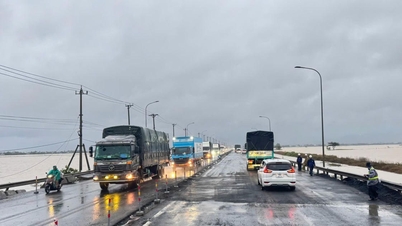
In addition, inspect and assess the condition of bridges located in the area affected by Typhoon No. 9; for weak bridges, regular monitoring and timely action must be taken when bad weather affects operation, ensuring the safety of the structure as well as the safety of people and vehicles crossing the bridge.
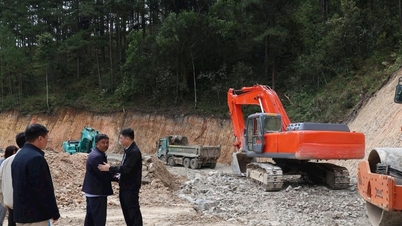
For Project Management Boards 3, 4, and 5, proactively implement measures to mitigate the consequences of natural disasters and ensure smooth traffic flow, guaranteeing the safety of people, construction equipment, and ongoing construction projects.
Management boards must have plans to prevent damage from natural disasters in order to ensure the safety of completed construction work, traffic safety, and the safety of auxiliary works, construction equipment, material storage yards, workshops, and living quarters for staff and workers.
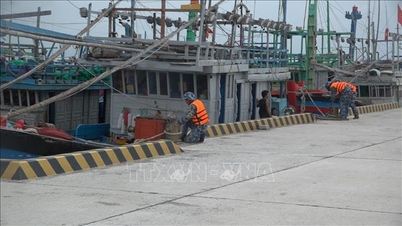
Workshops and material storage areas must be located in high, flood-free areas and must be securely fastened to prevent collapse during strong winds and storms. Construction equipment must be stored safely; floating vessels must have sheltered harbors or wind-sheltered areas for mooring during storms.
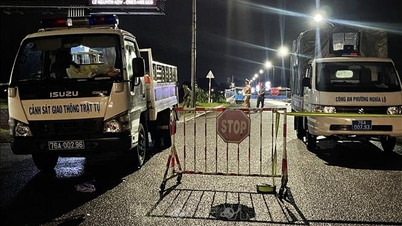
Agencies and units, in coordination with the Civil Defense Committee, must organize rescue forces to ensure traffic flow 24/7; they must constantly and closely monitor the developments of Typhoon No. 9; and at the same time, require units to organize 24/7 duty shifts. Regularly report the situation and impact of Typhoon No. 9 to the Steering Committee for Disaster Prevention and Search and Rescue, and the Vietnam Road Administration as prescribed.
Source: https://baotintuc.vn/van-de-quan-tam/ung-pho-bao-so-9-cuc-duong-bo-yeu-cau-xu-ly-ngay-cac-vi-tri-sat-lo-lon-gay-ach-tac-giao-thong-20250924181558776.htm
![[Photo] Prime Minister Pham Minh Chinh holds a phone call with the CEO of Russia's Rosatom Corporation.](/_next/image?url=https%3A%2F%2Fvphoto.vietnam.vn%2Fthumb%2F1200x675%2Fvietnam%2Fresource%2FIMAGE%2F2025%2F12%2F11%2F1765464552365_dsc-5295-jpg.webp&w=3840&q=75)























































Comment (0)