


The event aims to strongly promote investment cooperation in technology and trade between Vietnam and Japan in developing high-quality, low-emission rice-growing areas in the Mekong Delta, with several key focuses: enhancing the participation of Japanese businesses, investors, and scientific and technological organizations in production, processing, trade, mechanization, and carbon credit markets; connecting businesses from both countries in applying AI, Big Data, MAV systems, land, water, and emissions management, and smart sensors; developing a circular economy , processing by-products, and reducing methane emissions in rice production; and strengthening cooperation in training, developing rice cultivation systems, and human resources.
At the conference, Mr. Nguyen Do Anh Tuan, Director of the International Cooperation Department (Ministry of Agriculture and Environment), invited Japanese businesses to invest in green finance and carbon credit technology; precision mechanization and resource-saving technology; circular economy and byproduct processing technology.
According to Mr. Nguyen Do Anh Tuan, Vietnam is piloting a carbon credit payment mechanism. This is a new market with potential revenue from emission reduction. Vietnam hopes that Japanese financial corporations such as Green Carbon will participate in establishing a transparent and effective Measurement, Reporting, and Verification (MRV) system, ensuring that Vietnamese rice carbon credits meet international trading standards.
The Director of the International Cooperation Department stated that the goal of the 1 million hectare rice project is to reduce irrigation water by 20% and chemical fertilizer use by 30%. This presents an opportunity for companies like Satake, Yanmar, and Kubota to expand their production lines for smart agricultural machinery, applying alternating dry-drain (AWD) irrigation technology and comprehensive mechanization from sowing to harvesting. Furthermore, Vietnam hopes that investors such as Chitose and Kanadevia will invest in factories producing biochar and organic fertilizer from rice straw, transforming agricultural waste into soil improvement materials and completing a closed-loop production cycle.

Vietnam aims to produce approximately 350,000 to 400,000 hectares of high-quality, low-emission rice by the end of 2026. The Vietnamese Ministry of Agriculture and Environment will prioritize the selection and pilot implementation of Japanese technology models during the 2025-2026 Winter-Spring crop season in key rice-growing areas under the 1 million hectare rice project. Therefore, we hope Japanese investors will participate in the pilot program with Vietnam starting from the 2025-2026 Winter-Spring rice crop season. Following the pilot program, the Ministry of Agriculture and Environment and local authorities will create the best mechanisms to attract investors; establish a legal framework and support policies for the cooperation program.
The 1 million hectare rice project is considered Vietnam's third agricultural revolution, aiming to reorganize rice production towards a modern and sustainable direction; reduce greenhouse gas emissions by 15-20%; increase farmers' income by 10-15%; reduce post-harvest losses to below 10%; and establish a brand and value chain for "green rice - low-emission rice".
The third agricultural revolution is not just about productivity, but also about being greener, emitting less, and adding more value; creating a new production ecosystem: farmer organizations (cooperatives) – linking the rice value chain to reduce emissions – digital transformation – carbon market. The core of the revolution is creating economic, social, and environmental value simultaneously.
Regarding the results after two years of implementing the 1 million hectare rice project, Mr. Le Duc Thinh, Director of the Department of Cooperative Economics and Rural Development, stated that the Ministry of Agriculture and Environment has issued two procedures: a rice cultivation procedure to reduce emissions and a Measurement, Reporting, and Verification/Assessment of Emissions (MRV). After piloting the project on 11 sites covering over 543 hectares with 355 participating households, the results showed an average yield increase of 5.12 quintals/hectare, successful water drainage 2-3 times per crop, and a reduction in emissions of 3.7 tons CO2e/hectare/crop;…
To date, 354,800 hectares have implemented sustainable farming practices and reduced emissions in 6 provinces and cities; seed sowing has been reduced by 70-100 kg/ha; 400 out of a total of 620 cooperatives participated in phase 1; and green rice chains such as Trung An and Tan Long have been formed.

However, the Ministry of Agriculture and Environment recognizes the need for further investment in emission reduction technology, production organization, and science and technology. Therefore, it hopes Japan will support Vietnam in implementing a program to cultivate 1 million hectares of rice using advanced technology, green finance, and training of personnel, extension workers, cooperatives, and farmers according to international standards, working together towards the goal of "green Vietnamese agriculture" for the global market.
The Mekong Delta, the country's largest rice granary, is facing significant impacts from climate change and urgently needs to innovate production methods, modernize the value chain, and enhance competitiveness. In this transformation, international cooperation plays a crucial role, especially with Japan – a country with advanced agriculture, efficient management, high technology, and leading quality standards.
Therefore, at the conference, representatives from localities, associations, and businesses in Vietnam's rice industry also proposed inviting Japanese investors to participate in the 1 million hectare rice project in several areas: training and capacity building for human resources (personnel for MRV reporting); Japanese businesses participating in the use of straw compaction technology to supply biomass power plants; investing in closed-loop infrastructure to address water resources and applying alternating wet and dry rice cultivation techniques; calling for investment in rice mills in Ca Mau; investing in machinery and equipment to serve the stages in the emission reduction criteria (removing straw from the fields, etc.);…
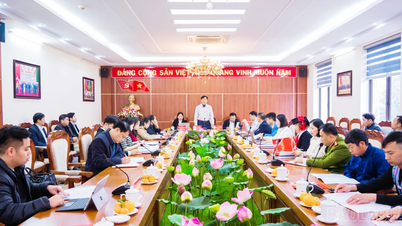
Vice Chairman of the Can Tho City People's Committee, Tran Chi Hung, expressed confidence that with the active support of the Japanese Government, the Embassy, JICA, and Japanese businesses, many opportunities for cooperation and development in the agricultural sector of the Mekong Delta and the whole country will arise. This will serve as a basis for both sides to expand cooperation and jointly build a sustainable rice value chain, aiming for green development.

Mr. Hagiwara Hideki, Deputy Director of the Office of the Minister in charge of environment, export and international relations (Ministry of Agriculture, Forestry and Fisheries of Japan), affirmed that the conference was a good opportunity for Japanese businesses to directly listen to the concerns and needs of relevant parties on the Vietnamese side. This was also an opportunity for many Japanese businesses to participate in the 1 million hectare rice program.
"Japan has high expectations for the implementation of the 1 million-hectare high-quality, low-emission rice program. The Japanese Ministry of Agriculture, Forestry and Fisheries will provide maximum support for these activities," said Mr. Hagiwara Hideki.
Japan is currently Vietnam's largest ODA donor, third-largest investor, and a key trading partner. In the agricultural sector, the ministerial-level dialogue mechanism and the shared, long-term vision for Vietnam-Japan agricultural cooperation have become crucial foundations, dating back to 2016. In September 2025, the Vietnamese Minister of Agriculture and Environment and the Japanese Minister of Agriculture, Forestry and Fisheries signed a memorandum outlining a shared, long-term vision for strategic cooperation between 2026 and 2030, emphasizing the role of cooperation in technology, innovation, high-quality human resource training, and green agricultural development.
Source: https://baotintuc.vn/kinh-te/xuc-tien-dau-tu-hop-tac-cong-nghe-voi-nhat-ban-trong-phat-trien-vung-lua-chat-luong-cao-20251212130342724.htm






















































Comment (0)