

Promoting the Party's self-rectification strength
Marxism-Leninism is the ideological foundation of the Communist Party of Vietnam , serving as a guiding principle for all policies and strategies of the Party and the State. One of the fundamental principles of Marxism-Leninism is the principle of development: all things and phenomena are in motion, changing and developing through the struggle between opposing forces. Development is the result of this struggle, in which the new inevitably emerges to replace the old, creating historical progress.
Applying that principle to Party building, our Party affirms that building and rectifying the Party is an inevitable law of development, a process of self-renewal and self-improvement to meet the leadership requirements in each stage of the revolution. Self-renewal and self-rectification are vivid manifestations of dialectical thinking, always identifying and overcoming contradictions, mistakes, and weaknesses within the Party to ensure its purity and strength.
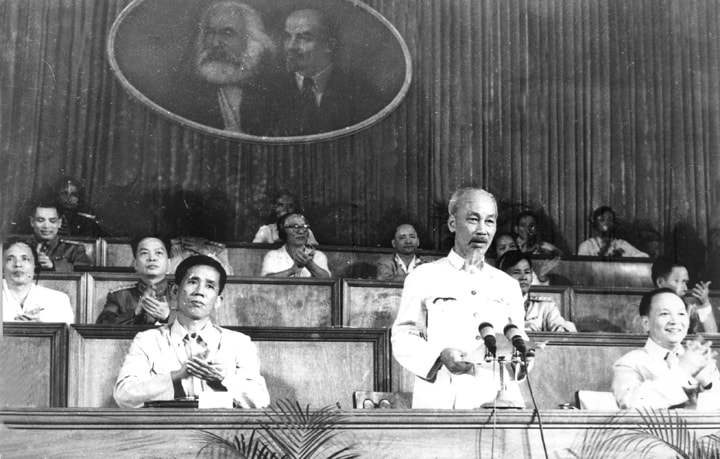
Firstly, from a theoretical standpoint, Marxism-Leninism points out that contradiction is the source and driving force of all development. For Party building, correctly identifying and addressing the contradictions between the demands of reform and organizational limitations, and between revolutionary qualities and negative manifestations in each cadre and Party member, is a decisive factor for the Party's continuous progress. Therefore, our Party has always considered self-criticism and criticism as a "sharp weapon," a law of development for a genuine revolutionary Party.
Secondly, from an ideological perspective, Marxism-Leninism helps us clearly understand the dialectical relationship between revolutionary ideals and the realities of life. The intrusion of individualism, pragmatic lifestyles, and hedonistic mentality is inevitable in a market economy ; however, if correctly identified and guided, it will become a driving force for creativity and development. This is also the spirit of dialectics: not denying extremes, but transforming contradictions into positive momentum.
Thirdly, in terms of organization and personnel, dialectics requires the Party to constantly rectify and renew itself, considering inspection, supervision, and discipline as a self-regulating process to ensure the purity and fighting capacity of the Party organization. Strictly handling violations while encouraging innovation and creativity is the harmonious combination of "construction" and "combat."
Promoting the spirit of Ho Chi Minh in building and rectifying the Party.
Throughout his life, President Ho Chi Minh always considered building and rectifying the Party as a crucial task, determining the survival of the Party and the regime. He demanded that the Party constantly renew and rectify itself in all four aspects: ideology, politics, organization, and morality; resolutely combating individualism, bureaucracy, corruption, and degeneration. He emphasized that cadres are "the root of all work," and must cultivate revolutionary ethics, maintain discipline, unity, and closeness to the people. In his Testament, he instructed: "The first thing that needs to be done is to rectify the Party."
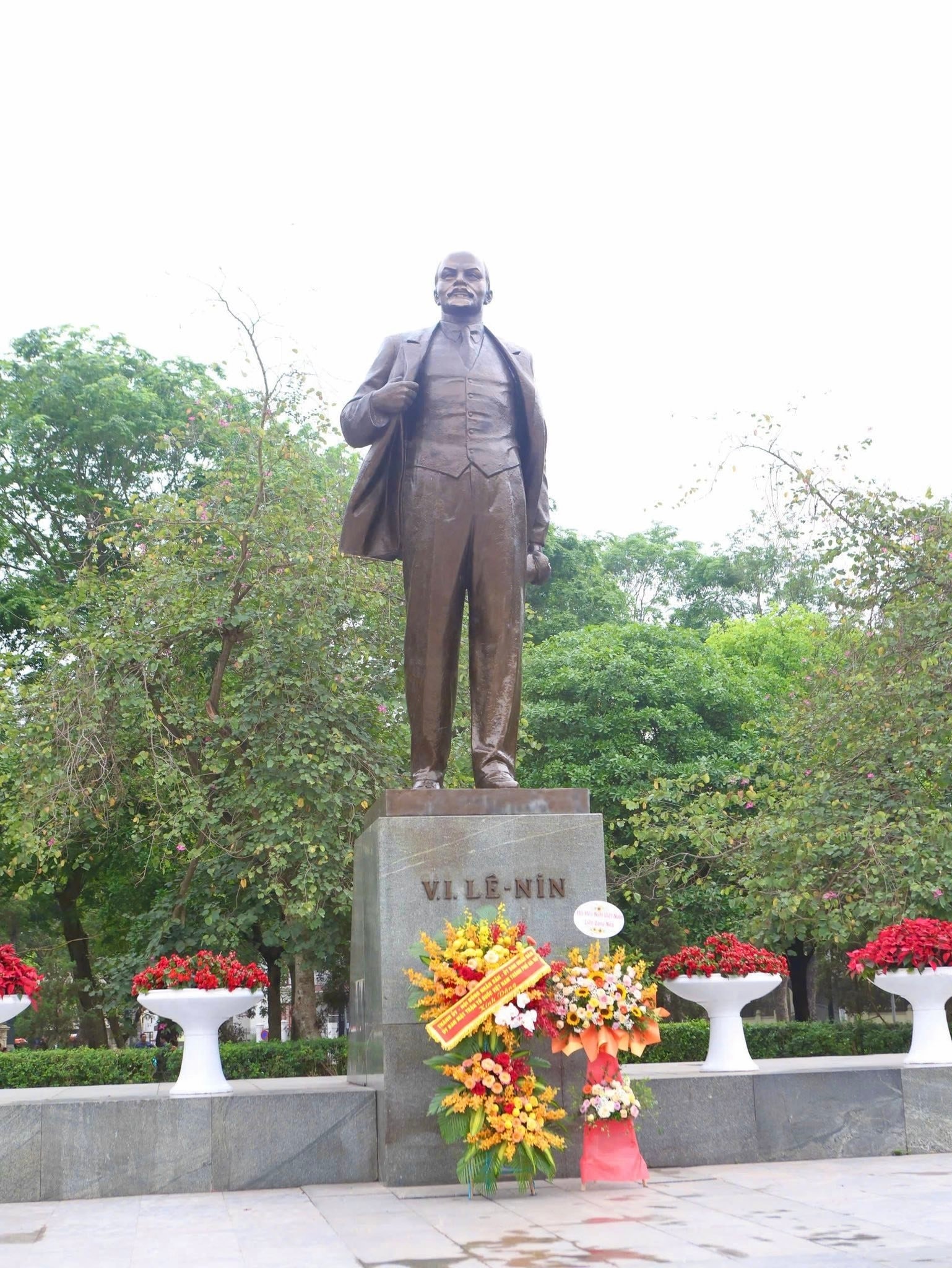
Since the beginning of the Doi Moi (Renovation) process (1986), the Party has continuously issued many important resolutions on Party building and rectification. Resolution No. 3 of the 7th Central Committee (1992) was the first to clearly state the task of "renovating and rectifying the Party" in the new era; Resolution No. 6 (second time) of the 8th Central Committee (1999) is considered a major rectification, emphasizing the struggle against individualism, opportunism, degeneration, and corruption. Resolution No. 4 of the 11th Central Committee (2012) further outlines three urgent groups of solutions to combat ideological, moral, and lifestyle degradation, "self-evolution," and "self-transformation."
Building upon and developing the previous resolutions, Resolution No. 4 of the 12th Central Committee (2016) expanded the scope and content, linking Party building with the fight against corruption, waste, and negative phenomena; and emphasized the exemplary responsibility of cadres and Party members, especially leaders. In particular, Conclusion No. 21-KL/TW of the 13th Central Committee (2021) represents a new development, expanding the requirement for rectification from the Party to the entire political system, identifying four risks and four key tasks, considering this a crucial and ongoing task.
In the context of globalization, digital transformation, and deep international integration, the task of Party building and rectification faces many new challenges. Some cadres and Party members are exhibiting signs of ideological and political decline, moral decay, and lifestyle degradation; fading ideals, diminished fighting spirit; and even signs of "self-evolution" and "self-transformation." According to dialectical thinking, this is a manifestation of internal contradictions in the development process. If these contradictions are not identified and addressed promptly, they will hinder development and even weaken the Party's leadership role.
Applying Marxist-Leninist dialectics creatively in new conditions.
In his article commemorating the 95th anniversary of the Party's founding, General Secretary To Lam outlined seven key tasks in Party building: steadfastly adhering to the ideals and goals, perfecting the theoretical system; strengthening inspection, supervision, and discipline; promoting self-criticism and criticism; preventing and combating corruption and negative phenomena; reorganizing the organizational structure to be streamlined, effective, and efficient; focusing on building a team of cadres with sufficient qualities, capabilities, and prestige; and promoting the application of science, technology, and digital transformation in Party member management. This represents a creative application of Marxist-Leninist dialectics in new conditions, combining theory and practice.
In the Draft Political Report submitted to the 14th National Congress, the Party continues to define the task of "strengthening Party building and rectification and the political system; resolutely and persistently fighting to prevent and repel degradation, 'self-evolution,' and 'self-transformation'." This is not only a political goal, but also a concrete manifestation of the dialectical law of development – the law of struggle between the new and the old, between the positive and the negative.
To meet the demands of the new phase, each Party committee, Party organization, and individual cadre and Party member must firmly grasp the scientific and revolutionary essence of Marxism-Leninism and creatively apply it to practical work. Self-criticism and criticism should be considered a regular activity; inspection and supervision should be seen as tools for prevention, correction, and strengthening the people's trust in the Party.
Building and rectifying the Party in the spirit of Marxism-Leninism must always harmoniously combine inheritance and innovation; strict discipline and encouragement of creativity; and "construction" and "combat." All policies regarding cadres must be based on objective laws of motion, ensuring democracy, objectivity, and scientific rigor; resolutely eliminating negative manifestations while simultaneously identifying and nurturing new talents with strong political acumen, revolutionary ethics, practical capabilities, and strategic thinking.
Marxist-Leninist dialectics is not merely a philosophical doctrine, but a scientific method of thinking that helps our Party always view reality objectively, comprehensively, and progressively. Creatively applying dialectics is the key to the Communist Party of Vietnam's continuous self-renewal, self-rectification, and enhancement of its leadership, governance, and fighting capacity; maintaining its revolutionary and scientific nature, worthy of its role as the leader of the State and society, and worthy of the people's trust.
Source: https://daibieunhandan.vn/van-dung-chu-nghia-mac-lenin-trong-xay-dung-chinh-don-dang-10393217.html


![[Photo] Prime Minister Pham Minh Chinh receives Lao Minister of Education and Sports Thongsalith Mangnormek](/_next/image?url=https%3A%2F%2Fvphoto.vietnam.vn%2Fthumb%2F1200x675%2Fvietnam%2Fresource%2FIMAGE%2F2025%2F12%2F16%2F1765876834721_dsc-7519-jpg.webp&w=3840&q=75)













































Comment (0)