

After peaking at $2,450 per ounce on May 20th, the spot price of gold on the world market plummeted. Coupled with the US Federal Reserve's (Fed) delay in cutting interest rates due to caution regarding inflation, the price of gold has fallen to the $2,310-$2,330 per ounce range in recent days.
In fact, the shock of the People's Bank of China (PBOC) halting gold purchases in May after 18 consecutive months of net purchases had a strong impact on the sentiment of gold investors in the international market.
However, demand for precious metals is projected to remain high and is expected to increase in the near future, driven by major players such as central banks in various countries.
In a report recently released by the World Gold Council (WGC), many central banks are planning to add gold to their foreign exchange reserves within the next 12 months due to ongoing political and macroeconomic instability. Countries will continue to buy gold even as prices rise.
According to the WGC survey, 29% of the 70 central banks surveyed expect to increase their gold reserves in the next 12 months, higher than the 24% figure for 2023.
29% is also the highest level since the WGC began the survey in 2018.
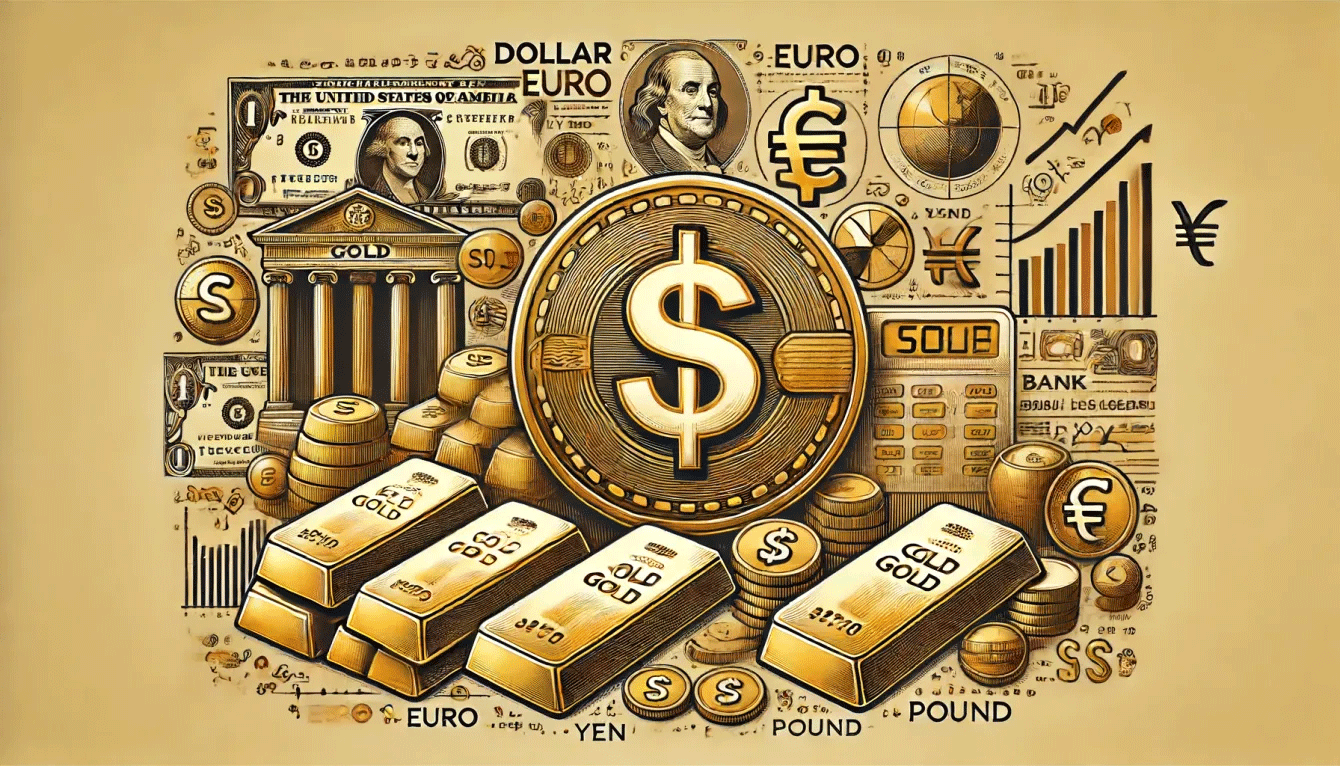
According to the WGC, countries are increasing their gold purchases due to concerns about the risk of crisis as well as rising inflation.
According to the survey results, 81% of central banks surveyed believe that global central bank gold reserves are expected to increase in the next 12 months. This figure is higher than the 71% recorded a year earlier.
The WGC survey was conducted two weeks after the PBOC announced that China's central bank did not purchase additional gold reserves in May. Prior to that, the PBOC had been net buyers of gold for 18 consecutive months.
News that China stopped buying gold in May caused significant volatility in the international gold market. Gold prices fell sharply.
However, according to the WGC, analysts believe that even if China reduces its gold purchases, interest in the precious metal remains strong, as countries push to diversify their foreign exchange reserves amid rising geopolitical tensions around the world.
Countries are also diversifying their foreign exchange reserves as the role of the US dollar as a global reserve currency diminishes. The World Bank Group (WGC) reports that 62% of central banks believe the role of the US dollar will gradually decline over the next five years. In 2023, this figure rose to 55%, compared to 42% in 2022.
Besides China halting purchases, gold is also under pressure from a strong US dollar as the Fed delays cutting interest rates due to concerns about rising inflation.
In the short term, gold is projected to perform negatively following the US's tough anti-inflation policies. However, the Fed is still expected to cut interest rates once this year and four times in 2025. In that case, the US dollar is expected to depreciate rapidly, and gold prices could rise.
Gold price fluctuations will also depend heavily on the outcome of the US election in November. The White House's stance will significantly influence international issues.
Source: https://vietnamnet.vn/vang-lao-doc-sau-cu-soc-trung-quoc-va-my-cung-ran-ca-map-se-mua-ban-ra-sao-2292911.html























































































Comment (0)