

Amidst the booming Vietnamese gaming industry, projected to reach $1.66 billion in revenue by 2025, copyright infringement remains a major obstacle, resulting in losses of up to 30% of potential revenue. VTC News interviewed Mr. Nguyen Hung Cuong, Deputy Director of VTC Intecom, one of the pioneering companies in Vietnam's gaming sector, to discuss this issue.
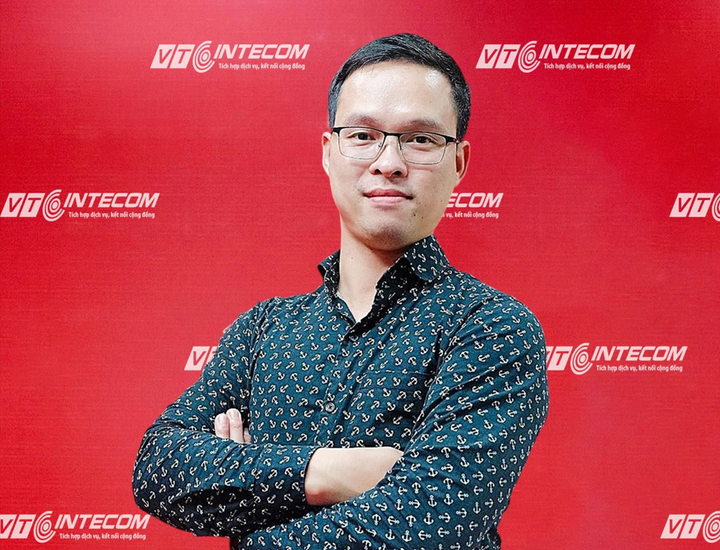
Mr. Nguyen Hung Cuong - Deputy Director of VTC Intecom Company - VTC Corporation.
- Could you share some insights about the entertainment gaming industry in Vietnam, including the advantages and challenges in developing online games?
Entertainment games, or simply games, began appearing in Vietnam in the early 1990s in the form of game consoles and cartridge-based video games like the NES/Famicom, mainly through unofficial imports or "4-button arcade" shops. However, the industry truly boomed in the early 2000s thanks to the widespread availability of the Internet and ADSL.
On the positive side, Vietnam has a population of over 100 million people, an internet penetration rate of 78.8% (approximately 79.8 million users), and over 106 million smartphone subscribers, creating a solid foundation for mobile games. We have a young, tech-savvy population with a high demand for entertainment; a skilled workforce in programming and graphics at competitive costs; and the government is increasingly interested in and views games as part of the digital content industry.
However, there are numerous challenges: widespread copyright infringement reduces revenue and creative motivation; the market is fragmented with imported games dominating; cross-border competition from high-quality international games, coupled with strict regulations such as Decree 147/2024; and social prejudices prevent games from being properly recognized as a cultural industry.
- How have technology and digital content businesses transformed, innovated, and applied new technologies to adapt to the Vietnamese e-game industry?
Faced with fierce competition and the rise of mobile, we have shifted our focus from PC games to mobile and eSports, restructuring into a closed ecosystem encompassing publishing, payment, media, and infrastructure, while actively participating in G-Star to expand international collaborations and enhance our standing.
In terms of creativity, we focus on high-quality content with a distinct Vietnamese identity, deep localization, and investment in new mobile products. The eSports system is being upgraded to create a professional playing field and increase brand recognition. New technologies such as AI, 3D graphics, and mobile development are being strongly applied, along with copyright protection technology.
Through VTC Game Academy, we train human resources and promote digital transformation. These activities affirm VTC as a pioneering enterprise, using games to spread Vietnamese culture to the world .
- How are copyright, copying, and infringement issues affecting business development?
Copyright infringement is the biggest obstacle for the Vietnamese gaming industry. The widespread practice of game cloning, hacking/cheating, and distributing pirated software results in revenue losses of up to 30%. Not only foreign games, but even successful Vietnamese games are quickly copied, reducing profits, hindering exports, and discouraging startups.
We are constantly facing pirated servers, content copying, source code hijacking, and "similar" versions to evade copyright. AI technology and foreign servers are causing infringement to spread rapidly and become difficult to control. The current legal framework lags behind the pace of technology, creating compliance pressure for legitimate businesses.
For example, pirated game servers like Silkroad Origin or Fly Squadron force players to switch to the free-to-play version, while our operating, anti-hacking, and marketing costs are very high. This creates unfair competition, reduces business efficiency, hinders investment, and affects the team's creative motivation.

- What direction is necessary for the sustainable development of the software and entertainment game industry?
For sustainable development, we and businesses in the industry are working closely with regulatory agencies to address violations. We propose adding regulations for AI products and the responsibilities of digital platforms. Businesses should focus on exclusive content with Vietnamese identity, organize eSports, perfect the ecosystem, and promote training and international cooperation.
From a business perspective, we propose the following to the regulatory authorities: Establish a specialized intellectual property registration portal for games, managed by the Ministry of Culture, Sports and Tourism, to facilitate quick and international registration. Strengthen international cooperation on intellectual property protection through bilateral/multilateral agreements with key markets. Increase legal support for small studios, providing advice on international intellectual property.
Furthermore, a more specific legal framework is needed for the digital environment, such as addressing infringement on international platforms, and a simplified international copyright registration mechanism to reduce costs and enable businesses to proactively protect their digital assets.
- Compared to other countries in the region and the world, what is the current position of the Vietnamese gaming market? What resources do businesses need to expand globally?
Vietnam is among the top 5 in Southeast Asia for the gaming market, with rapid growth and significant domestic potential, although its total revenue lags behind Indonesia, Thailand, and the Philippines. Compared to the world, we are smaller than China, the US, Japan, and South Korea, but stand out thanks to our abundant IT workforce and young gaming community.
To expand globally, four core resources are needed: high-level human resources such as game designers and backend engineers with a global mindset; long-term capital for major IPs and R&D; strong technical infrastructure such as cloud and global payment systems; and a well-structured product/marketing strategy, from soft-launch to international marketing, taking Flappy Bird as an example, but it needed a long-term strategy to become a blockbuster.

- What is the direction of mobile game development in Vietnam in the digital age?
The industry needs to shift from quantity to quality, increasing content depth and cross-platform reach, prioritizing Vietnamese culture. Invest in original content: Collaborate with cultural/historical experts to explore Vietnamese heritage and ensure authenticity.
Cross-platform development: Using Unity/Unreal from scratch to expand to PC/Console.
Increase live-ops and data analytics: Build a data analytics team and optimize events based on global player behavior.
- What responsibilities and efforts do businesses have in producing wholesome games, developing culture, educating, and guiding young people?
Businesses like ours have a responsibility to create safe and positive content. We build wholesome content by incorporating Vietnamese culture and history, encouraging creative thinking and collaboration, and focusing on music and positive interaction.
Building a healthy ecosystem: Age warnings, time-limited play control, transparent payment methods, child protection, and addressing toxic behavior.
Cultural and educational partnership: Collaborating with schools to create educational/historical games, organizing community eSports events, investing in scholarships, and training young talent.
With close cooperation between businesses and regulatory agencies, the Vietnamese gaming industry has not only overcome copyright infringement but also become a driving force for exporting digital culture. This is a crucial moment for Vietnam to assert its position on the global gaming map.
Thank you, sir!
Source: https://vtcnews.vn/vi-pham-ban-quyen-game-pho-bien-lam-giam-doanh-thu-va-dong-luc-sang-tao-ar991015.html















![[Photo] Prime Minister Pham Minh Chinh holds a phone call with the CEO of Russia's Rosatom Corporation.](/_next/image?url=https%3A%2F%2Fvphoto.vietnam.vn%2Fthumb%2F1200x675%2Fvietnam%2Fresource%2FIMAGE%2F2025%2F12%2F11%2F1765464552365_dsc-5295-jpg.webp&w=3840&q=75)















































Comment (0)