

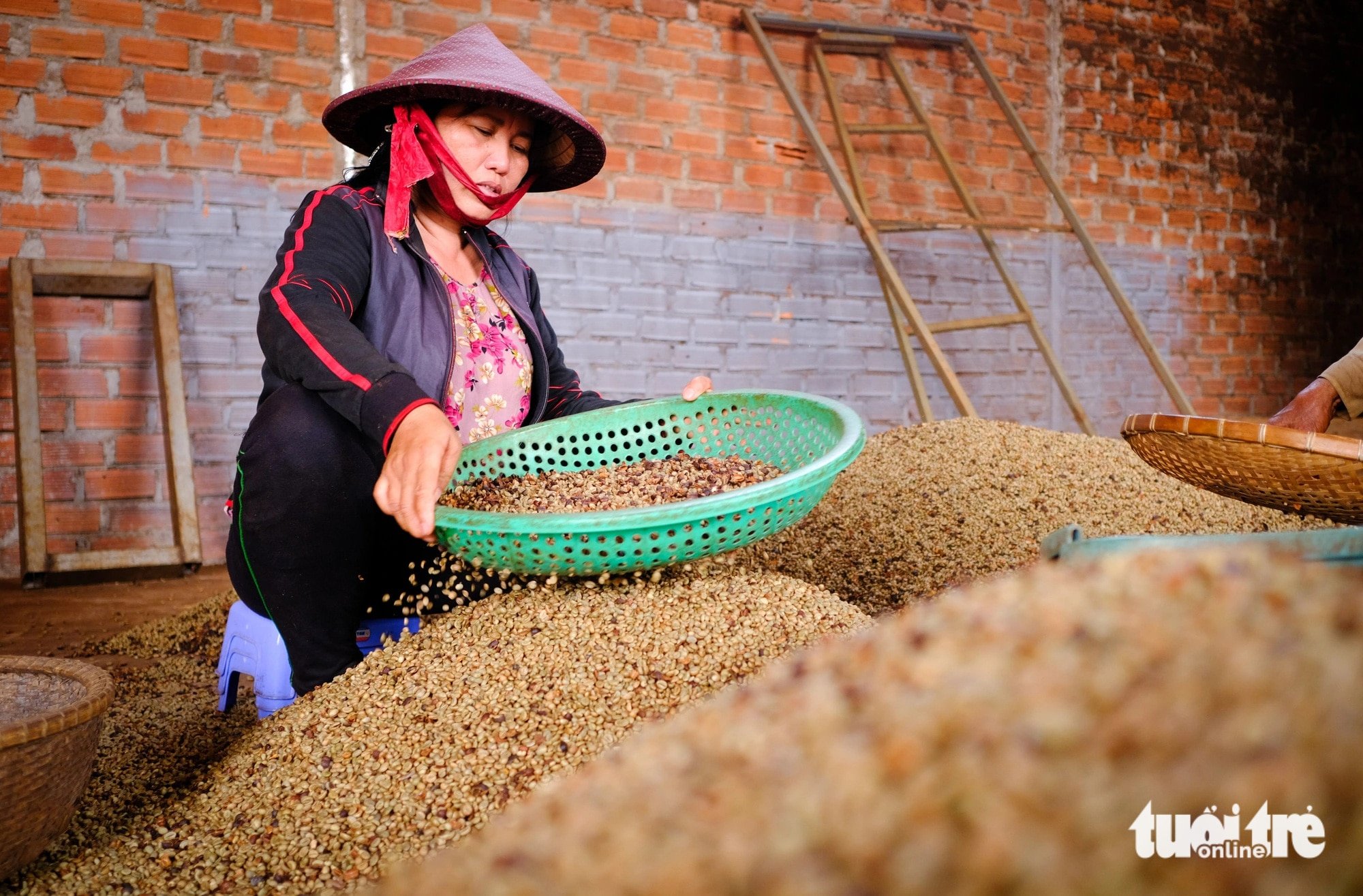
Farmers in Gia Lai province mill green coffee beans to sell to dealers during the 2023-2024 crop year – Photo: TAN LUC
On November 4th, the Department of Industry and Trade of Gia Lai province and Saigon Invest Commodity Trading Joint Stock Company organized a workshop on "Preventing coffee price risks and methods of trading coffee on commodity exchanges".
Vietnamese coffee prices depend on London exchange
At the conference, Mr. Doan Ngoc Co, Deputy Director of the Department of Agriculture and Rural Development of Gia Lai province, said that the province has 105,000 hectares of coffee. Export value in 2023 reached nearly 500 million USD, and in 2024, up to this point, it has exceeded 650 million USD.
Gia Lai is aiming to develop specialty coffee and comply with EU anti-deforestation regulations to facilitate exports to markets.
Mr. Co assessed that the commodity exchange is a good direction for developing the coffee industry, bringing benefits to farmers, cooperatives and parties participating in the coffee industry.
In fact, coffee prices often fluctuate erratically due to many factors such as weather, supply and demand, policies, etc., making it difficult for growers to predict prices and plan production, leading to unstable income.
According to Saigon Invest Commodity Trading Joint Stock Company, leading coffee producing countries have long put coffee on the trading floor such as Brazil, Colombia, Indonesia, Ethiopia...
Vietnam is the world’s largest producer of Robusta coffee, but the coffee is traded by foreign companies on London’s ICE and some Asian exchanges. Since there is no trading floor of its own, the price of Vietnamese coffee is still determined by foreign companies.
Mr. Tran Van Binh - General Director of Saigon Invest Commodity Trading Joint Stock Company - said that with its position as a leading exporting country, Vietnam needs to establish a coffee trading floor to serve as a reference price for world coffee and be self-sufficient in prices to develop the export market, not allowing foreign enterprises to manipulate coffee prices as they have been doing for a long time.
Establishing a trading platform will ensure price transparency, help farmers access market information, and optimize profits. It will facilitate the trading of specialty coffee, enhance product value, and attract domestic and foreign investors.
Mr. Binh believes that listing coffee on the stock exchange will solve the problems of premature buying and selling, price manipulation, deposit forfeiture, and debt default that have occurred in the past.
Overcoming the uncertainties in coffee trading
A representative of a business in the industry, Mr. Nguyen Huynh Phu Lam - Director of Classic Coffee Joint Stock Company (Gia Lai) - said that the coffee industry is currently facing risks when buying from afar and selling from afar due to price fluctuations, especially with the unexpected developments of coffee prices in the past 2 years.
Trading coffee through the floor can overcome this situation, ensuring future transactions take place as committed, ensuring a safe supply for processing and exporting enterprises.
However, for a trading platform to be successful, it must attract the participation of individuals and businesses, and must ensure transaction security and product quality for all parties involved.
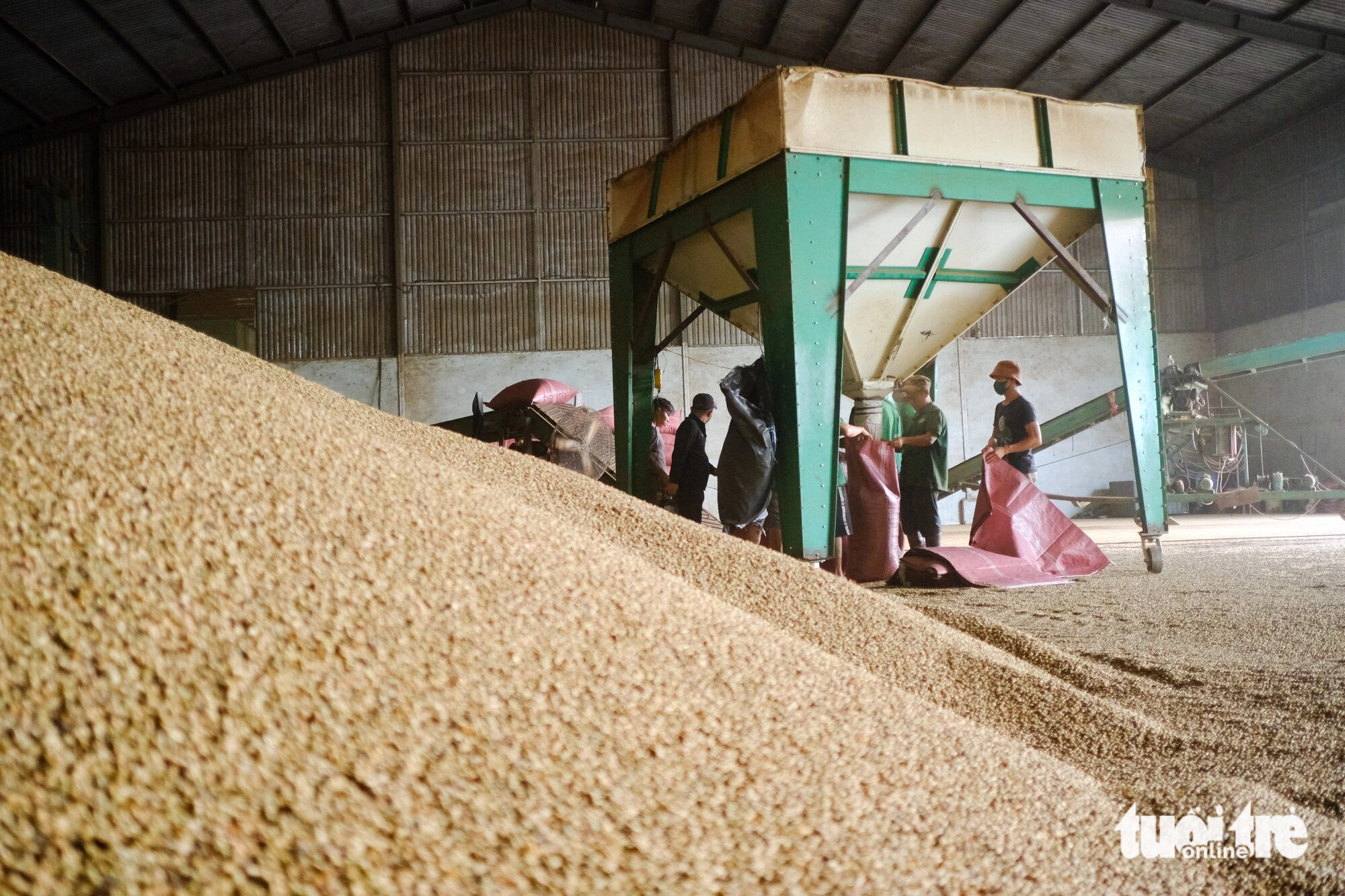
Workers bag green coffee beans at the warehouse of a coffee purchasing company in Ia Grai, Gia Lai – Photo: TAN LUC
Meanwhile, Ms. Dao Thi Thu Nguyet, Deputy Director of the Department of Industry and Trade of Gia Lai province, acknowledged that with a coffee exchange, farmers will feel secure in their production and will not suffer losses due to price differences between the world and domestic markets. This will lead to the professionalization of the coffee production and export industry.
But to bring coffee to the market, according to Ms. Nguyet, it is necessary to closely monitor quality from production to processing and export.
Changing the mindset and practices of farmers.
As a long-time employee in the agricultural sector, Mr. Do Thanh Nam - Chairman of Naracuqua Agricultural Products Company - shared that to improve the quality and brand value of agricultural products, it is necessary to change the thinking and working habits of farmers.
Mr. Nam said he had previously collaborated with a business in Mang Yang (Gia Lai) to provide fertilizer and seeds to farmers growing clean vegetables and fruits. However, as harvest time approached, market prices were higher than the guaranteed purchase price, so farmers... sprayed pesticides to avoid meeting the purchase standards, aiming to sell them elsewhere for profit.
On the other hand, there is the story of traders abandoning their deposits en masse, leading to the recent price crisis of Vinh Long oranges.
Citing the above two stories, Mr. Nam advised farmers and businesses to keep their word and respect their partners in order to have sustainable and long-term business.
![[Photo] The captivating scenery of the fragrant maple forest in Quang Tri](/_next/image?url=https%3A%2F%2Fvphoto.vietnam.vn%2Fthumb%2F1200x675%2Fvietnam%2Fresource%2FIMAGE%2F2025%2F12%2F10%2F1765353233198_lan09046-jpg.webp&w=3840&q=75)

![[Photo] Explore the US Navy's USS Robert Smalls warship](/_next/image?url=https%3A%2F%2Fvphoto.vietnam.vn%2Fthumb%2F1200x675%2Fvietnam%2Fresource%2FIMAGE%2F2025%2F12%2F10%2F1765341533272_11212121-8303-jpg.webp&w=3840&q=75)



















![[Video] The craft of making Dong Ho folk paintings has been inscribed by UNESCO on the List of Crafts in Need of Urgent Safeguarding.](https://vphoto.vietnam.vn/thumb/402x226/vietnam/resource/IMAGE/2025/12/10/1765350246533_tranh-dong-ho-734-jpg.webp)























































Comment (0)