

Overcoming difficulties to become wealthy.
Tan Hoa is a particularly disadvantaged commune in Binh Gia district, with nearly 90% of its population being Dao ethnic minorities. The lives of the people here are primarily based on agriculture, making their livelihoods precarious. Concerned about the challenge of helping the people sustainably alleviate poverty, the local Party committee and government have identified a development strategy that focuses on leveraging the strengths of the hill and forest economy.
In this area, cinnamon trees were chosen as the main crop because they are well-suited to the local climate and soil. To date, the Tan Hoa cinnamon growing area has over 500 hectares, with an average age of one to over 10 years, and many areas are already ready for harvesting.
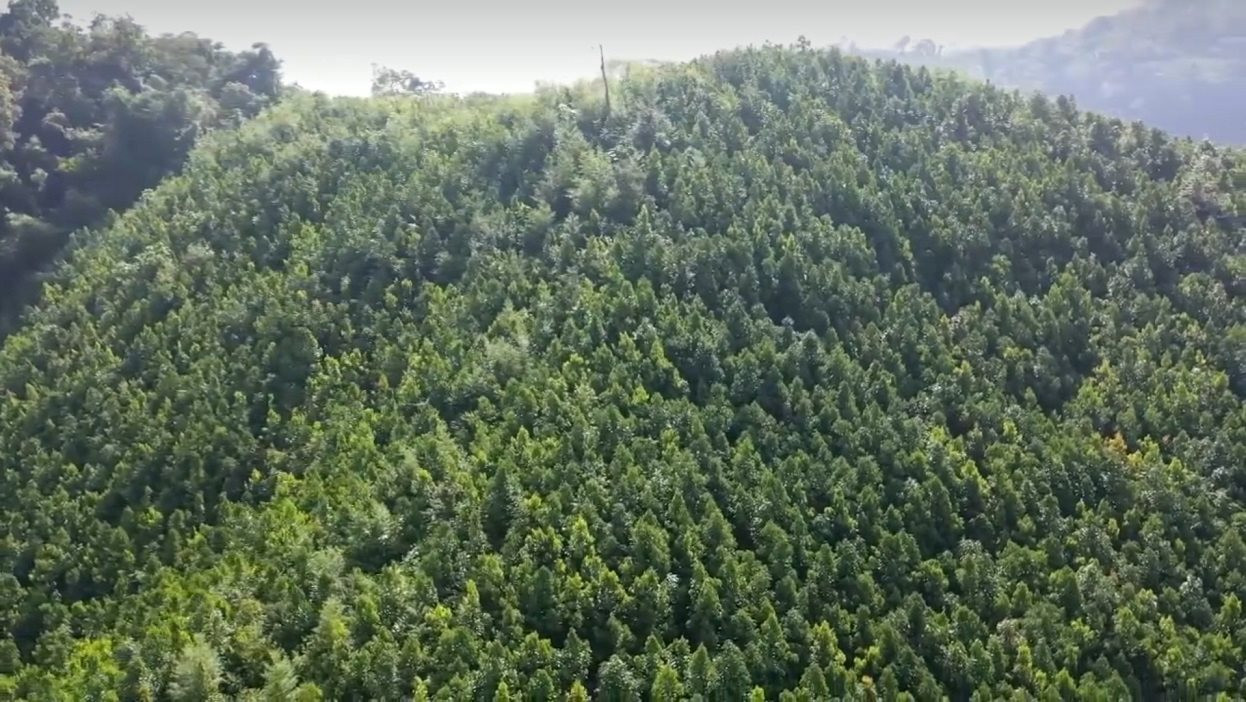
As one of the pioneering households in the cinnamon cultivation movement, more than 10 years ago, Mr. Dang Hoa Lin, a Dao ethnic minority member in Tan Tien village, Tan Hoa commune, boldly experimented with planting cinnamon in his garden. After harvesting a relatively high amount of essential oil and seeing the cinnamon trees grow and develop well, his family invested in planting cinnamon on all the forest land allocated to them. Currently, he owns over 5 hectares of cinnamon forest, with more than 15,000 trees, providing a stable income of nearly 100 million VND per year.
As for the family of Mr. Dang Manh Ha (from the same village in Tan Tien), around 2003, seeing the potential of cinnamon trees, he proactively borrowed capital to invest in planting 4 hectares of cinnamon. To date, the harvest has helped his family improve their living standards, build a spacious house, and have capital to reinvest in planting cinnamon on the harvested forest land.
Along with cinnamon, star anise is also a crop associated with the ethnic minorities of Lang Son province for generations. At over 70 years old, war invalid Hoang Xuan Lai, from Coc Man village, Mong An commune, still enthusiastically engages in agricultural production, raising buffalo and cattle, and cultivating star anise and fruit trees.
According to Mr. Lai, recognizing the potential of the hill and forest economy, and utilizing the available forest land and upland rice paddies, he switched to planting anise, now cultivating nearly 4 hectares. Furthermore, he also planted about 400 mandarin orange trees, intercropping them with corn and raising chickens, buffaloes, and cattle for meat. From his livestock farm, fruit tree plantation, and forestry, Mr. Lai's family has earned an average of 80 to 150 million VND per year over the past few years.
In good harvest years, his family also created jobs for people in the surrounding area by harvesting anise. Not only that, he actively encouraged villagers to diversify their crops and livestock, sharing his techniques for caring for crops and livestock with veterans and people in the commune, helping them gradually develop their economy and achieve a stable life.
It is known that, to date, Binh Gia district has nearly 8,600 hectares of anise cultivation, mainly concentrated in the communes of Quang Trung, Hoang Van Thu, Minh Khai, Hong Thai, Hong Phong, Tan Van and Binh Gia town... To improve the quality of the crop, the district has directed the expansion of the anise production model according to organic standards in the two communes of Quang Trung and Hoang Van Thu and invested in implementing the project to support the improvement and development of anise cultivation in Binh Gia district...
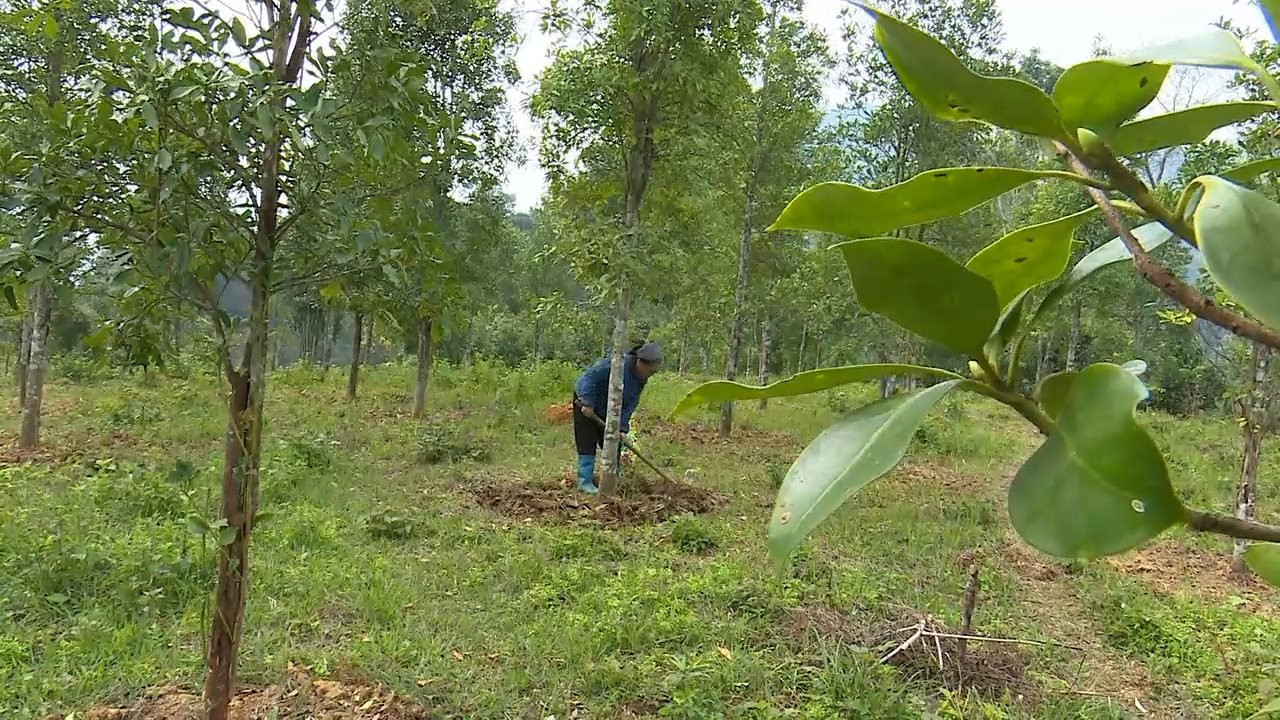
Combined exploitation, protection, conservation, and regeneration of forests.
Binh Gia district comprises 18 communes and 1 town, including 12 particularly disadvantaged communes, inhabited by ethnic groups such as Nung, Tay, Dao, Kinh, and Hoa. The entire district has over 98,000 hectares of forest and forestry land, accounting for 89% of its total natural area. The large area of production forests and abundant labor resources are advantages for the development of forestry in this locality.
In addition, the district has suitable climate and soil conditions for many types of crops, allowing for diversification of agricultural and forestry products such as: star anise, cinnamon, pine, flowering teak, acacia, eucalyptus, and other understory trees.
According to the Vice Chairman of the People's Committee of Binh Gia District, Hoang Van Chung, in recent years, leveraging its existing potential and advantages, the district has decisively directed the development of agricultural production towards commodity production, concentrated specialized farming, and the introduction of high-yield, high-quality, and high-economic-value crop varieties into production. It has identified key crops to create concentrated commodity production areas that yield high economic efficiency.
Initially, the district has clearly formed several concentrated commodity production areas such as: the cinnamon growing area in Vinh Yen, Thien Long, Tan Hoa, and Hoa Binh communes with a total area of over 4,000 hectares; the oil palm growing area in Hong Phong, Hoa Tham, Quy Hoa, and Hung Dao communes with nearly 3,000 hectares; and the acacia and eucalyptus growing area in Thien Thuat, Hoa Binh, Thien Hoa, and Hong Thai communes with nearly 4,000 hectares.
The black tea production area is concentrated in the communes of Hoa Tham, Hung Dao, Hong Phong, Quy Hoa, Vinh Yen, etc., with an area of nearly 600 hectares; the tobacco raw material growing area has a production and business linkage with Ngan Son Joint Stock Company in Mong An and Tan Van communes; the tangerine growing area in the communes of Tan Van, Hoang Van Thu and Binh Gia town covers an area of over 186 hectares, with an annual production of nearly 531 tons.
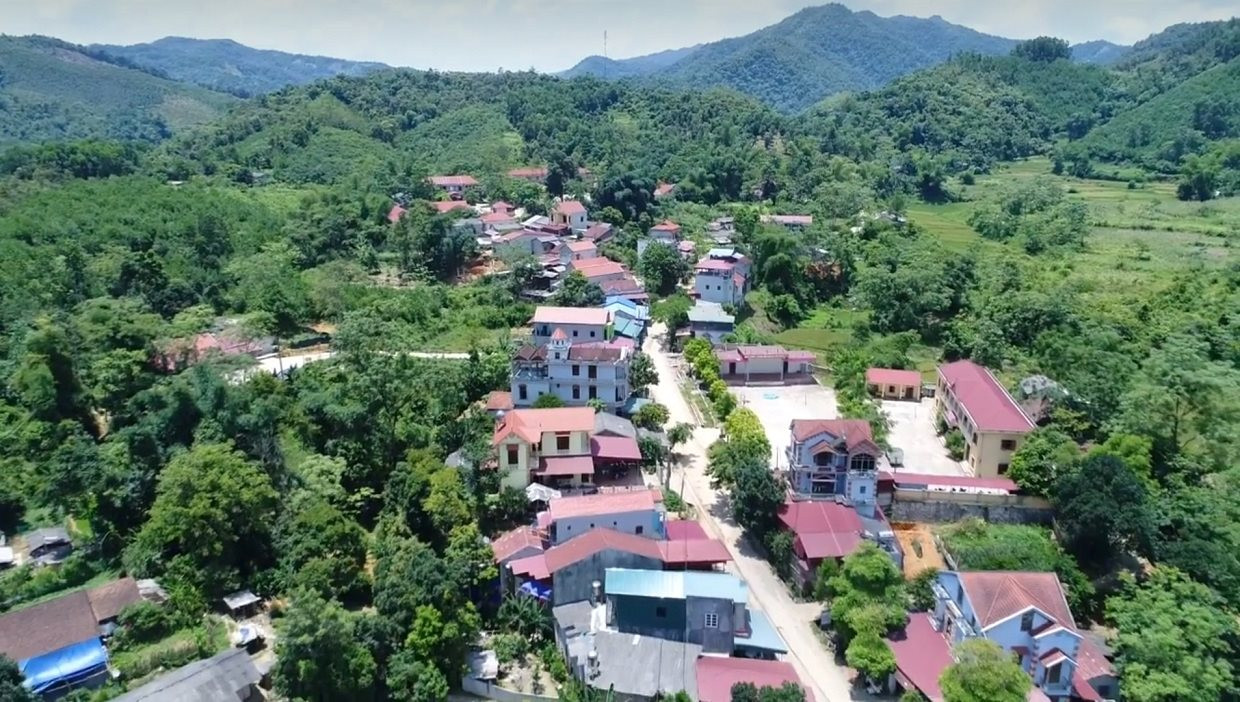
According to Mr. Chung, the District People's Committee has directed specialized departments, communes, and towns to implement comprehensive technical measures to improve agricultural productivity, quality, and output. They have also effectively implemented reforestation projects and programs, creating favorable conditions for people to borrow capital to invest in the development of agriculture and forestry. Furthermore, they have promoted the rational exploitation of forest products, closely integrating this with forest protection, conservation, regeneration, and environmental protection.
This has contributed to improving people's lives, with average per capita income gradually increasing over the years and the poverty rate significantly decreasing. By the end of 2022, the poverty rate in the entire district was 20.63%, a decrease of 5.82% compared to 2021.
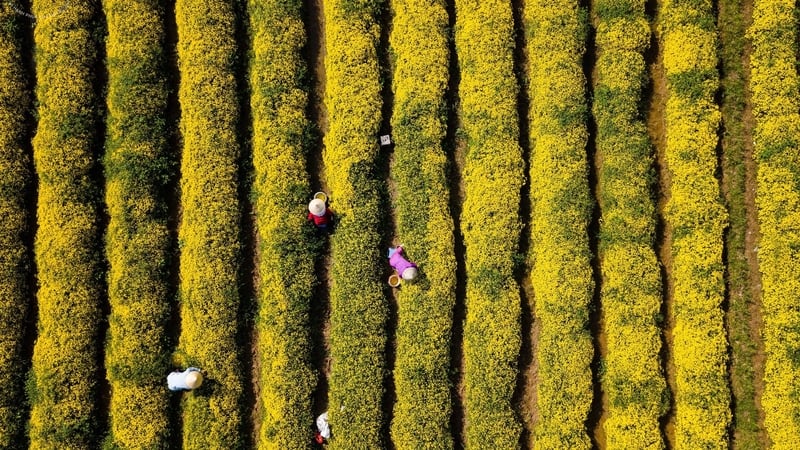
From 2022 to the present, Binh Gia district has planted 1,100 hectares of new forest, including species such as star anise, pine, cinnamon, acacia, eucalyptus, and other forestry trees. The district is continuing to implement the plan to build a model to support the development of golden camellia cultivation, carried out at 18 households/5.4 hectares in villages in Thien Hoa, Thien Thuat, and Hoang Van Thu communes. In 2023, the district aims to plant over 900 hectares of new forest, raising the forest cover rate to 75.2%.
Source







































































Comment (0)