

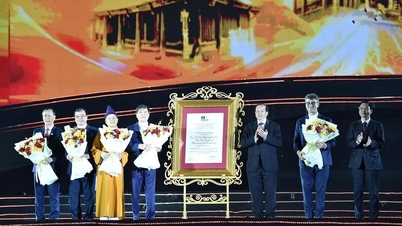
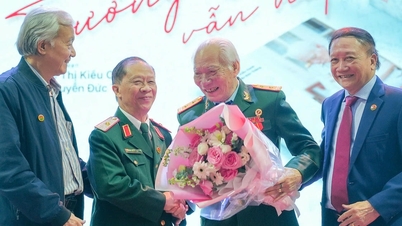
To date, through three awarding rounds, Quang Ninh has had 2 People's Artisans and 36 Distinguished Artisans honored. This is not including nearly a hundred folk artisans who have been awarded titles by the Folk Arts Association. However, Quang Ninh still has many artisans in various localities who possess different intangible cultural heritages that need further attention and recognition.
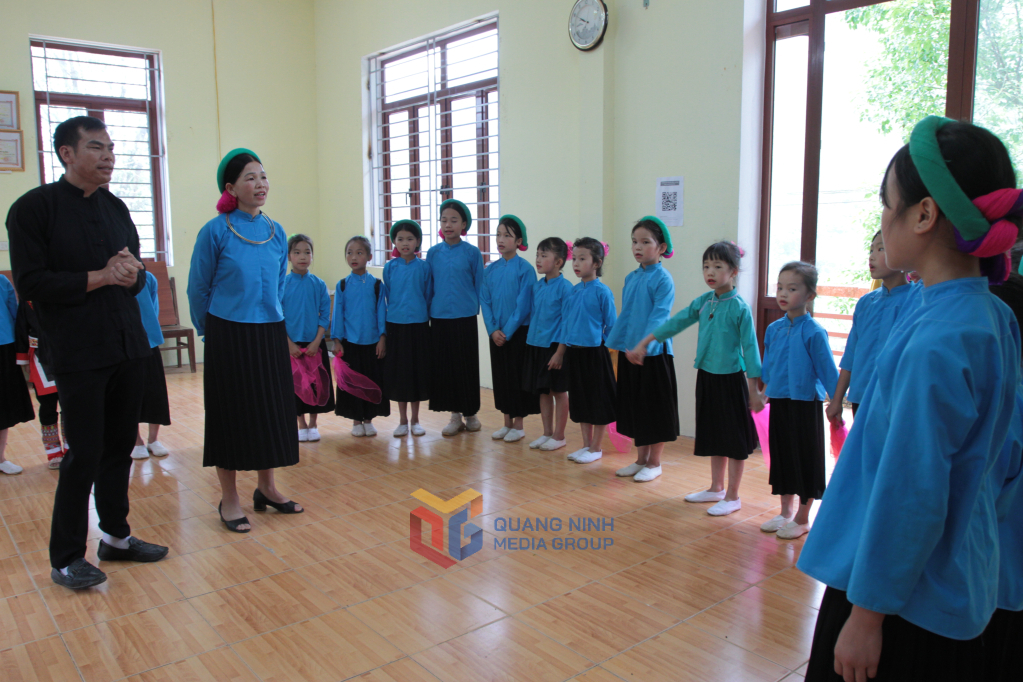
Folk artisans are silent, dedicated teachers on the journey of transmitting cultural heritage from one generation to the next. In Quang Ninh province, there are many folk artisans preserving various forms of intangible cultural heritage, such as: "Hat dum" singing (Quang Yen), traditional "Hat cheo" singing (Dong Trieu), Dao folk songs (Uong Bi, Ha Long, Tien Yen, Binh Lieu), Dao Thanh Y costume embroidery, Dao ethnic coming-of-age rituals (Binh Lieu, Ba Che, Tien Yen), "Hat then" and "Hat soong co" singing (Tien Yen, Binh Lieu), "Hat nha to" singing, "Hat cua dinh" singing and dancing (Dam Ha, Hai Ha, Van Don, Mong Cai), "Hat sinh ca" singing of the Cao Lan people (Ba Che), pottery making (Dong Trieu), and the craft of weaving bamboo boats and fishing gear (Quang Yen, Van Don).
The efforts and dedication of the folk artisans have created a positive synergy, allowing traditional cultural heritage to spread its vitality among young people. To date, the province has 76 artisans who have been awarded the title of Vietnamese Folk Artisan. In addition, there are hundreds of other artisans who have not yet been awarded any title but are still enthusiastically practicing, preserving, and teaching folk arts.
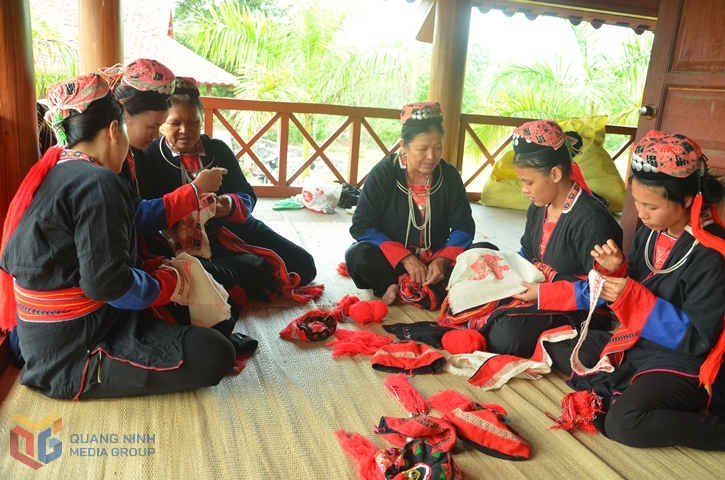
Meanwhile, the majority of folk artisans in the province today are 70-80 years old or older, some are nearing 100, and their numbers are dwindling due to age. Those folk artisans who are still healthy, despite the hardships and difficulties of life, continue to work together to preserve and pass on their love of folk culture to future generations. Every day, they quietly work in each village and hamlet of the ethnic minority communities, nurturing their love for traditional culture.
In the fourth round of awards in 2024, the cultural sector received 16 applications, including 3 applications for the title of People's Artist and 16 applications for the title of Meritorious Artist. Among them, one individual is from the San Diu ethnic group (Mr. Ly Van Sinh), while the rest are from the Kinh ethnic group in the following localities: Hai Ha (4 people), Mong Cai (9 people), Ha Long (1 person), and Dong Trieu (1 person). Dr. Tran Quoc Hung, Director of the Center for Conservation and Research of the San Diu Ethnic Culture of Vietnam, and a member of the Council, believes that this number is too small compared to other provinces and compared to Quang Ninh's own potential. People's Artist Thanh Chac and Meritorious Artist Trong Binh, members of the Council, also agreed with this view. Just in the area of Cheo singing alone, in Dong Trieu, Quang Yen, Uong Bi, Ha Long, and Cam Pha, there are many artisans who are diligently practicing and teaching, and they deserve to be honored.
The list above is similar to the lists from the previous three award rounds in that it shows an imbalance between localities and types of intangible cultural heritage. Some localities have no nomination applications. Many strong areas such as Then singing, Dum singing, Soong Co singing, and traditional crafts have no applications. Notably, the courtship singing in Ha Long Bay has repeatedly lacked any artisans submitting applications.
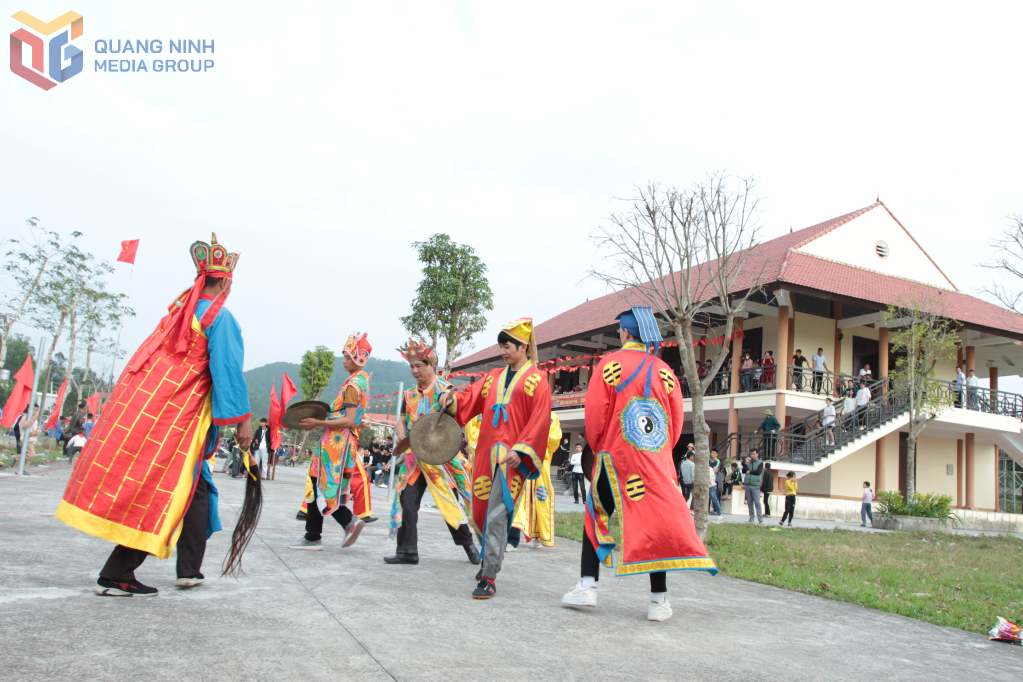
Mr. Ninh Van Thuong, Deputy Director of the Department of Culture, Sports and Tourism, frankly admitted: Some localities and coordinating agencies are still indifferent to the implementation of reviewing and guiding individuals applying for the titles of People's Artist and Meritorious Artist. Therefore, some typical intangible cultural heritage of localities such as the Then ritual of the Tay people (Binh Lieu district), the coming-of-age ceremony of the Dao people, and the traditional costume making of the Dao Thanh Y and Dao Thanh Phan ethnic groups (Ha Long, Tien Yen, Ba Che, Dam Ha) have not had a single individual applying for the title. In some localities, by the time they discovered the provincial award program and plan, the deadline for receiving applications had already passed.
During the application process, the Department provided specific guidance to individuals applying for supplementary awards on how to complete the application forms. However, three individuals from Hai Ha district, despite their contributions to the locality in cultural and artistic activities, submitted incomplete and identical applications. These applications lacked detailed descriptions of their knowledge, skills, and techniques related to the heritage they possessed, and included no supporting documentation. Furthermore, their certificates of merit were not authenticated.
Pham Hoc
Source


![[Photo] Prime Minister Pham Minh Chinh presides over a meeting on private sector economic development.](/_next/image?url=https%3A%2F%2Fvphoto.vietnam.vn%2Fthumb%2F1200x675%2Fvietnam%2Fresource%2FIMAGE%2F2025%2F12%2F20%2F1766237501876_thiet-ke-chua-co-ten-40-png.webp&w=3840&q=75)




































































Comment (0)