

The Ministry of Information and Communications is requested, before November 30th, to coordinate with the Ministry of Industry and Trade and other relevant agencies and organizations to report to the Prime Minister on the current situation and propose solutions to definitively address the problem of signal and electricity outages in villages and hamlets.
The above directive from Deputy Prime Minister Nguyen Hoa Binh , Permanent Vice Chairman of the National Committee on Digital Transformation, has just been announced by the Government Office to ministers, heads of ministerial-level agencies, government agencies, and chairmen of People's Committees of provinces and centrally-administered cities.
Based on the recommendations of the Ministry of Information and Communications in its report on national digital transformation in October 2024, Deputy Prime Minister Nguyen Hoa Binh also directed the heads of ministries, sectors, and localities to prioritize resources and urgently complete the assigned tasks in the National Committee on Digital Transformation's 2024 work plan and the 2024 digital transformation plans of ministries and provinces on schedule, with quality and efficiency.
At the same time, complete the development of digital transformation plans for ministries, sectors, and localities as required by the Prime Minister in Directive 34 dated September 16, 2024.
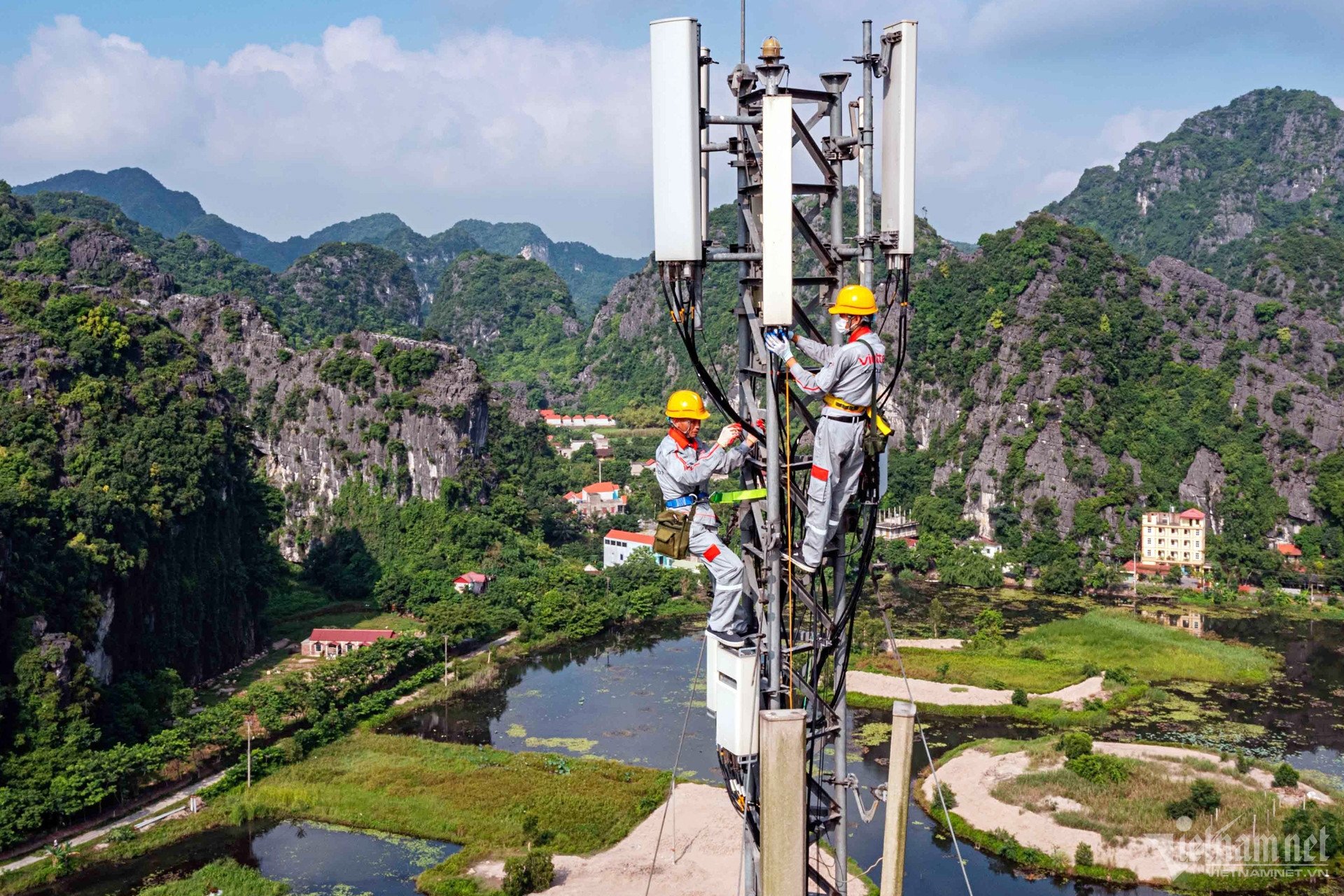
Comprising four main components—telecommunications and Internet infrastructure, data infrastructure, physical-digital infrastructure, and digital utility and technology infrastructure such as services—Vietnam's digital infrastructure has been defined as needing to have ultra-large capacity, ultra-wide bandwidth, widespread accessibility, sustainability, greenness, intelligence, openness, and security to meet the requirements of digital economic development, digital society, and digital government, contributing to national defense and security.
Vietnam's perspective on digital infrastructure development has been clearly stated in the 'Digital Infrastructure Strategy to 2025 and Orientation to 2030', which is that the State prioritizes the development and protection of digital infrastructure such as transportation infrastructure and energy infrastructure, on par with developed countries.
According to the Ministry of Information and Communications, regarding the development of digital infrastructure, the percentage of mobile phone subscribers using smartphones has reached 88.7%, and the percentage of households with broadband fiber optic internet has reached 82.3%.
Specifically regarding addressing areas with poor mobile coverage, during the lockdown period due to the Covid-19 pandemic, the Ministry of Information and Communications directed network operators to extend mobile coverage to more than 2,500 villages and hamlets with poor coverage, bringing the 4G coverage rate to 99.8%, higher than the average rate of developed countries (99.4%).
As of early October, there were still 761 villages and hamlets nationwide with no mobile phone coverage. Of these, 543 were located in particularly disadvantaged areas.
Statistics from the Ministry of Information and Communications also show that, among the 761 villages with poor mobile phone coverage, 637 villages have electricity and 124 villages do not.
Regarding the deployment of infrastructure for providing fixed broadband internet access services, there are still 3,551 villages that do not have fiber optic cables.
Regarding the commercialization of 5G telecommunications services, in 2024, the Ministry of Information and Communications successfully auctioned off the right to use radio frequencies for 5G deployment and granted licenses to Viettel, VNPT, and MobiFone to deploy commercial 5G.
Since mid-October, Viettel has launched its 5G network, with 6,500 BTS stations covering 100% of the capitals of all 63 provinces and cities, industrial zones, tourist areas, seaports, airports, hospitals, and universities.
In its October 2024 national digital transformation report, the Ministry of Information and Communications pointed out that one of the limitations is the difficulty in developing digital infrastructure.
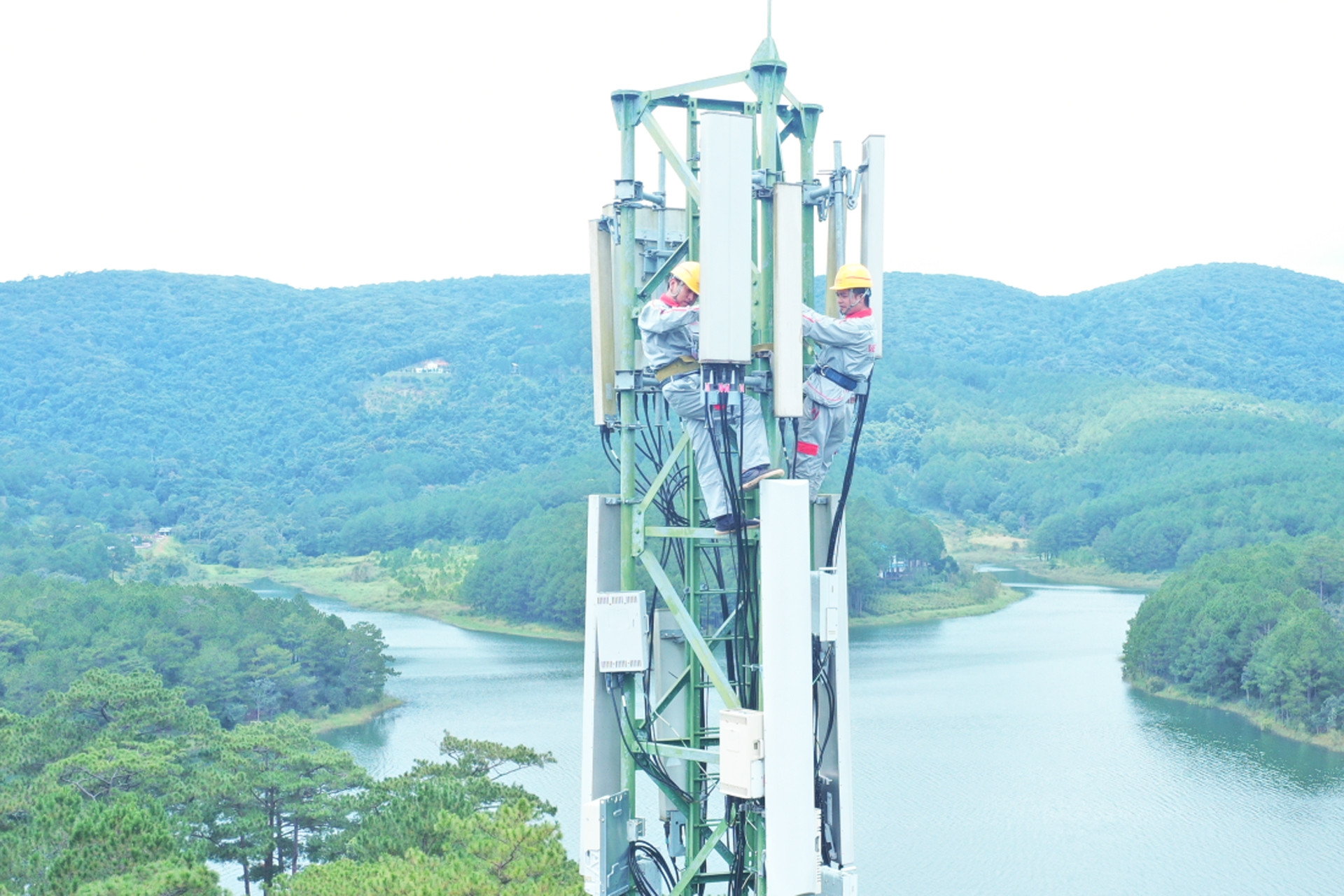
Specifically, there are still 124 villages without access to the power grid, or with electricity but insufficient to power the BTS stations; deploying generators to supply power to the BTS stations would be very costly for the company, while revenue would not cover the costs.
Furthermore, some villages have difficult terrain, making the investment costs for electricity transmission, fiber optic cables, and substation construction in these areas very expensive.
To address these difficulties, the Ministry of Information and Communications proposes that in the coming period, relevant ministries and agencies, including the Ministry of Industry and Trade, the State Capital Management Committee at Enterprises, EVN Group, and local authorities, create favorable conditions regarding infrastructure such as locations and power grids, enabling mobile telecommunications companies to provide coverage in underserved areas; as well as bringing fiber optic cables to villages and hamlets to meet the needs of households.
Source: https://vietnamnet.vn/yeu-cau-som-de-xuat-giai-phap-xu-ly-dut-diem-tinh-trang-lom-song-lom-dien-2344857.html


![[Image] Close-up of the newly discovered "sacred road" at My Son Sanctuary](/_next/image?url=https%3A%2F%2Fvphoto.vietnam.vn%2Fthumb%2F1200x675%2Fvietnam%2Fresource%2FIMAGE%2F2025%2F12%2F13%2F1765587881240_ndo_br_ms5-jpg.webp&w=3840&q=75)






















































































Comment (0)