70 years since the Dien Bien Phu victory: The only person who suggested the General reconsider the plan for a swift attack.
Báo Thanh niên•14/04/2024
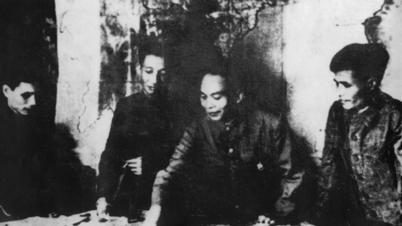
Before the start of the Dien Bien Phu campaign, based on reconnaissance and a thorough understanding of the situation of both the enemy and our forces, General Pham Kiet promptly suggested to General Vo Nguyen Giap, Commander-in-Chief, to reconsider the plan for a quick victory.
"Only Kiet would dare say that!"
On January 26, 1954, General Vo Nguyen Giap made his historic decision: to shift from a quick victory strategy to a steady, sure advance strategy: "It is now decided to postpone the offensive. Order all troops along the entire front line to withdraw to their assembly points and pull out the artillery. Political work must ensure the complete execution of the withdrawal order as well as the combat order. Logistics will shift to preparing according to the new strategy."
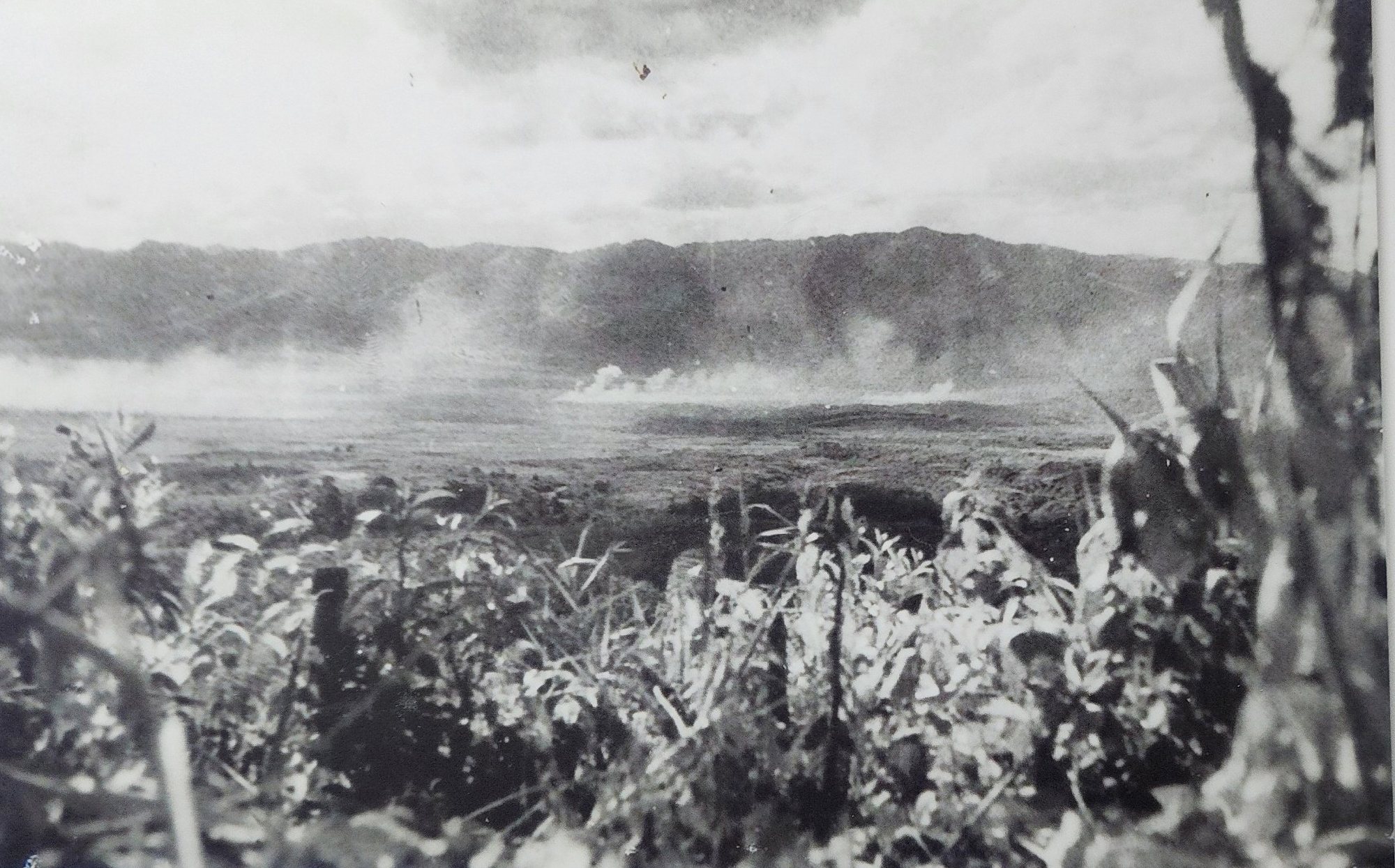
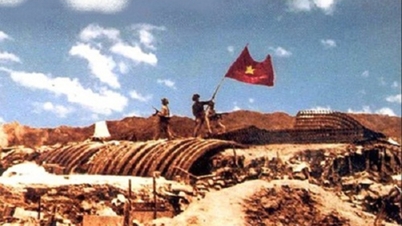
The troops advanced into the Dien Bien Phu stronghold.
NATIONAL ARCHIVES CENTER DOCUMENTATION 3
In his memoir about Dien Bien Phu, the General further emphasized the decision of January 26, 1954: "On that day, I made the most difficult decision of my life as a commander." He made that historic decision after much deliberation: "From the Tham Pua Conference (the Front Party Committee Conference, held on the afternoon of January 12, 1954, which proposed the plan for a quick victory - NV) to bringing the artillery into position, it was a very long time for me. Many sleepless nights. I thought and considered many times, but still found very few factors for victory. I instructed the envoys to gather information to report anything noteworthy promptly. Everyone reflected on the very high fighting spirit of the officers and soldiers. The commander of the 312th Division, Le Trong Tan, told me that during the battle, we would have to make three consecutive breakthroughs to reach the center..." Documents indicate that the 105 mm cannons were towed by trucks to a distance of 9 to 12 km from the field position. The manual towing of the cannons began on January 15, 1954, with the initial expectation that they would reach the position within 4-5 days. However, the towing speed was very slow due to the newly opened temporary road, numerous steep slopes, and the soldiers' lack of experience in towing cannons weighing over 2 tons, while French aircraft continuously conducted reconnaissance and bombardment. By the day before the planned opening of fire (January 20), the cannons had still not reached their position, forcing the campaign command to postpone the opening of fire by 5 days. On January 24, through technical reconnaissance, the campaign command learned that the French had determined the time of the Viet Minh's opening of fire and informed each other. The opening of fire was again postponed by 24 hours. Faced with the rapidly changing situation, the French army was urgently increasing its forces and building more fortified positions, especially on the high ground east of the fortified complex. General Vo Nguyen Giap wrote: "On the ninth day, two days before the fighting began, Comrade Pham Kiet, Deputy Director of the Protection Department, who was monitoring the artillery deployment in the West, requested to speak with me by phone. Comrade Kiet commented: 'Our artillery is all positioned on field battlefields, in very open terrain. If subjected to counter-artillery fire or air attacks, losses will be unavoidable. Some artillery pieces have not yet been moved to their positions.' These frank opinions came at a very timely moment."
At that time, all officers and soldiers were enthusiastically implementing the rapid attack plan. I myself was urgently monitoring the enemy's consolidation and considering a change in strategy. It was then that I received a phone call from Comrade Pham Kiet. He briefly presented the situation and was the only one at that time who suggested I reconsider the rapid attack plan.
Excerpt from a letter by General Vo Nguyen Giap to the Vietnam Historical Science Association dated January 19, 1995
Later, in a letter to the Vietnam Historical Science Association dated January 19, 1995, the General emphasized the role of General Pham Kiet: "Especially at the Dien Bien Phu front, along with the task of overseeing security, he was assigned by me to inspect the battlefield preparations in the Northeast. He went to the site, inspected the artillery positions, and discovered the danger of deploying field artillery in a relatively flat area. At that time, all officers and soldiers were enthusiastically implementing the plan for a quick attack. I myself was urgently monitoring the enemy's consolidation and considering a decision to change the strategy. It was at that moment that I received General Pham Kiet's opinion over the phone. He briefly presented the situation and was the only one at that time who suggested that I reconsider the quick attack plan."
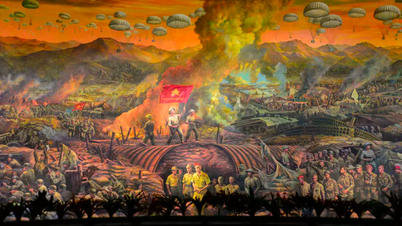
The center of Muong Thanh shook under the artillery fire of our troops.
NATIONAL ARCHIVES CENTER DOCUMENTATION 3
The General said: "Later I learned that some officials were concerned, but at that time no one spoke their true thoughts for fear of being seen as wavering. I highly appreciate Kiet's opinion..." The General added: "Only Kiet dared to say that!"
"A mirror of unparalleled purity."
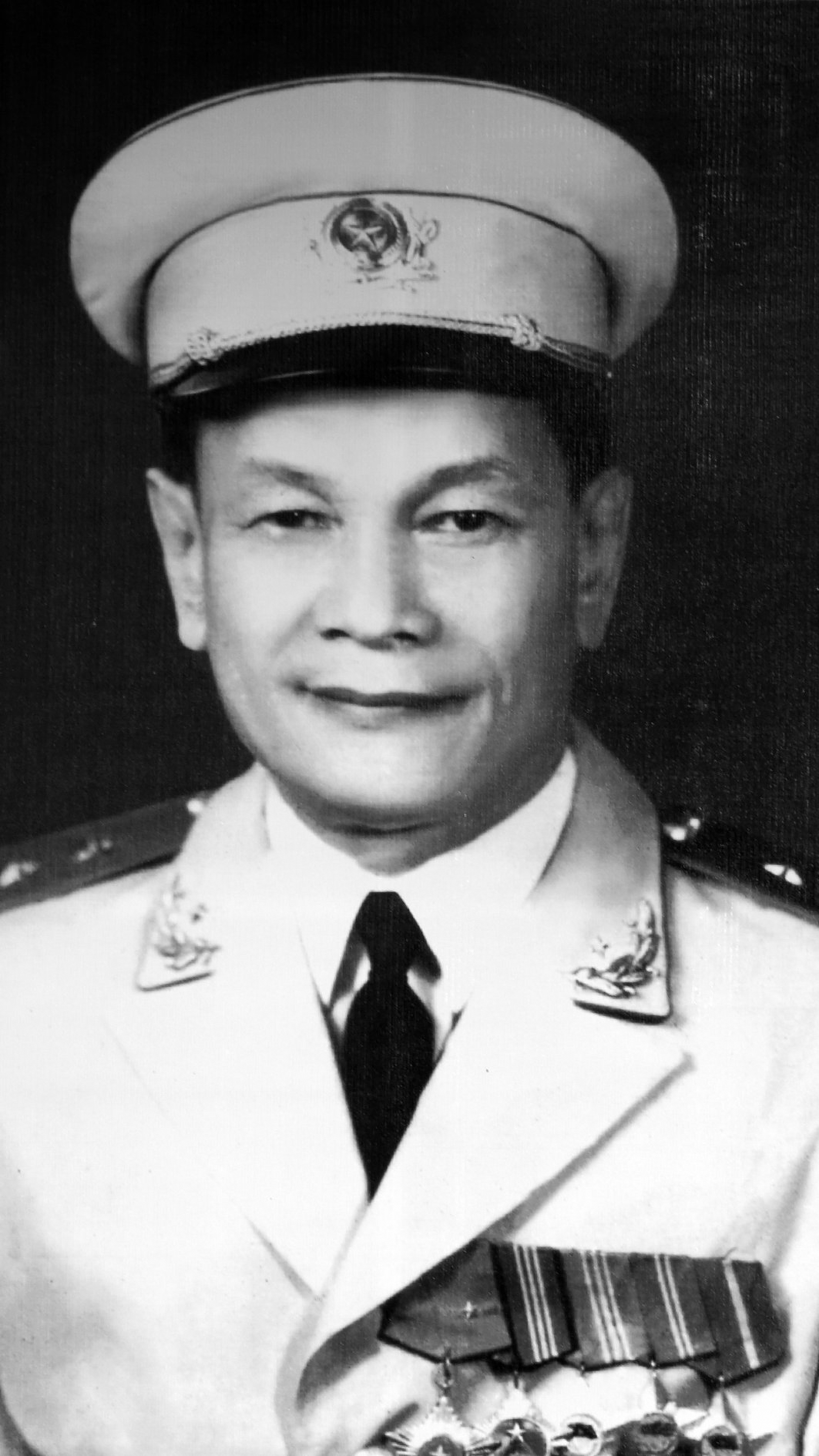
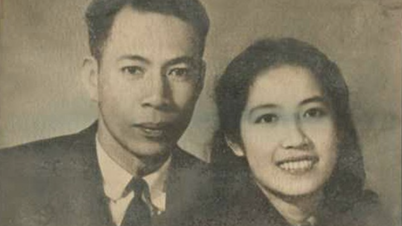
Lieutenant General Pham Kiet (real name Pham Quang Khanh) was born on January 10, 1910, in An Phu village (now Minh Thanh hamlet, Tinh Minh commune, Son Tinh district, Quang Ngai province). Pham Kiet's name is associated with many victories across revolutionary battlefields: He was the leader of the Ba To guerrilla team (March 1945), participated in the 101-day defense of Nha Trang (1945), and served as Deputy Director of the Protection Department during the Dien Bien Phu Campaign...
Lieutenant General Pham Kiet
DOCUMENTS
He was also the Commander and Political Commissar of the Armed Police Force (now the Border Guard), and Deputy Minister of Public Security. He commanded hundreds of battles and special operations, eliminating hundreds of spies and commandos, shooting down many aircraft, and seizing numerous weapons, equipment, and documents from the enemy, thus firmly protecting the North. In the 1960s, during the battle to defend the Vinh Linh border region, he directed the construction of the Vinh Moc tunnels, which were then expanded to many other communes, resolutely holding their ground and fighting tenaciously. Today, the Vinh Moc tunnels remain a monument commemorating the heroic deeds of Vinh Linh during a time of war, deeply marked by the presence of Commander Pham Kiet. In his personal life, General Pham Kiet was simple, loyal, and attentive, caring for the people and soldiers in even the smallest matters. He traveled extensively to difficult and challenging areas, thoroughly understanding the situation and directing efforts to overcome difficulties. Prime Minister Pham Van Dong, a fellow villager and revolutionary comrade, remarked: "He dedicated his entire life wholeheartedly to his compatriots and the country, never demanding or seeking personal gain for his family. He lived simply and honestly, always caring for his subordinates and everyone else with everything he could. Anyone who worked with him, interacted with him, or served under him, respected, admired, and loved Pham Kiet... Kiet was an exceptionally pure example." At 1 PM on January 23, 1975, the compassionate heart of the hero, Lieutenant General Pham Kiet, ceased to beat. His character and fortitude left behind a legend of a man utterly loyal to his country and devoted to his people.





![[Image] Close-up of the newly discovered "sacred road" at My Son Sanctuary](/_next/image?url=https%3A%2F%2Fvphoto.vietnam.vn%2Fthumb%2F1200x675%2Fvietnam%2Fresource%2FIMAGE%2F2025%2F12%2F13%2F1765587881240_ndo_br_ms5-jpg.webp&w=3840&q=75)


































































Comment (0)