

Race to develop API
Sharing at the event "Connecting Fintech 2025" recently held in Ho Chi Minh City, Mr. Pham Thanh Son, Deputy Director of Vietcombank Information Technology Center, said that this bank is currently operating 4 systems providing API services, including: VCB Acquire Hub (payment for public services and hospitals), Open Banking (API for accounts, payments and collections), Mobile Payment Gateway (payment via international cards) and E-Wallet API (linking, depositing and withdrawing e-wallets). In total, Vietcombank is providing nearly 200 APIs, covering more than 40 groups of operations from payment, account management, e-wallets, payment methods, eKYC to data checking and querying.
From an operational perspective, Vietcombank's API system is handling millions of calls every day, with a success rate of over 99% in key business groups. Hundreds of partners from e-wallets, hospitals, schools to e-commerce and public services are using Vietcombank's API. This shows that the bank does not just stop at "connecting" according to legal requirements, but also considers API as a digital service infrastructure, a strategic business asset that contributes to expanding revenue sources and increasing competitiveness.
This trend is also spreading throughout the banking system. VietinBank, with the iConnect platform, has developed hundreds of APIs for cash flow management, QR payments, collection and payment, and ERP system integration for businesses. BIDV , through the BIDV Open API and SmartConnect platforms, has deployed many “off-list” APIs such as real-time invoice reconciliation, identification API, transaction authentication API, e-commerce payments, and embedded financial services for the tourism, transportation, and logistics industries.
In the joint stock commercial banking sector,OCB announced that it has deployed more than 200 Open APIs, supporting businesses to automate revenue and expenditure and seamlessly integrate financial services into digital platforms. TPBank promotes APIs to serve the LiveBank ecosystem and TPFico digital bank; MB develops the BIZ MB API platform with account management, salary payment, collection and payment services and digital signature connection. Meanwhile, VPBank focuses on launching APIs to serve the consumer ecosystem through Cake digital bank and e-commerce platforms. Sacombank, Techcombank and many other banks are also strongly deploying APIs to serve businesses, from payment, money transfer to financial management.
 |
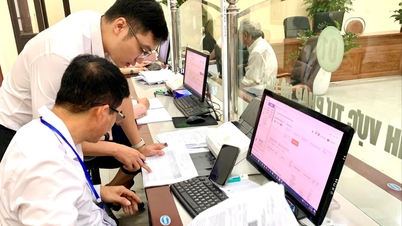
| API services are increasingly being exploited by banks in many areas of the economy. |
Shaping new competitive advantages
According to the records of the Department of Information Technology (SBV), the common point of commercial banks that have been strongly developing API systems in recent times is that they do not stop at basic APIs such as e-wallets and payments, but have expanded to areas with high commercial value such as: API for lending integrated on e-commerce platforms or partner applications; API for managing corporate cash flow; API for providing embedded financial services; API for data serving credit scoring, fraud prevention, etc.
Statistics after more than half a year of implementing Circular 64/2024/TT-NHNN (regulations on the implementation of open application programming interfaces in the banking industry), about 40% of banks in the system have deployed APIs beyond the basic list. This figure shows that Circular 64 not only creates a legal framework for secure connections but also becomes a "push" for banks to review the role of APIs in business operations.
Experts at McKinsey and Allied Market Research believe that commercializing APIs is an inevitable trend when banks move from a closed model to an open model. APIs help banks "follow" customers in the digital environment, reduce dependence on counter transactions, and open up new sources of revenue from integration fees, maintenance fees, transaction fees and value-added services. Allied Market Research's report forecasts the global Open Banking market to reach $43.15 billion by 2026, with a compound growth rate of about 24.4% and believes that APIs will become the "backbone" of the new generation of digital banks.
Sharing the same view, experts at the Asian Development Bank (ADB) said that banks in Europe, Singapore, and Japan have proven that APIs can become new revenue-generating platforms when commercialized as services for businesses, fintechs, and developers. APIs are now helping banks shift their role from being a single service provider to a financial infrastructure provider for the entire digital economy.
In Vietnam, experts believe that the period 2026-2027 will be a period of explosive API competition when Circular 64/2024/TT-NHNN enters the "compliance scoring" phase. Banks will compete fiercely on the scale of the API ecosystem, the level of advanced API diversity, commercialization capabilities and data protection capacity - mandatory factors under the Law on Personal Data Protection.
As Vietnamese banks consider APIs as a strategic asset and boldly commercialize services, the banking industry in the coming years will move closer to the “open banking” model where data, connectivity and user experience become core competitive advantages and new growth drivers for credit institutions.
Source: https://thoibaonganhang.vn/api-dinh-hinh-loi-the-canh-tranh-cua-ngan-hang-174506.html


![[Photo] Cat Ba - Green island paradise](/_next/image?url=https%3A%2F%2Fvphoto.vietnam.vn%2Fthumb%2F1200x675%2Fvietnam%2Fresource%2FIMAGE%2F2025%2F12%2F04%2F1764821844074_ndo_br_1-dcbthienduongxanh638-jpg.webp&w=3840&q=75)



![[Infographic] Cross-calculated exchange rates to determine taxable value from December 4-10](https://vphoto.vietnam.vn/thumb/402x226/vietnam/resource/IMAGE/2025/12/04/1764832340841_infographic-ty-gia-tinh-cheo-de-xac-dinh-tri-gia-tinh-thue-tu-4-1012-20251204120447.jpeg)
















































![[VIMC 40 days of lightning speed] Da Nang Port: Unity - Lightning speed - Breakthrough to the finish line](https://vphoto.vietnam.vn/thumb/402x226/vietnam/resource/IMAGE/2025/12/04/1764833540882_cdn_4-12-25.jpeg)












































Comment (0)