

The series "Central Vietnam – Cultural Colors Amidst a New Life" will take readers on a journey from rural villages to urban centers, exploring how heritage is revived, creative spaces flourish, and opportunities for breakthroughs arise from the cultural industry.
This is not just a story of preservation, but also a story of the harmonious blend of tradition and innovation, so that Central Vietnam can both retain its essence and reach out to the world .
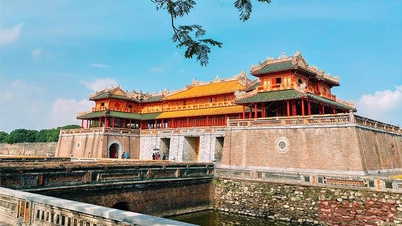
Tourists can experience a dragon boat cruise on the Perfume River, enjoying Hue folk songs amidst the romantic atmosphere of the ancient capital.
Lifelines at risk of disappearing
Amidst the bustling modern life in Central Vietnam, traditional crafts, folk songs, and festivals continue to thrive, serving as a vital source of cultural identity.
But many heritage sites are also on the verge of disappearing; without the preserving efforts and creative spirit of the community, businesses, and government, they might only remain in memory.
Central Vietnam – a narrow strip of land bordering mountains and the sea – is a melting pot of unique cultural values. From the vibrant sounds of traditional opera in the fishing villages of Quang Nam (formerly), the rhythmic pounding of rice pestles during the harvest festival in the Central Highlands, to the sound of oars cutting through the waves in the boat races of Quang Ngai… all constitute a treasure trove of precious intangible cultural heritage. However, many of these values are being eroded by time and urbanization.
In Da Nang, the Non Nuoc stone carving village once had hundreds of households, but now the number of artisans who have dedicated their lives to the craft can be counted on the fingers of one hand. In Hue, Hue folk singing on the Perfume River – a UNESCO-recognized heritage – is also struggling to find an audience in an era where digital entertainment reigns supreme.
The reasons are not only due to changing tastes, but also because the younger generation is less interested in inheriting traditional crafts. "Nowadays, you can buy anything with just a few clicks; who still has the patience to sit and learn a craft for a decade like in the past?" lamented artisan NVH in Non Nuoc.

The boat racing festival recreates the cultural features of the coastal region, attracting a large number of locals and tourists.
However, not all stories are bleak. Many heritage revival models have proven that, if tradition and new needs are harmoniously combined, heritage not only survives but also provides livelihoods.
In Da Nang, artisans from Non Nuoc have collaborated with young designers to create modern decorative products from stone art, serving tourists and for export. Hoi An, on the other hand, has incorporated traditional Vietnamese opera (hat boi) into the ancient town's atmosphere, combined with bilingual explanations, helping international tourists understand and appreciate the art form.
In Quang Ngai, the traditional boat racing festival was reorganized on a larger scale, accompanied by culinary activities and seaside tourism experiences, attracting thousands of visitors.
These models all have one thing in common: they integrate heritage into the "lifeblood" of the current community. Art is not just for show, but also creates jobs and rekindles pride in the people themselves.
When heritage becomes soft power
Heritage cannot be revived by relying solely on one side. Tourism businesses need to proactively connect with artisans and create attractive cultural tourism products. Local communities must be the main actors in preservation, instead of just standing on the sidelines and reaping the benefits.

Hue's royal cuisine is prepared and presented with exquisite detail, serving visitors as part of their journey to explore the culture of the ancient capital.
A successful example is the "Cam Thanh Community Tourism" project (Hoi An), which combines basket boat rowing with storytelling about fishing, the mangrove village, and interspersed with folk singing performances. This model creates jobs for hundreds of households and allows tourists to "buy" cultural experiences, not just material products.
In Hue, some travel companies collaborate with Hue folk singers to create "A Night on the Perfume River" tours, combining tea parties, royal cuisine, and music. As a result, Hue folk singing is not only performed on traditional dragon boats but also becomes an integral part of exploring the ancient capital.

The Hue folk singing performance on the Perfume River is meticulously staged by tourism businesses and artists, both preserving heritage and creating a unique tourism product for the ancient capital.
These stories show that heritage preservation is not about "confining" it to museums, but about placing it within real life, allowing it to adapt and develop.
Local authorities in Central Vietnam have implemented numerous policies to support artisans, invest in infrastructure for craft villages, and encourage the organization of large-scale festivals.
However, the challenge remains: how to preserve heritage without excessive commercialization, which would strip it of its essence? How to truly connect with heritage, making it a part of themselves, rather than just a "commodity" to serve tourists?
The answer probably lies in building shared values: so that people are proud of their heritage, and so that visitors can feel the unique difference that only that place possesses.
Tourists enthusiastically enjoy the lyrical melodies of Hue folk songs amidst the romantic atmosphere of the Perfume River at night.
Cultural heritage is part of Central Vietnam's soft power, not only to attract tourists but also to help position the region's brand. A traditional craft village, a folk song, a festival... can become an icon if nurtured, the right story told, and disseminated in the right way.
In this era of globalization, preserving and reviving heritage is not about resisting change, but about learning to "keep pace" with the times. When people, artisans, businesses, and the government work together, the cultural values of Central Vietnam will not only "survive," but also shine brightly in urban areas and reach out to the world.
Source: https://baovanhoa.vn/van-hoa/bai-1-hoi-sinh-di-san-cau-chuyen-tu-lang-que-toi-pho-thi-159964.html




























![[Video] The craft of making Dong Ho folk paintings has been inscribed by UNESCO on the List of Crafts in Need of Urgent Safeguarding.](https://vphoto.vietnam.vn/thumb/402x226/vietnam/resource/IMAGE/2025/12/10/1765350246533_tranh-dong-ho-734-jpg.webp)



















































Comment (0)