

This can be seen as a serious "performance benchmark," where character, strategic vision, and national will are assessed through victories and convincing performances on the sporting stage.
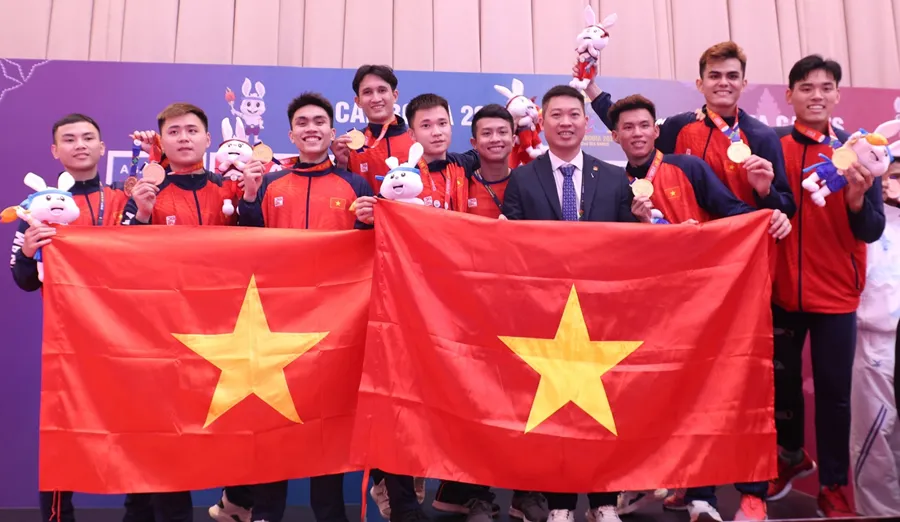
The second day of competition at the 33rd SEA Games (December 11-12) witnessed a vibrant picture: the Vietnamese sports delegation won 19 medals, including 10 gold medals, propelling our country to second place overall, behind only host country Thailand. This achievement is significant, but what's even more important is the "quality" of these medals.
Most of the victories on this breakthrough day came from Olympic sports such as gymnastics, athletics, swimming, and taekwondo – disciplines that require a scientific training foundation, in-depth training, and sustained dedication.
It's no coincidence. After years of persistent restructuring of the training system, focused investment, and a re-evaluation of key strengths, Vietnamese sports are beginning to reap the rewards of a long-term strategy: shifting from a mindset of "winning regional gold" to one of "approaching Olympic standards."
Behind every medal lies the mark of sports science, of rigorous preparation, and of a fundamental shift in the mindset regarding high-performance sports.
While Thailand quickly accelerated, accumulating a number of gold medals in the first two days almost equaling the achievements of Indonesia, Malaysia, or Singapore in previous SEA Games, Vietnamese sports chose a slow but steady approach, with victories that showcased their high-level performance.
All the sports in the Olympic program performed effectively, from canoeing and athletics to swimming. In this group of sports alone, we were in no way inferior to the host country. This is also the group of sports expected to contribute approximately 50% of the total gold medals, aiming to maintain our position in the top 3 overall – a difficult goal, but one that is entirely achievable.
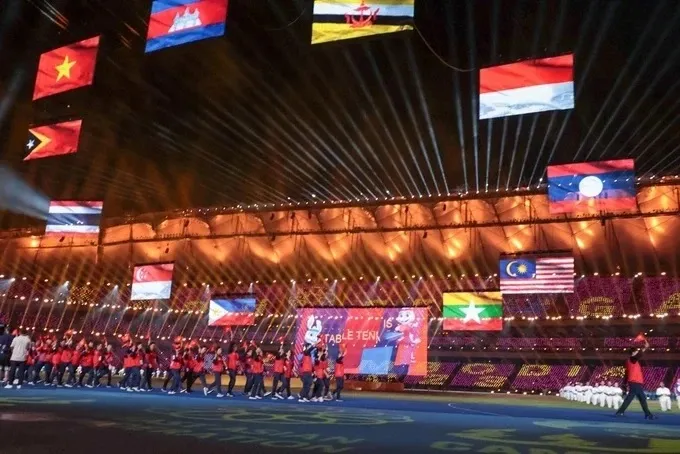
It's impossible not to mention football, where Vietnam's resilience continued to be affirmed. On a day when both teams needed to win, the U22 Vietnam team defeated Malaysia 2-0 to take the top spot in the group, while the Vietnamese women's team also beat Myanmar 2-0 in a crucial match.
Both victories came under immense pressure from the stands and in unfavorable conditions, and it was in these circumstances that the Vietnamese spirit was most clearly revealed: calmness, discipline, and fearlessness. Football – the sport that best reflects the national spirit – helped to emphasize the message: Vietnamese people can withstand pressure, but they will never be defeated.
More notably, the 33rd SEA Games marked the largest and most simultaneous generational transition ever in Vietnamese sports across Olympic disciplines, including football. After concluding a "golden era" that began in 2015, the impressive start at this Games demonstrates that Vietnamese sports are moving forward with stability and seamless connection between generations of athletes.
This is a testament to intellectual fortitude in investment orientation, a strategic decision of the Party and State that aligns with the spirit of innovation, creativity, and the aspiration for progress of the country in the new era. Investing in Olympic sports is a long-term commitment, requiring patience and a vision that extends beyond Southeast Asia.
Victories in fundamental sports are the clearest confirmation of the quality of training and the curriculum's alignment with international standards. This shift demonstrates a maturing sports system, confidently integrating and ready to compete fairly based on merit.
The goal of Vietnamese sports doesn't stop at the SEA Games. The regional games are a launching pad. The real target is the Asian Games and the Olympics, where the comprehensive capabilities of Vietnamese people are tested in the most demanding environments. What we demonstrate today is the foundation for tomorrow.
That path is not easy, but it is the right one: in-depth investment, scientific training, and idealistic aspirations. Sports, therefore, become part of the national strategy for advancement – a reflection of Vietnam's determination and adaptability on the global stage.
With the resilience forged in the Olympic Games, we have every right to believe that in the near future, the red flag with a yellow star will fly high not only on the regional stage, but also in the biggest arenas of the world .
Source: https://www.sggp.org.vn/ban-linh-viet-nam-giua-dong-chay-sea-games-33-post828413.html


![[Image] Close-up of the newly discovered "sacred road" at My Son Sanctuary](/_next/image?url=https%3A%2F%2Fvphoto.vietnam.vn%2Fthumb%2F1200x675%2Fvietnam%2Fresource%2FIMAGE%2F2025%2F12%2F13%2F1765587881240_ndo_br_ms5-jpg.webp&w=3840&q=75)












































































Comment (0)