

“You are part of our family, your future lies in our union, and our union would be incomplete without you,” European Commission President Ursula von der Leyen told Ukraine and nine other countries patiently waiting in line to become members of the European Union (EU).
The top EU leader has repeatedly reiterated the invitation to join the bloc but has never set a date for it to happen.
Please reply as soon as possible.
Russia's military campaign in Ukraine has brought the issue of EU enlargement back to the top of the bloc's agenda, adding three more countries to the list of potential candidates.
"It's too late for current EU member states to realize the idea that they will have to reform internally," said Steven Blockmans, research director at the Centre for European Policy Studies (CEPS).
"Expansion is not only back on the agenda but has become one of the top three issues that leaders are addressing," Modern Diplomacy quoted an EU diplomat as saying.
Ukraine, Moldova, and Georgia were added to the official list of candidates last summer, which already included Albania, Serbia, Kosovo, Türkiye, Montenegro, North Macedonia, and Bosnia and Herzegovina.
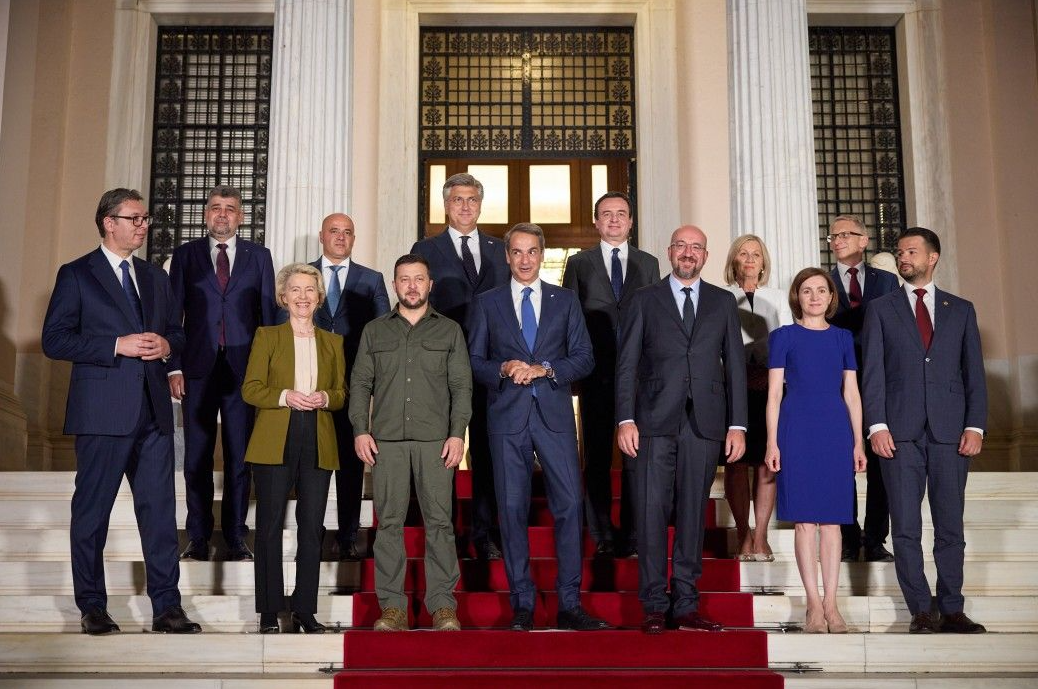
Leaders attend the Ukraine-Balkan Summit in Athens, Greece, on August 21, 2023. Photo: Kyiv Independent
The President of the European Parliament (EP), Roberta Metsola, has called for the start of formal EU accession talks with Ukraine and Moldova next year. The High Representative for Security and Foreign Policy and Vice President of the European Commission, Josep Borrell, has stated that the door is open for Georgia to join the EU, but stressed that Tbilisi “still has quite a lot of work to do.”
Meanwhile, the head of the EC has acknowledged that attention must now also be focused on the remaining issues, namely the accession of the Western Balkan countries.
“We have to discuss what the decision-making process will be like. We have to discuss how we will allocate the common funding we have, what common policies we will follow? These are very principled questions that we have to ask each other. We have to answer these questions as soon as possible, because it will take time to reach conclusions,” von der Leyen said last month.
While Ukraine and Moldova are currently the leading potential candidates, a senior EU diplomat warned that nothing would happen to expedite the process until there is a stronger call from within the EU.
"Nothing will happen until there is maximum political pressure. Why would member states agree to an expansion contrary to the status quo?" the diplomat said.
Internal reform "nightmare"
Many questions will need to be answered when it comes to EU expansion. For example, what will be the impact of expansion on the already strained EU budget?
How much will the EU budget, currently at €186 billion, increase after expansion? Will the top three members – Germany, France, and Italy – be willing to contribute more? Will Poland, Greece, or Hungary be happy to move from being net beneficiaries of EU funding to net contributors?
Then there's the question of the size of the European Parliament (EP) – which currently comprises 705 legislators representing 27 member states. Will EP members have to move up the ranks to make room for more politicians from newly joined member states in what could become the world's largest parliament? Will the political balance tip toward the left or the right?
To illustrate, consider Ukraine as an example. With a pre-conflict population of 44 million, 3 million fewer than Spain and 3 million more than Poland, Ukraine could expect to have 50-60 seats in the EP after joining the bloc. The question is how many of the 73 vacant seats left by Brexit Ukrainians could win, and how many new seats would there be? Or would EU expansion make the EP too cumbersome to function?
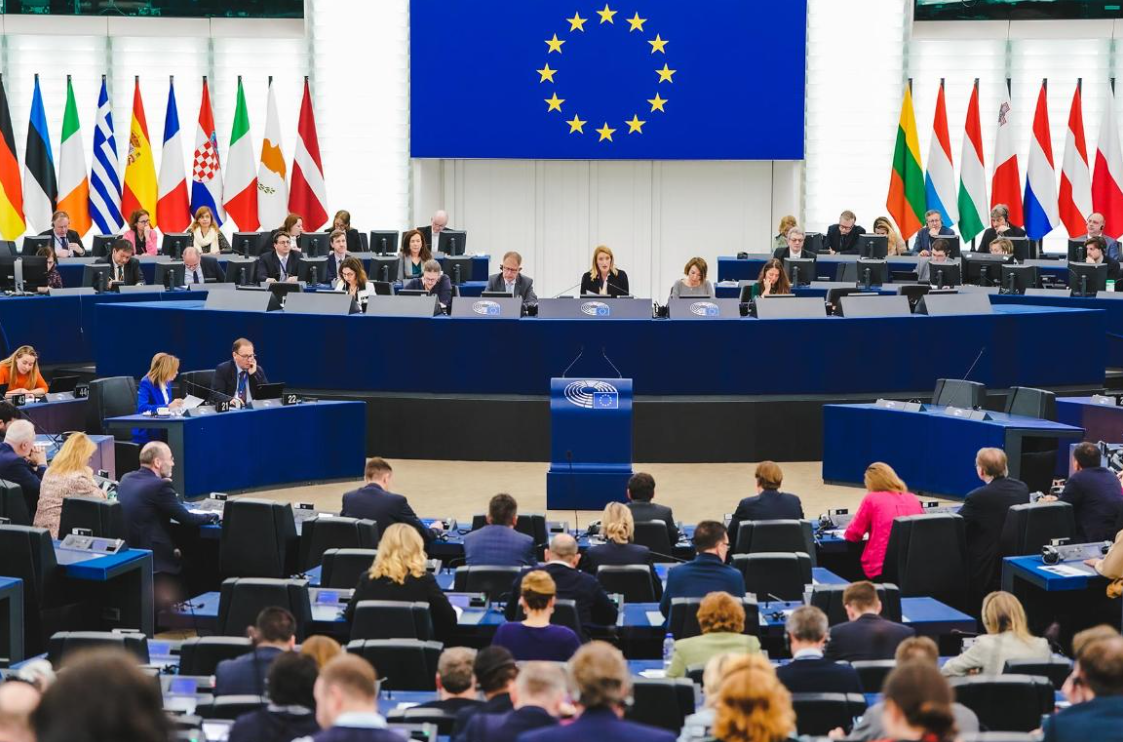
European Parliament President Roberta Metsola opens the plenary session in Strasbourg, April 2023. Photo: EP News
Ultimately, any of the 27 current EU member states can veto another country's accession, making domestic politics a powerful factor in determining which candidates will join the EU and which will not.
If an EU member state finds that any of the above questions could be upsetting to its voters, it may take action to prevent expansion.
Clearly, to realize their ambitions, EU leaders will need to confront increasing difficulties. The debate is likely to be heated as officials weigh the suitability of candidate states, and then there's the “nightmare” prospect of reforming the EU's internal decision-making processes to fit a much larger bloc.
Last week, European Council President Charles Michel urged politicians to begin engaging in EU reforms, aiming for readiness for expansion by 2030. “There is still much work to be done. It will be difficult and sometimes painful. For the sake of future member states and for the EU,” he said .
Minh Duc (According to Modern Diplomacy, Politics EU)
Source
![[Photo] First session of the 14th Congress of the Vietnam Trade Union](https://vphoto.vietnam.vn/thumb/1200x675/vietnam/resource/IMAGE/2026/06/03/1780465947883_ndo_br_img-3852-jpg.webp)
![[Photo] General Secretary and President To Lam presides over a meeting with the Central Organizing Committee.](https://vphoto.vietnam.vn/thumb/1200x675/vietnam/resource/IMAGE/2026/06/03/1780482764658_a1-bnd-4741-3342-jpg.webp)


![[Photo] Secretary of the National Assembly Party Committee, Chairman of the National Assembly presides over the meeting of the Standing Committee and Executive Committee of the National Assembly Party Committee.](https://vphoto.vietnam.vn/thumb/1200x675/vietnam/resource/IMAGE/2026/06/03/1780480353201_ndo_br_bnd-2585-jpg.webp)











































![[Video] Sunset at Lap An Lagoon – Where the sun sets over the fishing nets](https://vphoto.vietnam.vn/thumb/1200x675/vietnam/resource/IMAGE/2026/05/31/1780192137701_beach-landscape-sea-water-nature-grass-745871-pxhere-com.jpeg)



























Comment (0)