

SGGP
According to climatologists and weather experts, climate change is not increasing the frequency of storms, but it is increasing the intensity and destructiveness of this extreme weather pattern.
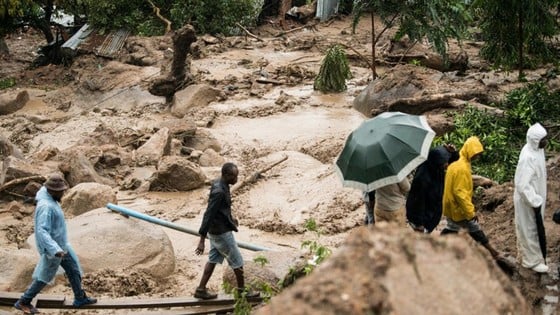 |
| Hurricane Freddy devastated Malawi. |
Cyclones refer to storms that form in the Indian Ocean, also known as cyclones. Hurricanes refer to tropical storms that form in the North Atlantic. Typhoons, on the other hand, describe storms in the Pacific Ocean . These natural phenomena, despite their different names, are all extremely powerful tropical storms, capable of generating ten times the energy of the atomic bomb dropped on Hiroshima, Japan, in 1945. Tropical storms are classified by wind speed, ranging from tropical depressions with speeds below 63 km/h to tropical storms (63-117 km/h) and then to hurricanes with speeds exceeding 117 km/h.
According to Emmanuel Cloppet, an expert from the French Meteorological Agency, a cyclone is a low-pressure trough that forms in the tropics in an area warm enough for this weather phenomenon to develop. This type of storm is characterized by rotating rain-bearing/storm-inducing clouds, creating strong winds and heavy rainfall, and causing storm surges. Cyclones are even more dangerous because they can travel over distances of up to hundreds of kilometers.
According to World Weather Attribution (WWA), a group of scientists and climate researchers, the total number of tropical storms globally each year remains unchanged, but climate change caused by human activity has made these storms more intense and destructive. Climate change affects tropical storms in three main ways: warming the air, warming the oceans, and causing sea level rise.
In its Extreme Weather and Climate Change Report, the WWA highlights that the most damaging type of storm, cyclones, is becoming increasingly frequent and often brings the most severe rainfall. Climate change is warming ocean waters, creating conditions for powerful storms to form, then rapidly intensify and move inland, carrying more water. The strong winds within cyclones cause storm surges, which can then flood coastal areas. According to updated data, storm surges are now much higher than in previous decades because sea levels have risen due to the effects of climate change.
Meanwhile, expert Cloppet stated that a 3°C increase in air temperature could potentially increase rainfall by 20% during a cyclone. These torrential rains have led to floods and landslides, exemplified by Cyclone Freddy, which claimed the lives of hundreds in Malawi and Mozambique earlier this year. Scientists predict that in the future, tropical cyclones will appear in many places where this type of storm has never been seen before, as global warming expands to areas experiencing tropical sea conditions.
WWA also agrees that, as ocean temperatures warm, tropical storms will shift further away from the equator. The northward shift of storms in the Northwest Pacific , striking East and Southeast Asia, is a direct consequence of climate change. As a result, these storms will sweep through areas that are typically unprepared for storm response, having faced this issue almost never before.
Source


![[Photo] Prime Minister Pham Minh Chinh attends the Conference summarizing and implementing tasks of the judicial sector.](/_next/image?url=https%3A%2F%2Fvphoto.vietnam.vn%2Fthumb%2F1200x675%2Fvietnam%2Fresource%2FIMAGE%2F2025%2F12%2F13%2F1765616082148_dsc-5565-jpg.webp&w=3840&q=75)




























































































Comment (0)