

Advantages for attracting investment
According to data from the General Statistics Office, as of May 20, 2023, 962 newly registered foreign direct investment (FDI) projects were licensed with a registered capital of US$5.26 billion, an increase of 66.4% compared to the same period last year in terms of the number of projects and a 27.8% increase in registered capital. Given the extremely close relationship between industrial park real estate and FDI, the amount of capital flowing into Vietnam shows that the potential for development of this type of investment is still very large.
Furthermore, many industrial parks in Vietnam are still attracting interest from foreign businesses due to the trend of relocating manufacturing plants out of China to diversify risks. With political stability and a strategic location, Vietnam is an attractive destination for many large global companies.
According to a report from the Foreign Investment Agency - Ministry of Planning and Investment, in the first five months of 2023, the total registered foreign investment in Vietnam reached over US$5.26 billion, an increase of 27.8% compared to the same period in 2022. Eighty-two countries and territories have invested in Vietnam. Singapore leads with a total investment of over US$2.53 billion, accounting for more than 23.3% of total investment in Vietnam, followed by Japan, China, Taiwan, Hong Kong (China), South Korea, etc., focusing on provinces and cities with significant advantages in attracting investment.
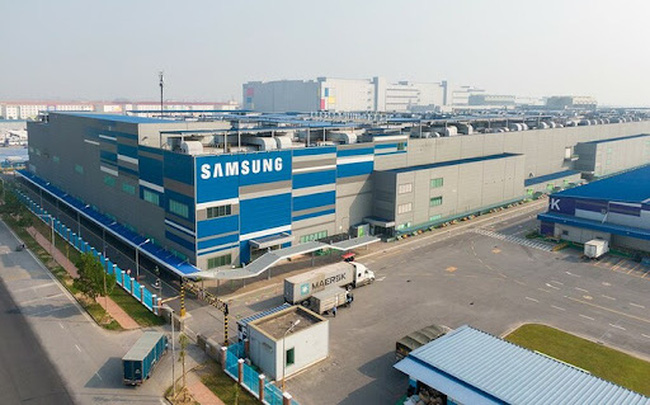
Vietnam continues to attract many large businesses thanks to its inherent advantages.
Vietnam's strengths also stem from its attractive rental prices compared to many countries in the region. According to some reports, current industrial park rental prices in Vietnam are 30-36% lower than those in Indonesia, Malaysia, and Thailand, and on par with the Philippines. Regarding exchange rates, the US dollar/Vietnamese dong exchange rate fluctuates less significantly compared to other countries, thus helping investors minimize losses when deciding to invest.
This type of service is also receiving attention from the government, which is developing transportation infrastructure to address outstanding logistics issues and directly support the industrial park real estate sector. Logistics costs in Vietnam account for approximately 16.8% of the value of goods, while this figure is only around 10.6% globally .
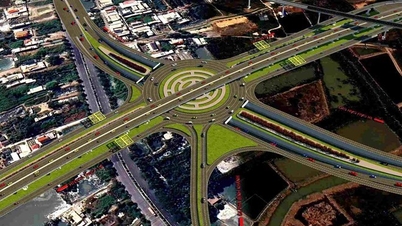
With the increasingly developed transportation infrastructure, projects such as the Ring Road 3 in Ho Chi Minh City, Ring Road 4 in Hanoi , and especially the North-South Expressway, which are being accelerated, will be factors that help Vietnam's industrial real estate increase its competitiveness and move towards long-term development.
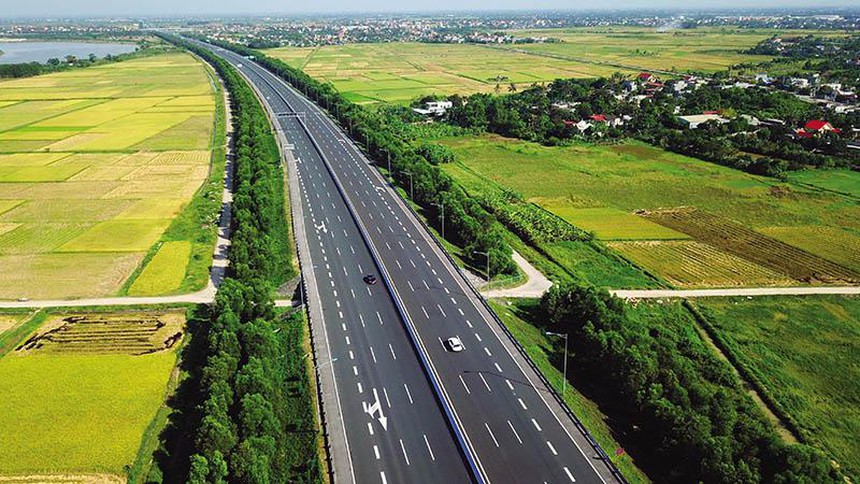
The accelerated development of transportation infrastructure is a major support for the development of industrial park real estate.
Commenting on investment prospects in Vietnam, Morgan Ulaganathan, Director of Property Services & Tourism & Hospitality Advisory at Colliers Vietnam and a member of the Executive Board of the Singapore Chamber of Commerce in Vietnam, stated that Vietnam has a strategic position to become a logistics hub due to its potential to significantly reduce transportation costs for businesses. Vietnam's labor productivity is relatively competitive compared to other countries in the region. Furthermore, Vietnam has a relatively stable political environment, strong domestic consumption, and a good degree of economic openness.
According to this expert, land lease prices in Vietnam are quite competitive compared to other emerging markets, which is a major advantage for industrial real estate. However, some recent developments such as global minimum tax rates and geoeconomic fragmentation will certainly impact FDI flows into emerging markets, including Vietnam.
There are still many challenges ahead.
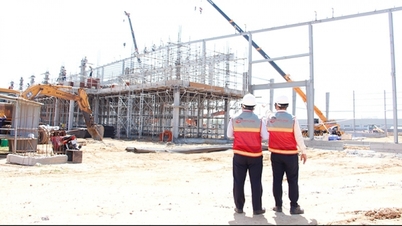
Despite its significant potential and advantages, industrial park real estate, like other types of real estate, is facing supply issues due to legal procedural obstacles.
In the South, there has been no new industrial park real estate supply since the last six months of 2022, following a sharp increase in supply at the beginning of the year. This market will face difficulties in implementing new projects in 2023. In the North, due to its later development, the industrial park land supply remains abundant and at reasonable prices.
According to a recent report by VNDirect, the cause of the supply shortage is the scattered nature of industrial park development planning, which is decided by local authorities. Furthermore, recent changes in high-level leadership in many localities have slowed down the project approval process. This has led to delays in land clearance and overlapping planning. Although more projects have recently been approved to improve this situation, the supply shortage is expected to persist until at least the end of 2023.
Furthermore, a new challenge has emerged for the industrial real estate sector: the "global minimum tax." This is one of the two main pillars of the Base Erosion and Profit Shifting (BEPS) program initiated by the Organization for Economic Cooperation and Development (OECD) and endorsed by over 140 countries.
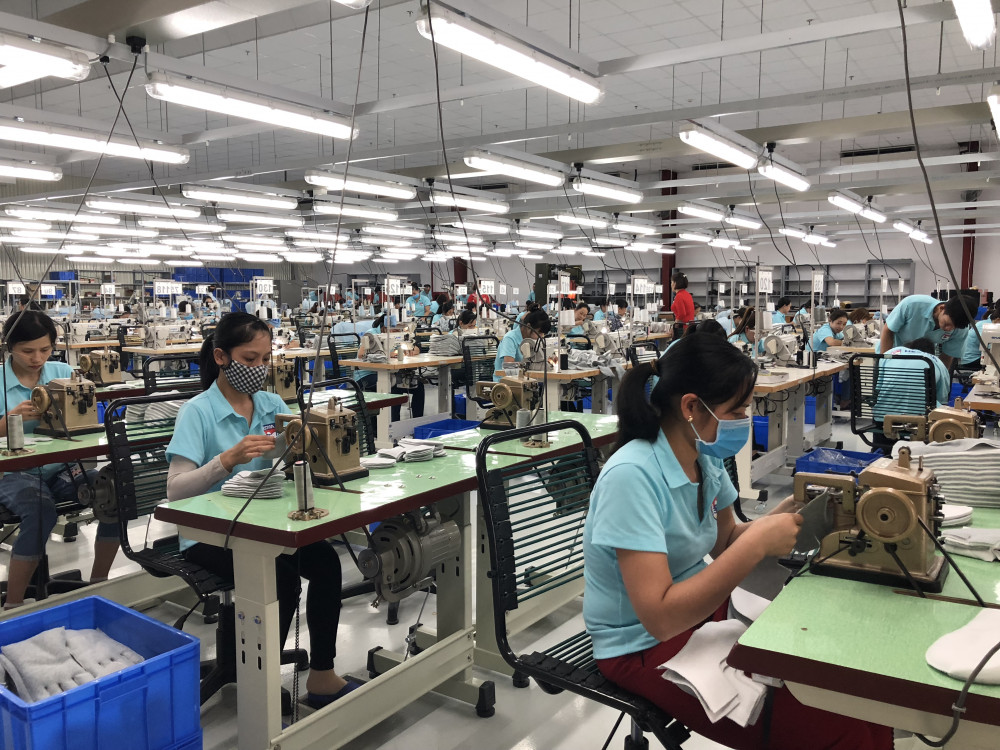
This type of business still faces many challenges in the future, such as labor costs, supply, and the new issue of "global minimum tax."
Accordingly, the global minimum tax rate is 15%, applicable to multinational companies with total revenue of €750 million (or $800 million) or more in two of the four most recent consecutive years. The OECD estimates that with the implementation of Pillar 2, total global tax revenue from multinational companies will increase to $220 billion.
The global minimum tax policy is required to be implemented from January 1, 2024. According to experts, the 15% global minimum corporate tax rate will raise concerns about the potential disruption to investment strategies, the operating methods of multinational corporations, and FDI attraction strategies if Vietnam is slow to respond.
Currently, Vietnam is using tariff preferences as a financial leverage tool to attract foreign investors, applying tax rates of 10%, 15%, and 17% depending on the sector, industry, scale, and location of the investment. In some special cases, preferential tax rates may be as low as 5%, 7%, and 9%. However, these incentives will no longer be effective when the global minimum tax policy is implemented, which could somewhat affect Vietnam's prospects for attracting FDI in the coming years.
Furthermore, Vietnam's advantage of low labor costs has significantly diminished. In 2013-2014, the average worker's salary in Vietnam was US$162 per month, equivalent to 75% of India's, 69% of Indonesia's, and 44% of Thailand's. In contrast, by 2022, the average worker's salary in Vietnam had increased to US$277 per month, equivalent to 84% of India's, 74% of Indonesia's, and 72% of Thailand's. Vietnam's expected wage increase rate in 2023 reached 5.9%, leading Southeast Asia and second only to India (8.7%), while the productivity of Vietnamese workers has not increased as much as businesses would like.
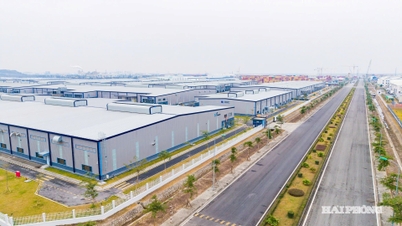
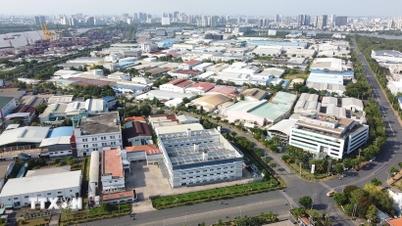
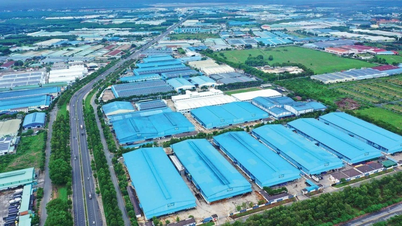
Currently, the country has approximately 563 planned industrial parks in 61 out of 63 provinces and cities; 397 industrial parks have been established; 292 industrial parks are operational with a total natural land area of over 87,100 hectares and an industrial land area of over 58,700 hectares. In addition, there are 106 industrial parks under construction with an industrial land area of approximately 23,800 hectares.
By the end of the first quarter of 2023, the occupancy rate of first-class industrial parks nationwide continued its upward trend, reaching over 80%, with the Southern region averaging 85% (leading the country).
In key markets in the North and South, industrial park occupancy rates remained above 90% in 2022. Several industrial parks in Hanoi, Ho Chi Minh City, Dong Nai, Bac Ninh, Bac Giang, and Binh Duong were almost fully occupied. Binh Duong had the highest occupancy rate, reaching over 95%.
Source















































































Comment (0)