

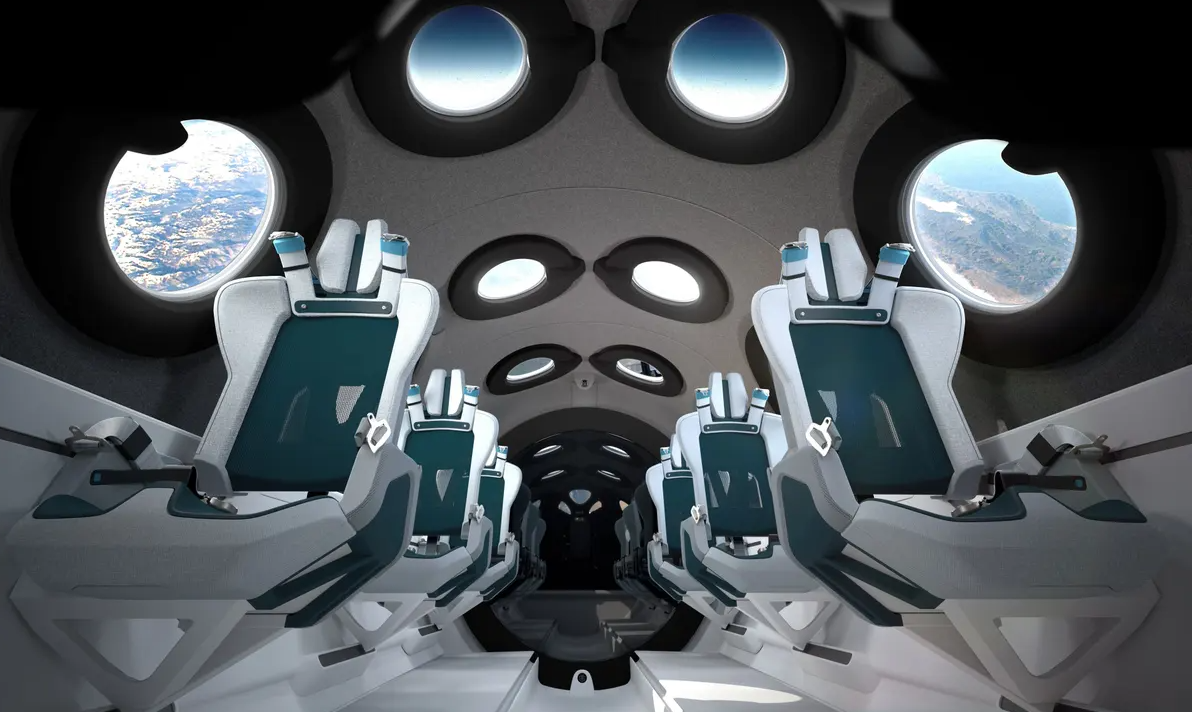
Inside a Virgin Galactic aircraft.
New research suggests that flights from Sydney to London will take just two hours in 2033. To achieve this, passengers will board near-orbital flights, briefly entering space before descending back to their destination. Currently, such flights take approximately 22 hours, according to The Times .
Suborbital flight is suitable for most people.
The UK Civil Aviation Authority (CAA) has partnered with the Royal Air Force and Imperial College London to conduct a medical study to determine whether near-orbital flight is suitable for passengers.
In the study, 24 healthy individuals experienced the conditions that occur during the launch and landing of a suborbital flight. Accordingly, the 1G force is the Earth's gravitational force.
During acceleration, the G-force can increase to four times the Earth's gravitational force, lasting from 20 to 30 seconds.
The G-force peaks at 6G during the landing phase, lasting from 10 to 15 seconds, meaning that during that period, the passenger's body is subjected to pressure six times greater than Earth's gravitational force.
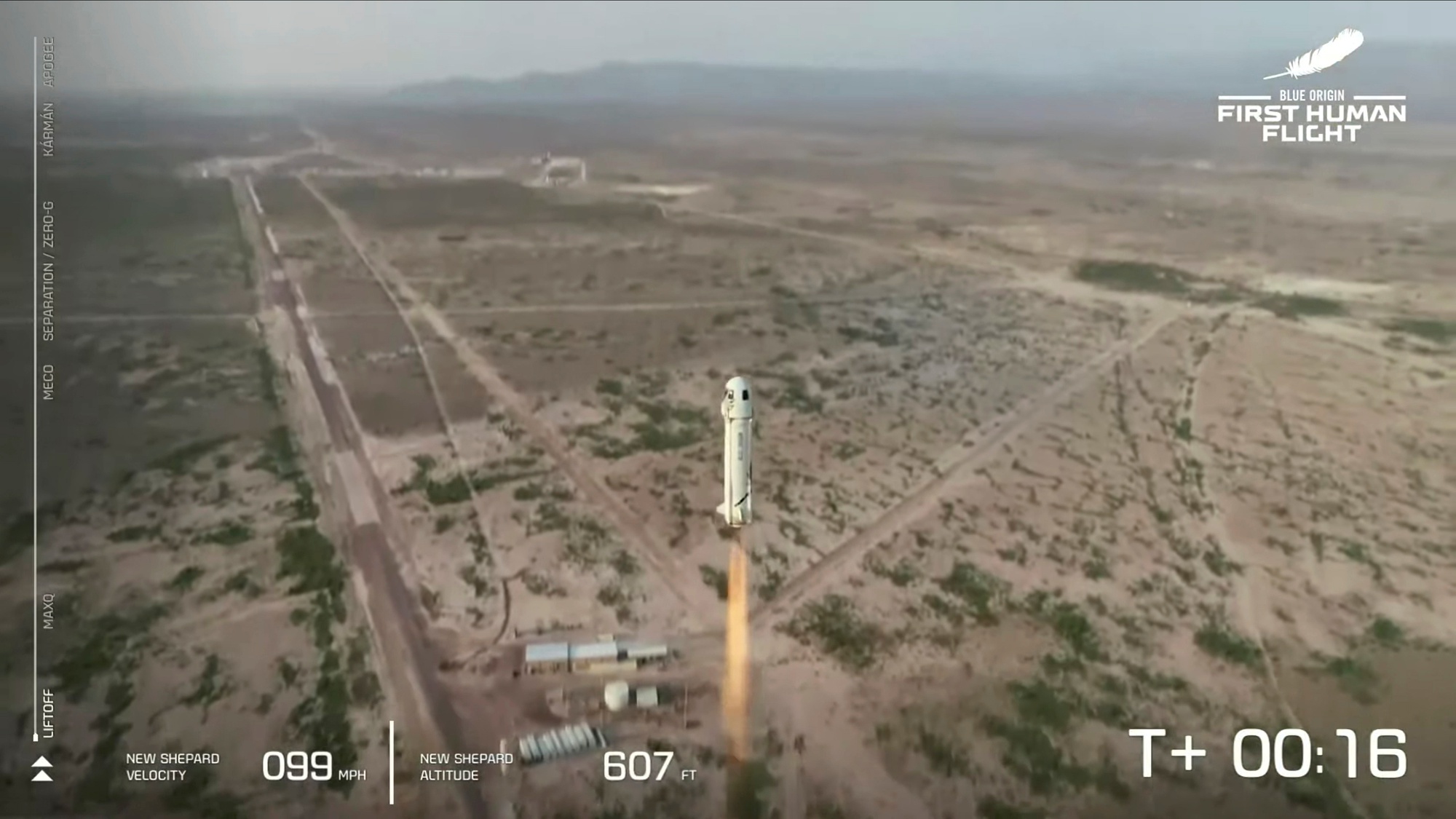
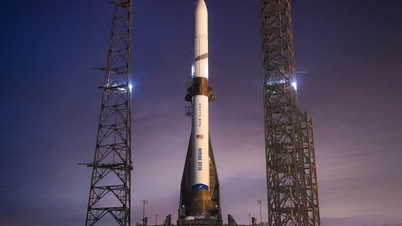
Blue Origin's New Shepard spacecraft during its successful maiden launch on July 20, 2021.
Such pressures can cause a number of effects on the human body, such as chest tightness, shortness of breath, and visual disturbances. In the study, one person fainted for a short period, but it did not lead to long-term effects.
According to a report published in the journal Aerospace Medicine and Human Performance , the team of experts concluded that "the majority of passengers are likely to experience relatively mild psychophysiological reactions" during near-orbital flights.
This means that humans could perform the aforementioned flights without necessarily meeting conditions such as being young, having a super-fit physique, or undergoing years of intense training.
However, Dr. Ryan Anderton, who leads the CAA's medical expert team, also warned that not everyone is safe on near-orbital flights, such as those with specific medical conditions.
"What we're trying to study is identifying which cases require vigilance and how screening should be conducted," The Times quoted Dr. Anderton as saying.
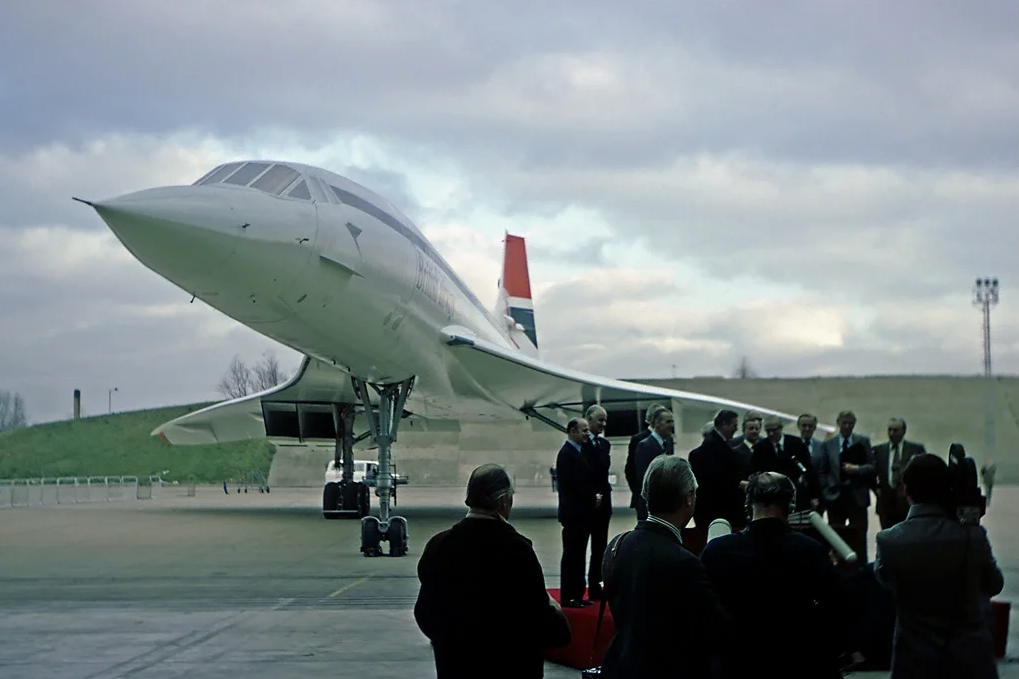
British Airways' Concorde aircraft
The future of ultra-fast travel
To date, the British Airways Concorde flight still holds the record for the fastest journey between Sydney and London, taking 17 hours, 3 minutes, and 45 seconds in 1985. At that time, the flight made stops in Bahrain, Colombo (Sri Lanka), and Perth (Australia) for refueling.
Qantas' current flight route takes approximately 22 hours, including a layover. By 2025, Qantas plans to launch a direct flight that takes 19 hours. This plan is called "Sunrise," as it will allow passengers to witness the sunrise in two locations.
Near-orbit flights are currently selling tickets for over $650,000, offered by British billionaire Sir Richard Virgin Galactic and Jeff Bezos' Blue Origin.
CAA estimates that the London-Sydney route could cost around $350,000 per ticket when it first launches, but the price will decrease over time as more people use the service.
Source link

![[Photo] Explore the US Navy's USS Robert Smalls warship](/_next/image?url=https%3A%2F%2Fvphoto.vietnam.vn%2Fthumb%2F1200x675%2Fvietnam%2Fresource%2FIMAGE%2F2025%2F12%2F10%2F1765341533272_11212121-8303-jpg.webp&w=3840&q=75)































































































Comment (0)