

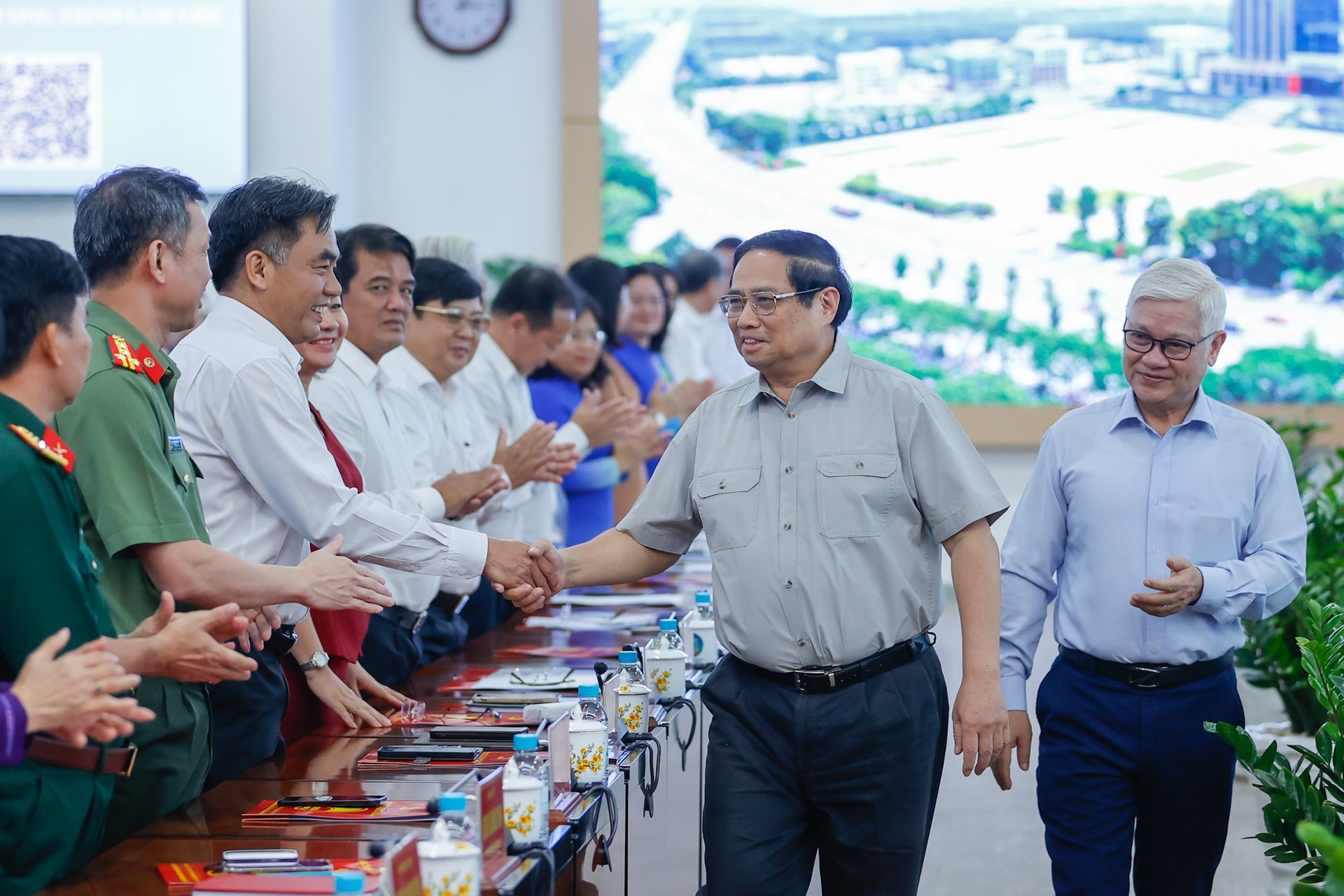
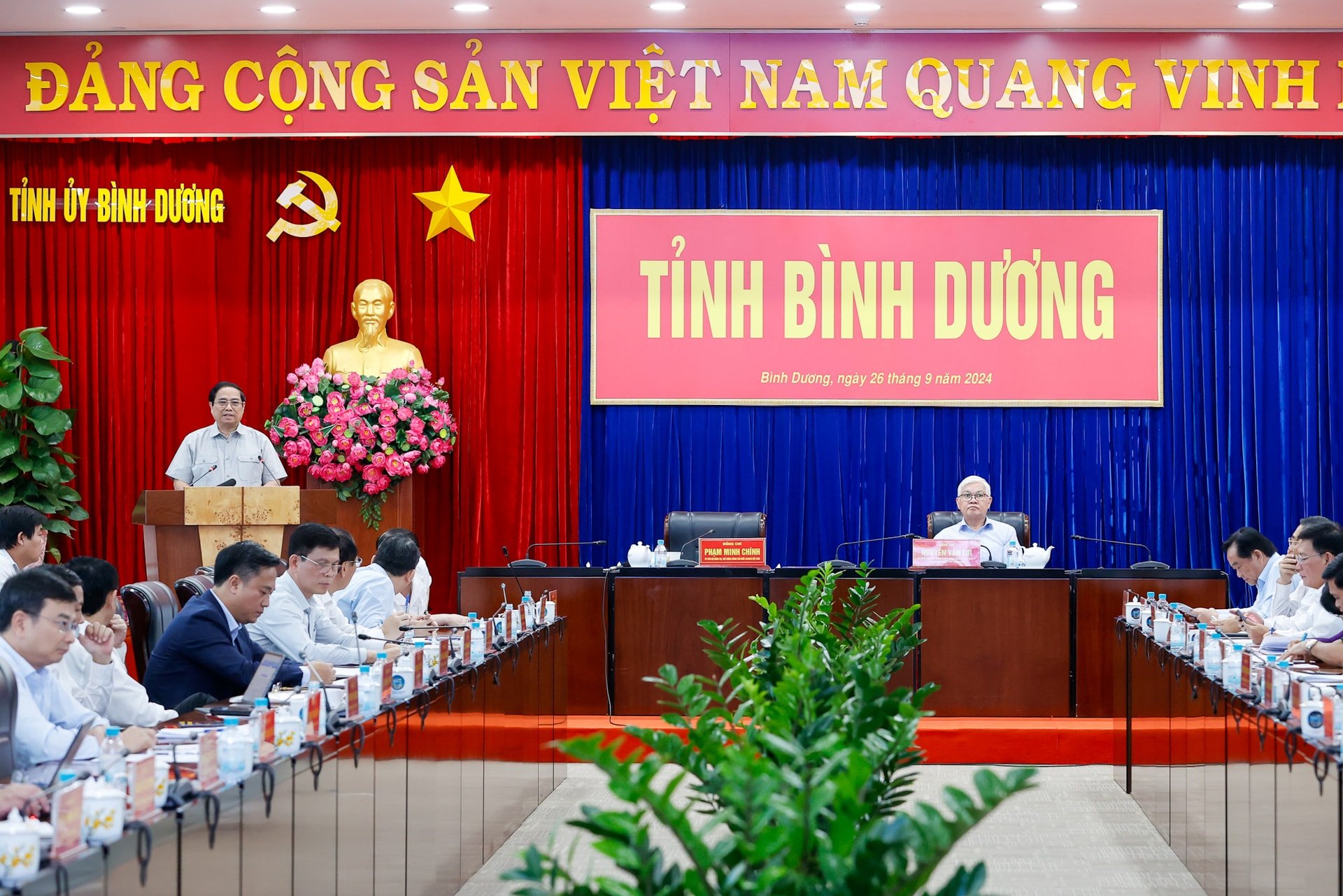
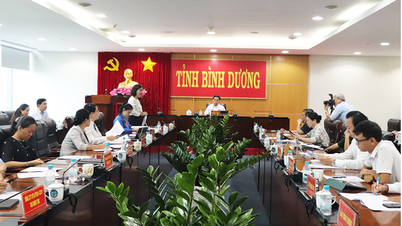
On the afternoon of September 26th, Prime Minister Pham Minh Chinh worked with the Standing Committee of the Binh Duong Provincial Party Committee on the socio-economic situation, national security and defense, party building work, and the construction of the political system in the province during the first nine months of 2024, the direction for the last three months of 2024, and the province's proposals and recommendations.
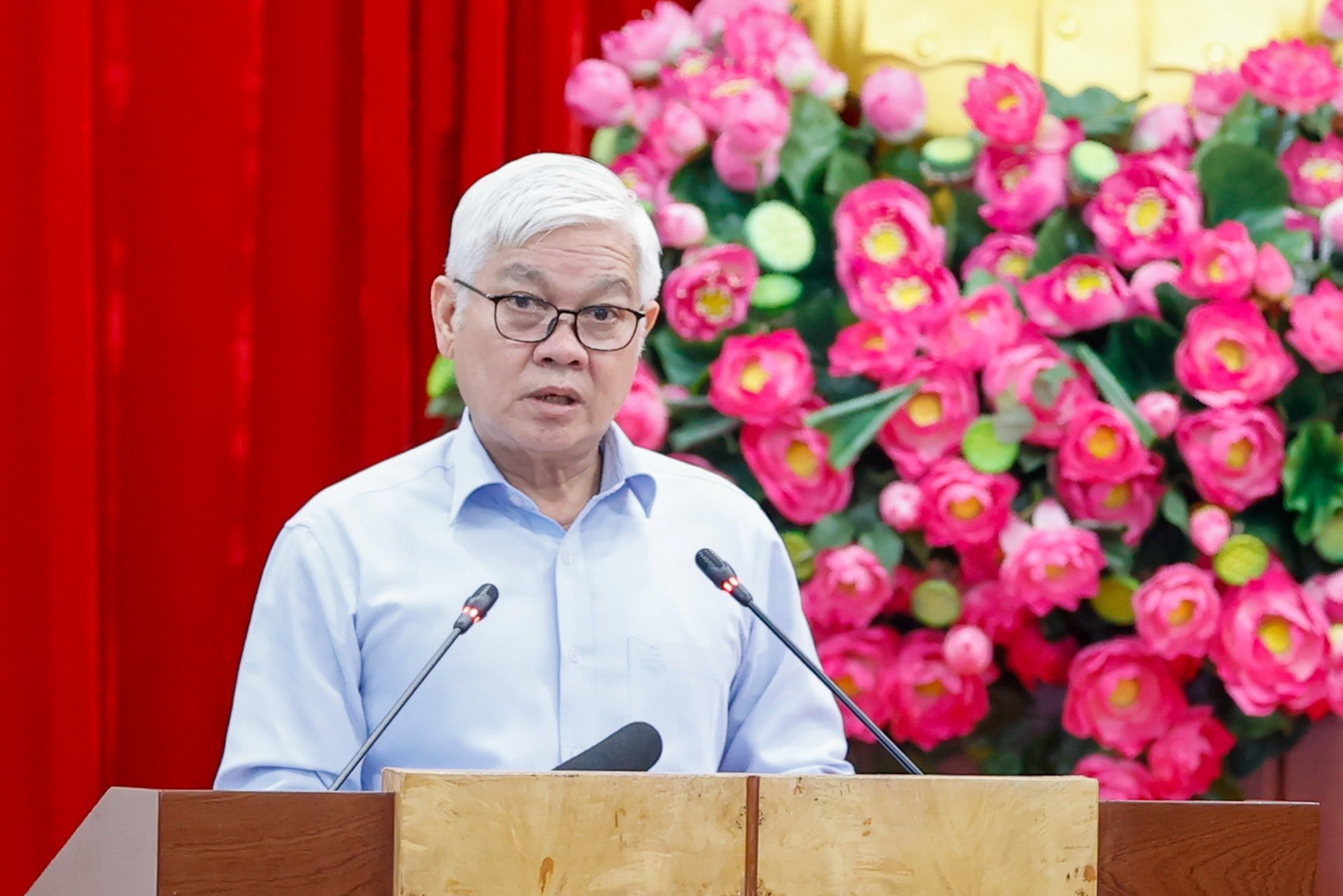
Also attending the working session were the Secretary of the Binh Duong Provincial Party Committee, Nguyen Van Loi, and leaders from various ministries, central agencies, and Binh Duong province.
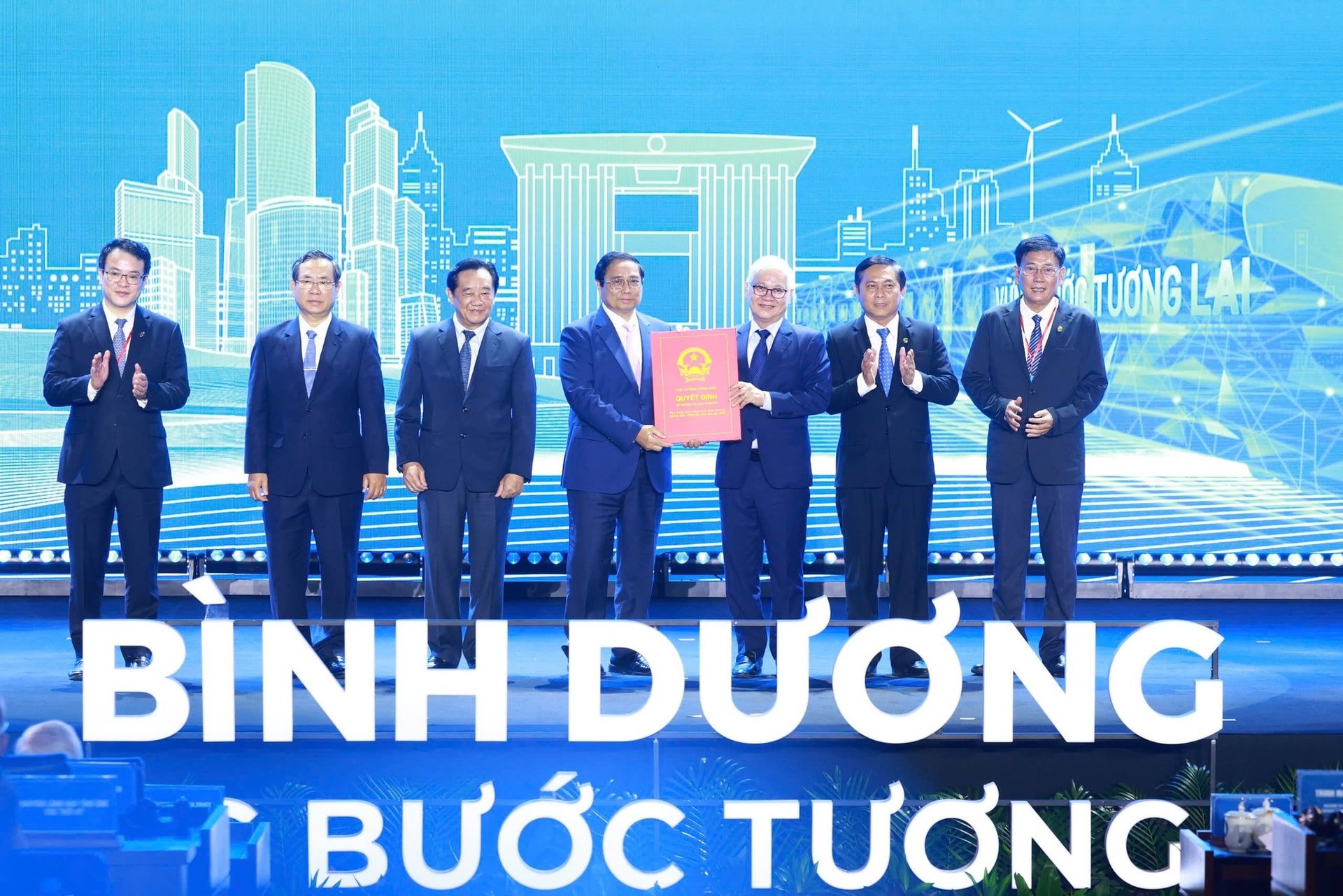
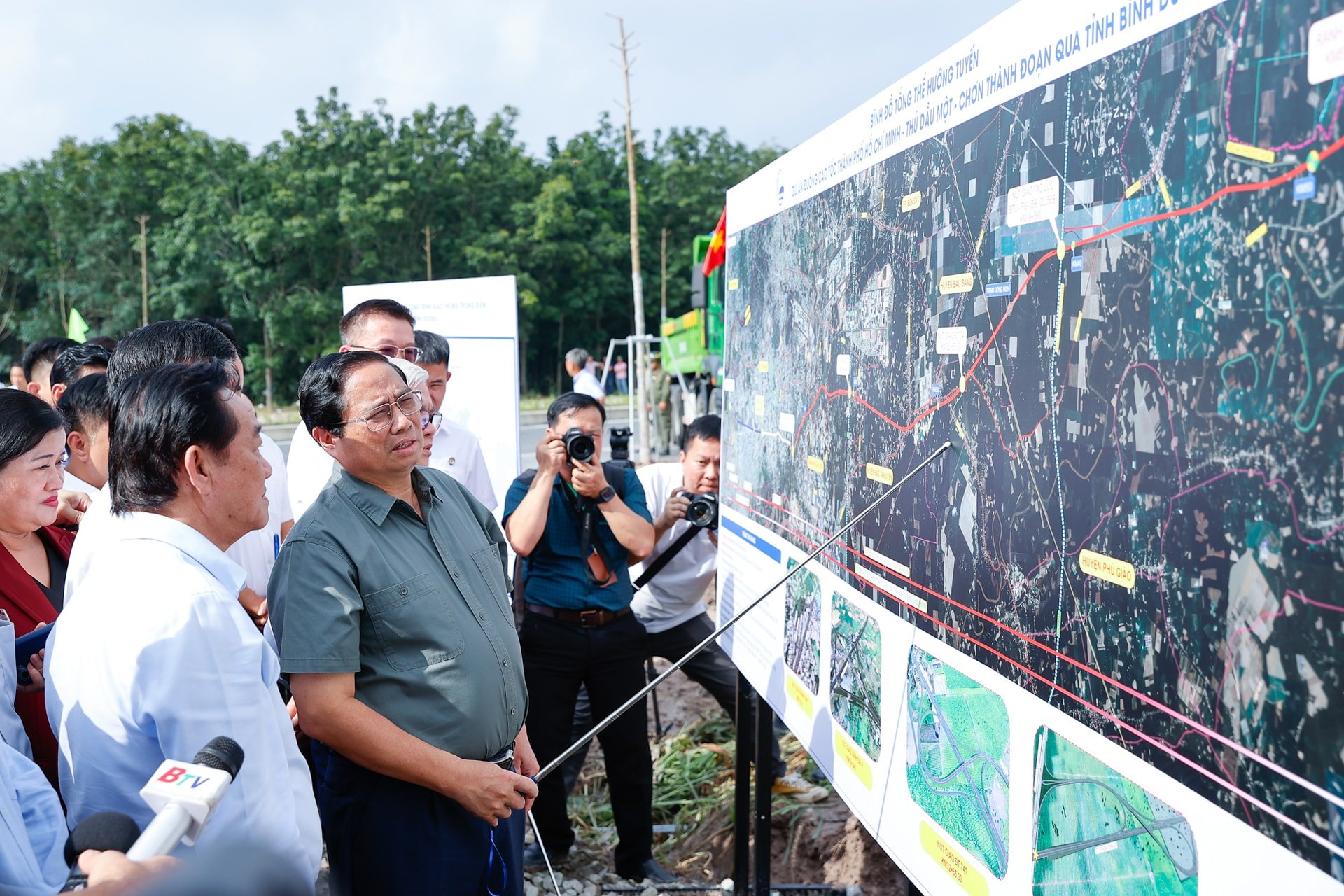
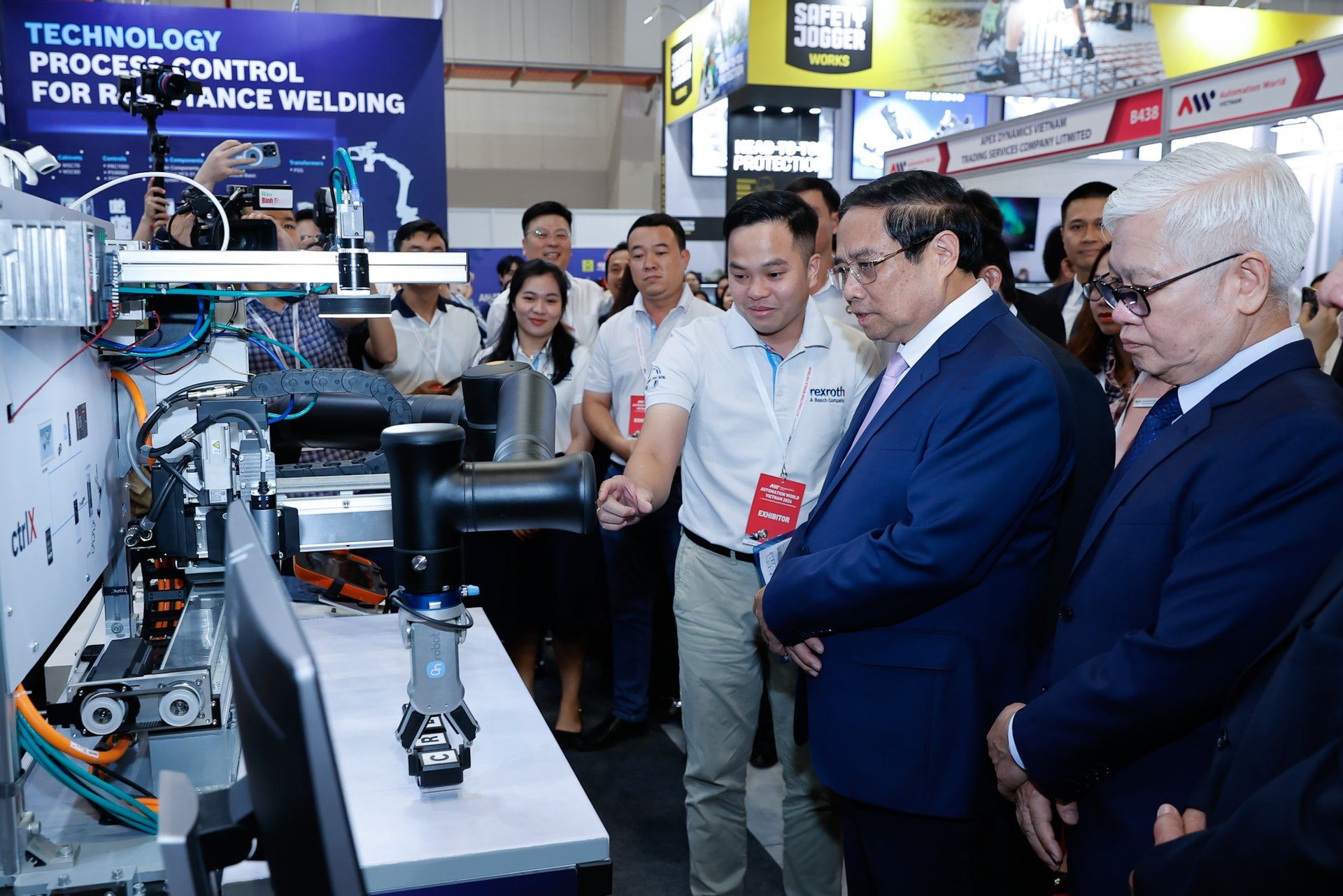
Earlier that morning, the Prime Minister attended the conference announcing the provincial planning associated with investment promotion in Binh Duong, surveyed the site, inspected the progress of the Ho Chi Minh City - Thu Dau Mot - Chon Thanh expressway project, and visited the Electricity and Energy Exhibition 2024 and the Vietnam Automation Exhibition 2024.
Regarding Binh Duong's potential advantages, opinions at the meeting assessed that Binh Duong is located in the Southern key economic region, a gateway for trade with Ho Chi Minh City; its natural area is 2,700 km2 (ranked 44th out of 63); its population is over 2.82 million people (ranked 6th out of 63); and its workforce accounts for 64% of the population (while the national average is 53%).
The province has a relatively flat, high terrain, fertile land, a rich river system and abundant natural resources; the climate is relatively stable, with virtually no storms or floods.
In terms of transportation and urban infrastructure, it is traversed by major national highways and is approximately 15 km from Tan Son Nhat International Airport and seaports.
In terms of industry, Binh Duong is a major industrial center with 30 industrial parks (covering over 12,600 hectares) and 12 industrial clusters (nearly 800 hectares). Many large industrial parks have high occupancy rates, such as Song Than, Dong An, Nam Tan Uyen, Tan Dong Hiep A, Viet Huong, and My Phuoc…
In particular, Binh Duong was the first place to build the VSIP industrial park, which is now one of the model examples of industrial development and investment attraction in Vietnam.
The education and training system is relatively developed, ensuring sufficient schools and classrooms for the children of the province's residents and migrant workers.
The province has many historical and cultural relics (11 historical and cultural relics recognized at the national level); many festivals known to tourists such as: Ba Pagoda Festival, Ong Ngua Pagoda Festival, Tan An communal house festival, Di An communal house festival…; and many traditional craft villages.
The people of Binh Duong province have a tradition of revolutionary heroism; they are hardworking, open-minded, eager to learn, dynamic, innovative, and always aspire to enrich their homeland and country. Many prominent figures have contributed to the nation and Binh Duong.
Ranked among the top FDI attraction destinations in the country.
According to reports from Binh Duong province and opinions expressed at the meeting, the province's socio-economic situation remained stable and achieved many important results during the first nine months of the year.
The economy continued its strong growth momentum in all three sectors. GRDP in the first six months of 2024 increased by 6.19%, the highest in the past five years. The estimated economic growth rate for the whole year 2024 is 7.28% year-on-year.
State budget revenue achieved positive results. Total state budget revenue for the first eight months reached over 50.1 trillion VND (reaching 77% of the annual forecast, equivalent to the national average of 78.5%).
The Industrial Production Index (IIP) in August increased by 11.25%, and the first eight months saw a 6.04% increase compared to the same period last year. Imports and exports increased significantly, resulting in a large trade surplus. In the first eight months, exports reached US$25.6 billion, up 13.7%; imports reached US$18.2 billion, up 13.4%; and the trade surplus was US$7.4 billion (the national trade surplus was US$19.07 billion).
In the first eight months, Binh Duong attracted over US$1.36 billion in FDI, a 4.7% increase compared to the same period last year, ranking 7th out of 63 provinces. To date, Binh Duong has consistently maintained its position among the top three provinces attracting the most FDI. As of August 31, 2024, the total registered FDI capital in Binh Duong was over US$41.8 billion.
Cultural, social, educational, health, and labor sectors received attention; social security measures were effectively implemented; and people's living standards improved.
Notably, since 2017, Binh Duong has been recognized as the first province, and to this day the only one in the country, to have no poor households according to the central government's standards.
The entire province has 100% of its communes meeting the advanced new rural standards, and 3 out of 38 communes have achieved the model new rural standard. The province has built 52,000 social housing units and worker housing, equivalent to 2.6 million square meters of floor space; and has approved investment in 2 new social housing projects with a scale of nearly 6,000 units and 4 commercial housing projects.
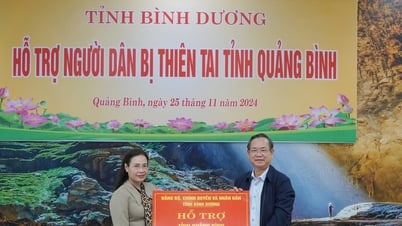
Recently, the province promptly organized fundraising efforts, received over 40 billion VND in donations, and transferred more than 23 billion VND to people in the northern provinces to help them overcome the consequences of Typhoon No. 3.
National defense and security have been maintained; social order and safety have been ensured; and international integration has been promoted. Emphasis has been placed on Party building and strengthening the political system; the leadership capacity of Party committees at all levels and the guidance and management of governments at all levels have been enhanced.
A series of large-scale transportation infrastructure projects
Notably, the province has the highest urbanization density in the country with 5 centrally-administered cities, achieving an urbanization rate of 84%. The province continues to plan and implement investment in the development of new urban systems, following the Transport-Oriented Development (TOD) model.
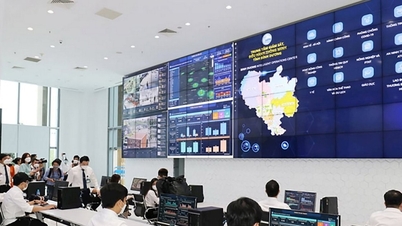
The province is focusing on investing in new-generation industrial parks, aiming for smart and green manufacturing in accordance with the plan. It is establishing concentrated Information Technology Parks and Science and Technology Parks in the center of the new Binh Duong city with a scale of 220 hectares.
Regarding the progress of several key regional connectivity projects, Binh Duong province reported that out of the 26 planned bridges connecting the region with Ho Chi Minh City, Dong Nai, and Tay Ninh, 12 have been completed to date.
In addition to completed projects already in use, the province is currently focusing on accelerating the commencement, construction, and inauguration of key regional transportation projects with a total investment of approximately 70,000 billion VND (approximately 42,000 billion VND from the state budget and approximately 28,000 billion VND mobilized by investors through public-private partnerships (PPP)).
Specifically, the Ho Chi Minh City Ring Road 3, passing through Binh Duong province, is approximately 26 km long and is expected to be technically opened to traffic by April 30, 2025 (two months earlier than directed by the Prime Minister).
Two projects, the Ho Chi Minh City Ring Road 4 passing through Binh Duong province (47.5 km long) and the Ho Chi Minh City - Thu Dau Mot - Chon Thanh expressway passing through the province (approximately 52 km long), are both expected to commence construction in November 2024.
The BOT project to upgrade and expand National Highway 13, approximately 13.8 km long with a total investment of 12,463 billion VND, is currently accelerating construction progress, striving to put it into use by the April 30th holiday in 2025.
Regarding railways, Binh Duong province will take the lead, coordinating with the Ministry of Transport and other ministries and agencies to jointly study the railway line from Bau Bang to Di An and then to Cai Mep - Thi Vai port (Vung Tau).
Meanwhile, the Suoi Tien - Binh Duong New City urban railway project is currently being surveyed and a pre-feasibility study report is being prepared by the province according to the plan. It is approximately 35 km long and has an estimated total investment of 86,150 billion VND (3.5 billion USD).
Impressed and proud of Binh Duong.
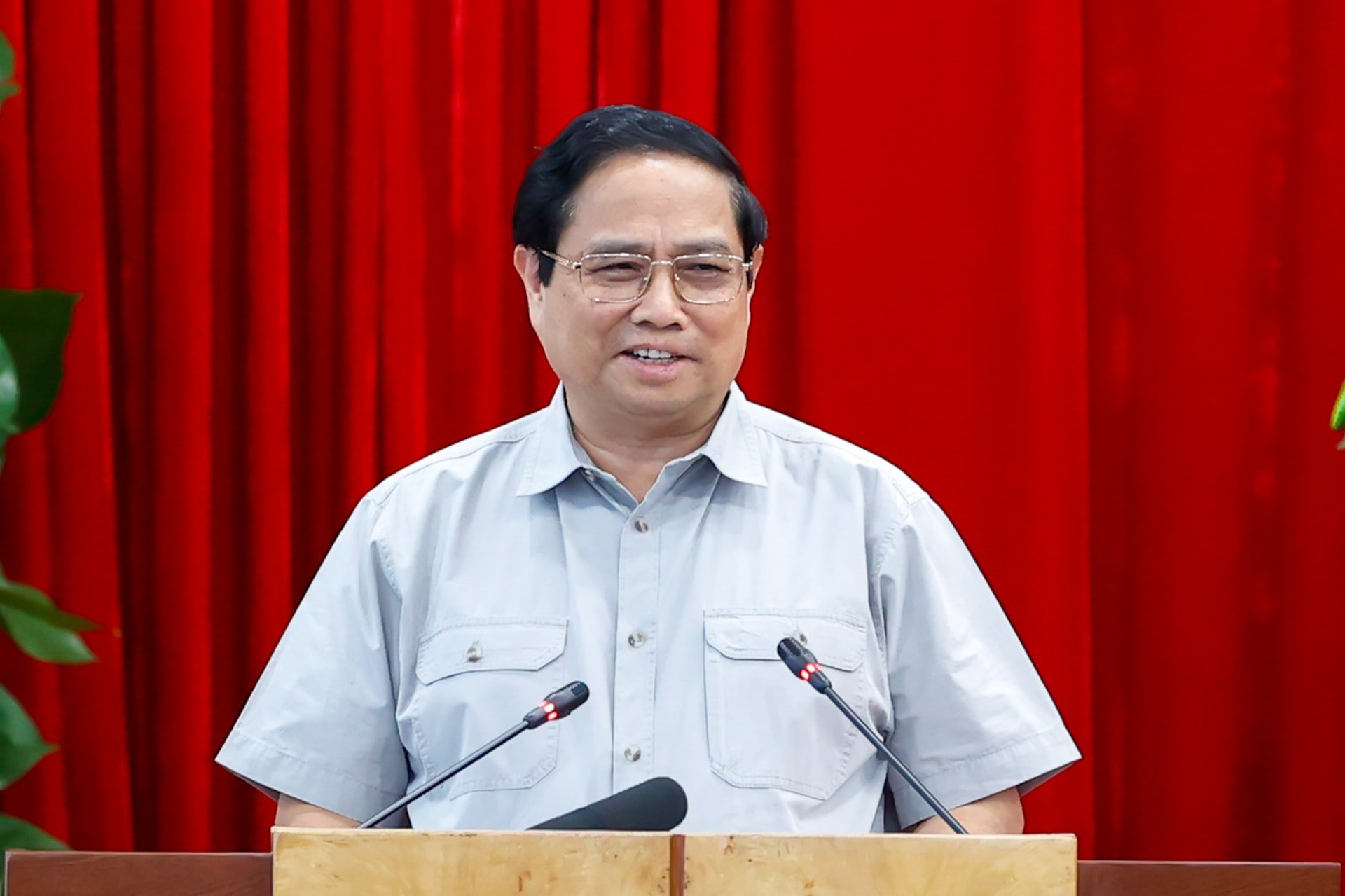
Concluding the meeting, Prime Minister Pham Minh Chinh basically agreed with the reports and opinions presented, and instructed the Government Office to compile and issue a notice summarizing the meeting's conclusions.
The Prime Minister emphasized that Binh Duong possesses many unique potentials, comparative advantages, outstanding opportunities, and a convergence of factors for further strong development. In particular, Binh Duong has a crucial location, connecting key regions, the nation, and the international community; this strength needs to be fully exploited for development.
"We are very impressed, happy, and proud of Binh Duong's achievements in rapid and sustainable development; building Binh Duong according to the world's smart city trend and eliminating poverty," the Prime Minister said.
On behalf of the Government, the Prime Minister highly appreciated and commended the efforts of the Party Committee, government, military, and people of Binh Duong province and the important achievements they have made, which have significantly contributed to the overall results of the whole country.
Besides the very basic achievements, the Prime Minister pointed out some shortcomings, limitations, difficulties, and challenges facing the province, such as not yet regaining growth momentum after the COVID-19 pandemic; growth in the first six months of 2024 being lower than the national average; slow disbursement of public investment capital and implementation of some important national projects; the need for more effort in administrative reform and improving the investment and business environment; and the need for more attention to sustainable and comprehensive development.
The Prime Minister highlighted six important lessons learned from Binh Duong's experience, emphasizing the need for further improvement and greater effectiveness in the future.
Firstly, we must thoroughly understand and creatively implement the Party and State's guidelines, policies, and strategies, adapting them to the local conditions, especially by promoting the development of new-generation industrial parks and ethnic minority enterprises (replicating the Becamex Binh Duong model).
Secondly, it is essential to have a firm grasp of the global, regional, and domestic situation, and to respond with timely, flexible, and effective policies. This is crucial because Binh Duong is strongly integrated and plays an important role in regional, national, and international linkages.
Thirdly, we must strongly promote the spirit of self-reliance and self-improvement, the tradition of solidarity, dynamism, and creativity, effectively mobilizing all resources; effectively utilizing all unique potentials, comparative advantages, and outstanding opportunities, and rising strongly through our own internal strength.
Fourth, leadership and management must demonstrate high determination, great effort, decisive action, focus on key areas, avoid scattered investments, and complete each task thoroughly. The greater the pressure, the greater the effort and striving to achieve the best possible results.
Fifth, promote decentralization and delegation of power, coupled with resource allocation, enhance the implementation capacity of lower levels, and strengthen inspection, supervision, and control of power; assign tasks and responsibilities clearly, specifying who is responsible, what the task is, the timeframe, and the expected results.
Sixth, strengthen discipline and order, proactively address work with the spirit of "what is said must be done, commitments must be fulfilled"; what is done must yield concrete, measurable results; remove obstacles and reduce costs for people and businesses.
Looking ahead, the Prime Minister requested Binh Duong to achieve breakthrough development and accelerate even more strongly in all fields. The Prime Minister reiterated his request for Binh Duong to implement the "three pioneering initiatives," which include:
Firstly, we must be pioneers in connecting the economy with the region, area, country, and internationally, especially connecting green and digital transportation with Cambodia, with the Central Highlands via Binh Phuoc, with the Southwest region via Ho Chi Minh City, and connecting nationally and internationally through Long Thanh International Airport and Cai Mep - Thi Vai port…
Secondly, we must be pioneers in proactively developing the digital economy, green economy, circular economy, sharing economy, and night-time economy, with a particular focus on digitizing and greening the economy.
Thirdly, we must be pioneers in proactively and actively building new-generation industrial parks, focusing on innovation, entrepreneurship, startup development, application of science and technology, and the achievements of the Fourth Industrial Revolution; developing new-generation industrial parks in a green, digital, high-tech, and smart direction; and paying attention to training high-quality human resources.
Soon to become a Class I city, a city directly under the central government.
Outlining 10 specific tasks and solutions, the Prime Minister first requested the urgent development and completion of the Plan for implementing the recently approved Provincial Planning; identifying the key contents, progress, and resources for implementing the programs and projects in the Planning.
Secondly, prioritize promoting growth and controlling inflation; renewing traditional growth drivers and effectively exploiting new growth drivers; increasing access to credit for people and businesses, directing credit towards priority sectors and transportation infrastructure.
Regarding investment, we need to accelerate the disbursement of public investment capital, especially for key projects; continue to promote the public-private partnership model; and attract FDI with high technological content and added value.
Regarding exports, research and development of duty-free zones and free trade zones (in coordination with relevant ministries and agencies in developing proposals, including proposals on location, scale, organizational model, institutions, mechanisms, policies, and comprehensive impact assessment), aimed at exports and attracting investment.
Regarding consumption, develop programs and plans to stimulate consumer demand in the area, especially during holidays and Tet (Lunar New Year) at the end of the year; promote the campaign "Vietnamese people prioritize using Vietnamese goods"; and promote the development of e-commerce and cashless payments.
Regarding new growth drivers, we will promote science and technology, innovation, digital transformation, green transformation, circular economy, sharing economy, knowledge economy, and night-time economy; and strengthen regional linkages.
Thirdly, strive to increase revenue, expand the revenue base, and save on budget expenditures; resolutely implement digital transformation and apply electronic invoices in revenue management; thoroughly save on recurrent expenditures and increase investment in development. Effectively implement policies on extending and reducing taxes, fees, and charges.
Fourth, develop a new type of industrial ecosystem; promote the transformation of industrial parks into eco-friendly, high-tech industrial park models; prioritize the development of processing industries and supporting industries.
Continue to strongly develop key service sectors that support industry, such as: e-commerce, finance, banking, logistics, and high-quality human resource training…
Developing agriculture is crucial for ensuring food security, stabilizing people's livelihoods, contributing to inflation control, and promoting high-tech and ecological agriculture.
Fifth, continue investing in the development of a comprehensive and modern socio-economic infrastructure; focusing on transportation, healthcare, education, industrial park and cluster infrastructure, information and telecommunications infrastructure, green infrastructure, and climate change adaptation; especially developing transportation infrastructure connecting regions, the nation, and internationally.
Sixth, continue to promote administrative reform, digital transformation, improve the business environment, eliminate the "request-and-grant" mechanism; strengthen dialogue, support and promptly resolve difficulties and obstacles in production and business for people and enterprises.
Seventh, focus on developing high-quality human resources, especially in potential and priority sectors; raise the intellectual level of the population, train human resources, and cultivate talent. Implement comprehensive and effective solutions to improve the quality of education and training, while simultaneously establishing mechanisms and policies to attract and utilize talent; shift from primarily knowledge transmission to comprehensive education. Promote the development of social housing through rental and rent-to-own schemes – this is also an important factor in attracting human resources and investment.
Eighth, effectively implement social security work, ensure social welfare, and promote comprehensive and inclusive development. Focus on the efficient management and use of land and resources, environmental protection, and disaster response to climate change. Preserve and promote the cultural values, beliefs, religions, fine traditions, and typical historical and cultural relics of the province.
Ninth, maintain political stability, security, safety, and public well-being; focus on combating and suppressing crime and social evils.
Tenth, prioritize the building of a clean and strong Party and political system; continue to enhance the leadership capacity and fighting strength of Party organizations and Party members; complete projects to celebrate the 50th anniversary of the liberation of the South and national reunification, the 80th anniversary of National Day, and prepare for the successful organization of Party congresses at all levels, leading up to the 14th National Congress of the Party.
"Binh Duong needs to further promote its glorious historical and cultural traditions, the 'hard-working yet heroic Eastern region,' and the outstanding achievements in all fields over the past years, focusing on breakthrough, more vigorous, and comprehensive development in the coming period, especially the development of the digital economy, green economy, circular economy, sharing economy, and knowledge economy. The goal is to achieve rapid but sustainable, inclusive, comprehensive, humane, and harmonious development between people and nature, between the economy, society, and environment," the Prime Minister stated.
The Prime Minister hopes and believes that, with its strategic position and role as an important growth pole of the Southern dynamic region, among the top 3 localities with the largest economies in the country, and with the development momentum of recent years along with the aspirations and determination of the entire Party Committee, government, and people of the province, the province will continue to make strong breakthroughs in the future, constantly developing its position as a modern industrial hub, striving to achieve the position of a leading industrial hub in Vietnam, with smarter and more modern products, and aiming to soon become a Class I city and a centrally-governed city by 2030, following the direction of a smart city, meeting the expectations of the people.
*Also at the meeting, leaders of ministries and sectors responded, and the Prime Minister gave directives on how to handle proposals and recommendations from Binh Duong related to: separating land clearance from public investment projects; mechanisms and support for investment resources to make Binh Duong province a centrally-governed city by 2030; and mechanisms and support for investment resources for key projects.
Binh Duong province also put forward proposals related to the complete construction of the Ho Chi Minh City Ring Road 3 project (specifically the Tan Van interchange, the largest interchange in the Ring Road 3 project and one of the most complex interchanges in Vietnam) using the project's contingency fund; the implementation of the Ho Chi Minh City Ring Road 4 project section through Binh Duong province; the study of a light rail transit (LRT) development plan to connect with intra-provincial TODs; the Suoi Tien - Binh Duong New City urban railway line and the Bau Bang - Di An railway line.
In addition, the proposals include establishing free trade zones according to approved plans; adjusting and supplementing policies to mobilize social resources in the fields of education and health to meet current development requirements; policies for training and attracting high-quality human resources; and using recurrent expenditure funds to renovate, upgrade, and expand infrastructure in already constructed projects.
Source: https://baotainguyenmoitruong.vn/thu-tuong-binh-duong-phai-but-pha-hon-nua-som-tro-thanh-thanh-pho-truc-thuoc-trung-uong-380708.html


![[Photo] Prime Minister Pham Minh Chinh holds a phone call with the CEO of Russia's Rosatom Corporation.](/_next/image?url=https%3A%2F%2Fvphoto.vietnam.vn%2Fthumb%2F1200x675%2Fvietnam%2Fresource%2FIMAGE%2F2025%2F12%2F11%2F1765464552365_dsc-5295-jpg.webp&w=3840&q=75)
























































Comment (0)