

My mother is 46 years old and has recently experienced digestive problems. She suffers from stomach pain and discomfort after eating a slightly large meal or dishes like sour soups or fermented fish sauce. Should she have a gastroscopy? (Hai Ha, Long An )
Reply:
Gastroscopy is a procedure that involves inserting a flexible endoscope through the mouth into the digestive tract to examine and observe the organs of the digestive system, including the esophagus, stomach, bulb, and duodenum. This method is safe and easily detects and identifies lesions in the upper digestive tract.
During endoscopy, the doctor may use several instruments to remove polyps, take biopsies, control bleeding, remove foreign objects from the digestive tract, dilate narrowed areas, ligate esophageal veins, etc.
Doctors often order a gastroscopy in cases where a patient has symptoms suspected of being an upper gastrointestinal disease causing difficulty swallowing, epigastric pain, belching, heartburn, loss of appetite, indigestion, bloating, nausea, and black stools.
This procedure is also indicated for individuals requiring tissue samples for diagnosis (biopsy), treatment of certain conditions via gastroscopy such as esophageal dilation, polyp removal, removal of foreign bodies, and reassessment of results after treatment of esophageal, gastric, and duodenal diseases.
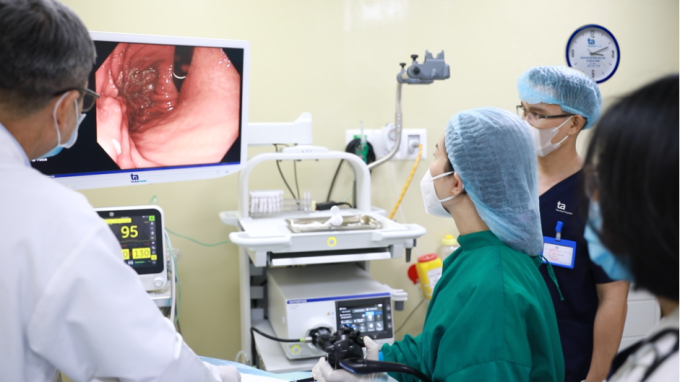
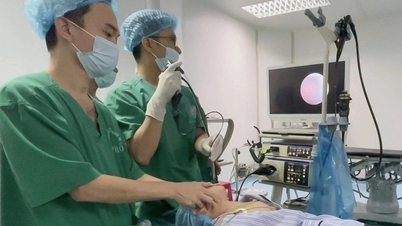
Doctor Bich Ngoc (center) performs a gastroscopy on a patient in September 2023. Photo: Provided by the hospital .
Additionally, gastroscopy is recommended for individuals at high risk for gastrointestinal diseases. Specifically, this includes those with a family history of gastrointestinal cancer, or those exhibiting unusual symptoms (difficulty swallowing, vomiting blood, unexplained anemia, palpable abdominal masses, etc.).
Besides the cases indicated above, healthy individuals without symptoms can also register for a gastroscopy to screen for and detect early abnormalities in the digestive system.
Depending on the patient's health condition, the doctor will advise on different intervals between gastroscopy procedures. Patients with gastric mucosal metaplasia need a gastroscopy once a year. Patients with gastric bleeding may be prescribed multiple endoscopic interventions in a day or follow-up examinations a few days after the intervention, as this is a dangerous complication requiring monitoring for appropriate treatment.
Your mother is 46 years old and is in the age group where endoscopy is needed to screen for intestinal diseases, including cancer. Currently, your mother has a weak gut; even eating sour soup or drinking coconut water causes discomfort and abdominal pain. This could be due to many reasons such as indigestion, gastroesophageal reflux disease (GERD), pancreatitis, allergies, or food intolerances.
To know for sure, your mother should see a doctor, possibly for a gastroscopy and colonoscopy to check her intestinal health.
Dr. Dang Le Bich Ngoc
Center for Endoscopy and Endoscopic Surgery of the Digestive System
Tam Anh General Hospital, Ho Chi Minh City
| Readers can ask questions about digestive diseases here for doctors to answer. |
Source link

![[Photo] Prime Minister Pham Minh Chinh attends the Conference summarizing and implementing tasks of the judicial sector.](/_next/image?url=https%3A%2F%2Fvphoto.vietnam.vn%2Fthumb%2F1200x675%2Fvietnam%2Fresource%2FIMAGE%2F2025%2F12%2F13%2F1765616082148_dsc-5565-jpg.webp&w=3840&q=75)





















































































Comment (0)